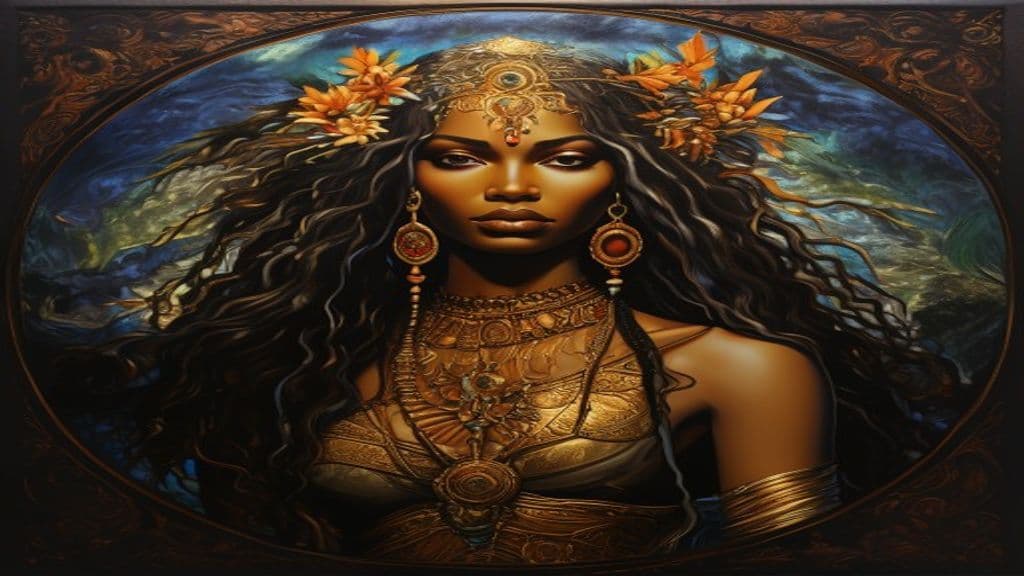
Scholars trace Mami Wata as a historically dynamic archetype rather than a single origin myth. The name in many contexts arises from creole-language compounds of English-derived words for "mother" (mami/mammy) and "water" (wata/wota), and scholars posit that early encounters with European mermaid imagery (from the 15th century onward), a widely circulated mid-19th-century lithograph (the snake-charmer Nala Damajanti), and mid-20th-century Hindu visual imports all contributed to the development and regional variation of Mami Wata cults and images. Local Bantu and Central African forms (e.g., Mami Muntu, Mamba Muntu, Dona Fish) show that the figure was incorporated and reworked within diverse indigenous religious frameworks.
Descriptions vary by region and period. A common iconography depicts an alluring, often mermaid-like woman with long flowing hair; in some historical and popular depictions she appears fair-skinned or "exotic," a trait tied to associations with foreignness. Central African variants may present as crocodile- or snake-associated beings (Mamba Muntu) or hybrid mermaid-crocodile forms. Visual repertoires were influenced by circulating prints (e.g., the Nala Damajanti lithograph) and by Hindu religious imagery introduced to West African coasts in the mid-20th century.
Across sources Mami Wata is credited with control over waters, transformative or shape-changing capacities (appearing as mermaid, snake, crocodile, or seductive human), and powers tied to wealth, fertility, healing and wisdom. She can mesmerize or seduce humans and is implicated in possession phenomena documented in clinical and ethnographic work. Devotees attract her favor with offerings—often exotic or foreign objects—at shrines; religious communities alternately venerate or demonize her.
Weaknesses
- othermanaged through veneration and reciprocal offerings
- otherreligious condemnation or demonization by Christian and Islamic communities
Wards
- ritualshrine devotion and offerings (general practice)
- conditionreligious rejection/demonization (general social strategy)
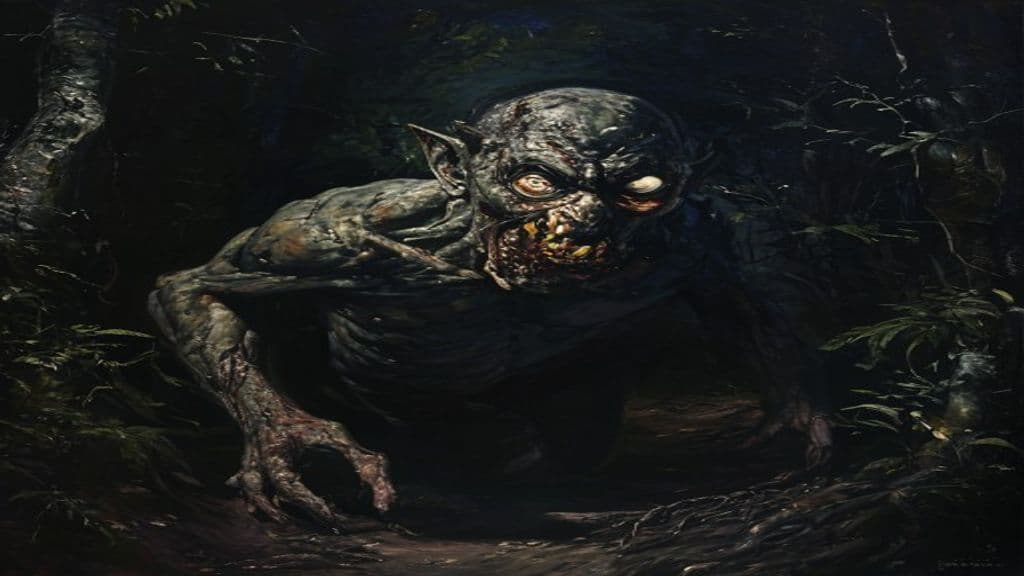
Pishacha
Flesh-eating spirits of Hindu mythology that haunt cremation grounds and are associated with disease, madness, and possession. The lowest class of demon in the Vedic hierarchy.
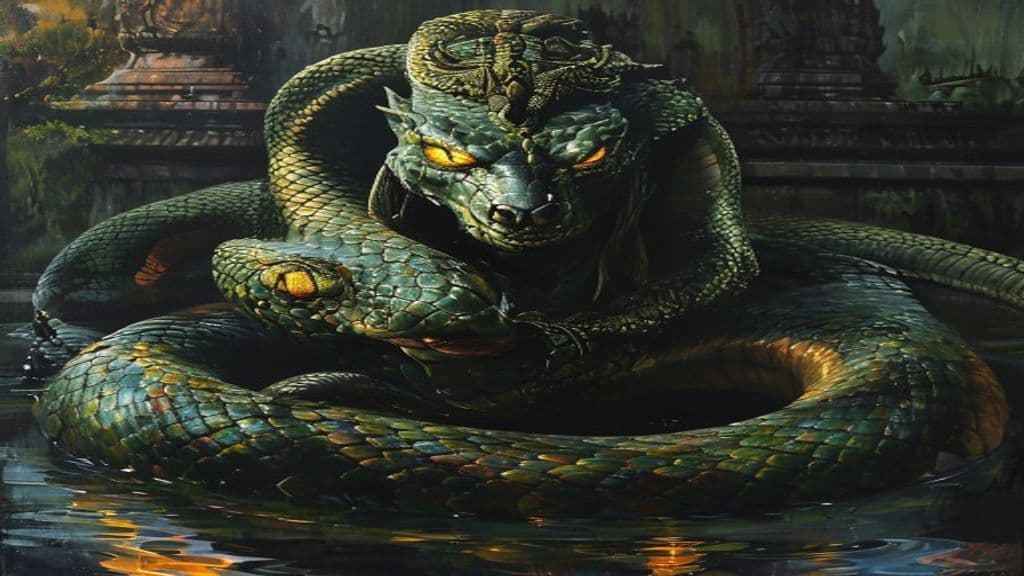
Naga
Divine serpent beings of Hindu, Buddhist, and Jain cosmology — powerful guardians of water, earth, and underground treasures. Revered as deities in South and Southeast Asia.
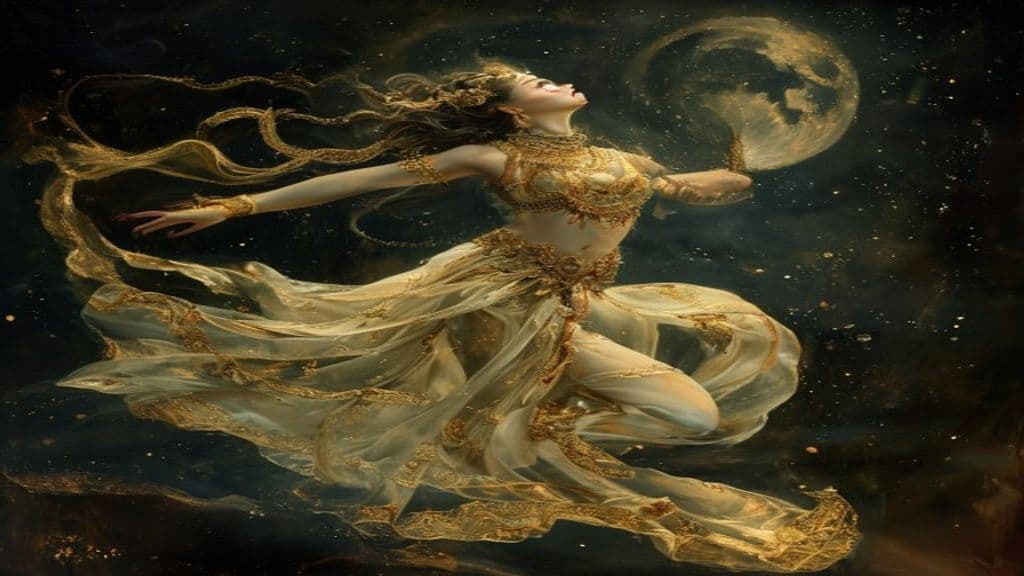
Apsara
Celestial dancers and water nymphs of Hindu cosmology — beautiful semi-divine beings who dance at the court of Indra and, by his command, descend to earth to distract sages from excessive asceticism.
Mama Qucha
Mama Qucha (Mama Cocha) is an Inca water mother deity, personifying the sea and other bodies of water. She functions as guardian of sailors and fishermen, provider of fish and calm seas, and is counted among the principal female elemental mothers in Inca cosmology.
Mama Quilla
Mama Quilla is the Inca goddess of the moon, described in sources as the ‘third power’ in Inca religion. She is presented as daughter of the creator Viracocha, sister and wife of the sun-god Inti, mother of the culture-heroes Manco Cápac and Mama Uqllu, and associated with marriage, the menstrual cycle, protection of women, and the Inca calendar.
Mama Raua
No attested information about an entity named 'Mama Raua' appears in the provided source set. The supplied materials include Inca mythological figures and Māori archival items, but none mention or describe Mama Raua.
Mama Uqllu
Mama Uqllu (Hispanicized Mama Ocllo, Mama Occllo, Mama Okllo) is an Inca mother-figure and culture-founder associated with fertility, marriage, the menstrual cycle, and the transmission of domestic and civilizing arts (weaving, house-building). She is paired with Manco Cápac in foundation myths and appears in variant genealogies as child of either Inti and Mama Killa or of Viracocha and Mama Qucha.
Mamdo Bhoot
The ghost of a Muslim person in Bengali Hindu folk belief — 'Mamdo' deriving from 'Mahmood.' The Mamdo Bhoot occupies a unique place in Bengal's supernatural taxonomy: a cross-religious ghost in a deeply syncretic tradition, with its own distinctive characteristics and ward practices that follow the ghost's religious tradition rather than the observer's.
Mami (disambiguation)
The term "Mami" in the supplied sources is a lexical form found in multiple unrelated contexts (personal names, popular culture, and as part of the compound "Mami Wata"). The provided documents do not support a coherent folkloric entity named solely "Mami." The nearest folkloric referent in the material is the water-spirit complex Mami Wata, mentioned only briefly in the sources.
Mamitu
Mamitu (variants Mammitum, Mammitu, Mammi) is a Mesopotamian goddess associated with the underworld, attested in god lists, theophoric names, and cultic contexts, most likely worshiped primarily in Kutha. Her importance in the broader Mesopotamian pantheon was minor and localized; she is recorded as consort to underworld gods such as Nergal, Erra, or Meslamtaea in different textual traditions.
Mamlambo
Mamlambo is a southern African / Zulu river-deity or water spirit figure described in modern sources as a large, hybrid aquatic monster associated both with deadly attacks attributed by villagers and with themes of seductive wealth similar to Mami Wata. High-profile press reports from 1997 linked mamlambo to multiple deaths at the Mzintlava River near Mount Ayliff in the Eastern Cape.
Mamo (Hawaiʻi mamo / Black mamo)
Mamo in the provided sources refers not to a Tibetan spirit but to two extinct Hawaiian nectarivorous finches (Drepanis pacifica — Hawaiʻi mamo; Drepanis funerea — black mamo). The sources document their appearance, ecology, cultural use of feathers, endemic ranges, and last recorded sightings; they do not describe any supernatural or Tibetan entities called Mamo.
Mamu (sleep demon) — note on source absence
No supplied sources document an Aboriginal Australian entity called Mamu as a sleep demon. The name 'Mamu' appears in the provided materials in other, unrelated senses (a Mesopotamian dream deity; an Indigenous Australian people; a Queensland place name), but no ethnographic or folkloric account of an Aboriginal sleep demon named Mamu is present in the supplied sources.
Mana (Oceanic cultures)
A universal, cosmic force in Oceanic cultures that can be intentionally cultivated or possessed, granting supernatural abilities and power. (Note: - Change Power tier from Primordial to Ancient (as Mana is described as a "supernatural force" that can be cultivated or possessed by individuals, suggesting it's deity-level but not cosmic in scope) )
Manaia (legendary chief)
In Māori mythology, Manaia is a legendary chief and ancestor figure who led a great fleet to attack Ngātoro-i-rangi in New Zealand. (Note: 1. Power tier: Greater (not Primordial) - as Manaia is an ancestor figure with significant military prowess, but not a cosmic or deity-level being. 2. Abilities: While Manaia exhibited fierce rivalry )
Community Record
- [1]Mami Wata. Wikipedia: 'Mami Wata' entry (consulted materials on etymology, appearance, syncretism, and cultural context).wiki
- [2]Mami Wata (Wikidata). Wikidata item Q1888234 (identifier and structured data related to the subject).other
- [3]Panel Discussion: Mami as Muse. Archive.org: 'Mami as Muse' panel (contemporary cultural and artistic engagement with Mami Wata imagery).other
- [4]Around the World in 80 Plays: She Mami Wata & The PxssyWitch Hunt. Archive.org: play listing and program materials referencing 'She Mami Wata' (example of theatrical use of the figure).other