
Accounts in the supplied sources present competing frames: many legends place the Menehune as a pre‑settlement, hidden people who lived in deep forests and valleys of the islands and were credited with constructing ancient works; other scholarship (notably Katharine Luomala as summarized in the packet) argues the legend may be a post‑European contact adaptation linking the Polynesian/Tahitian social term manahune (“lowly people”) with European small‑folk motifs. Census anecdotes (e.g., an 1820 Kauaʻi listing and a folkloric AD 1500 count in Wainiha Valley) appear in secondary summaries but are treated as contested and part of the folklore surrounding origin claims.
Descriptions in the sources vary. Several popular and archival summaries call the Menehune “dwarf‑like” or “little people.” A cited Beckwith summary describes them as “two‑feet‑high pygmy people” who fed on forest plants and lived in caves, while other accounts use the more general label of small, hidden folk. Beyond small stature, physical details are sparse and inconsistent across the provided materials.
Sources consistently attribute exceptional craftsmanship and rapid nocturnal building skill to the Menehune: they are said to build heiau (temples), fishponds (notably the Alekoko/Menehune Fishpond), roads, canoes, houses, and other engineered structures, sometimes completing works overnight; if a task is not finished within one night, they will abandon it. They are described as secretive and primarily active at night; some modern retellings also represent them as mischievous or tricksterlike, while other accounts emphasize their avoidance of regular human settlements. Favorite foods noted in the sources include maiʻa (banana) and fish.

Patupaiarehe
A class of non‑Māori, people‑like supernatural inhabitants in Māori oral tradition who live apart from ordinary human communities in misty, mountainous and forested places. They are portrayed as communities with chiefs and named groups, physically distinct in some accounts, skilled in music and crafts, ambivalent in relation to humans (ranging from hostile to culturally interactive).

Leprechaun
A diminutive, solitary supernatural being from Irish folklore, commonly depicted as a shoemaker who delights in mischief and is associated with hidden or buried treasure. Prominent in later folkloric collections and the 19th‑century literary revival rather than central early mythic cycles.

Taotao Mo'na
Taotao Mo'na (also taotaomona, taotaomo'na) are ancestral spirits in Chamorro belief on the Mariana Islands, regarded as the "people before" who inhabit and protect wild places and mountains. They function as landscape guardians whose favor or displeasure affects living people and whose presence is negotiated through cultural protocols and specialist healers.
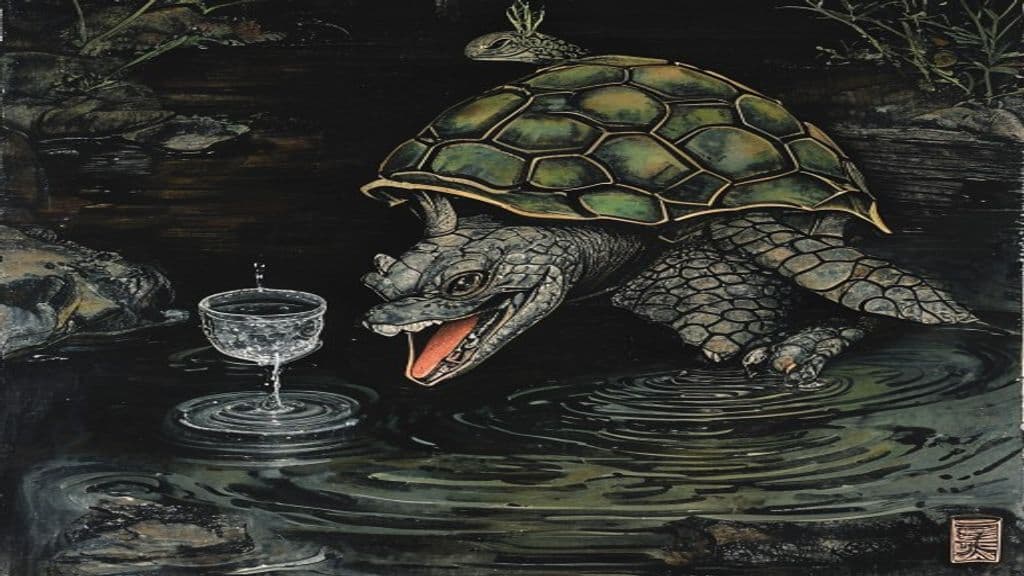
Kappa
A water-dwelling imp of Japanese folklore with a bowl of water on its head. Mischievous but bound by strict codes of politeness; dangerous near rivers.
Ascalapha odorata (Hawaiian)
A nocturnal moth associated with death or misfortune in Hawaiian tradition, possibly tied to Central and South American folklore. (Note: - Summary should note that Ascalapha odorata's association with death/misfortune is found in Central and South American folklore, not explicitly mentioned in Hawaiian tradition. - Power tier: Primordi)
Hawaiian hawk (ʻio)
The Hawaiian hawk, called ʻio (Buteo solitarius), is an endemic raptor of Hawaiʻi and a culturally significant bird mentioned in the Kumulipo and used as a royal emblem ('ʻiolani'). Sources treat it as a native animal species with symbolic importance rather than as an explicitly supernatural being.
Hina
Hina is an onomastic category in Polynesian traditions naming a number of related female divine figures—often sovereign goddesses or queens—who are variously associated with domains such as the moon and, in specific local tales, natural forces like rain or fire. Rather than a single pan‑Polynesian personage, Hina functions as a flexible role filled by distinct local figures (e.g., Sina, Hanaiakamalama).
Hoʻohōkūkalani
Hoʻohōkūkalani (also attested as Kahoʻohokuokalani-i-kau-i-kaheahea) is named in the cited sources as a Hawaiian goddess mentioned in ancient chants; she is described in those brief accounts as a beautiful woman who became a consort to her own father. The available sources are concise and do not provide extended narrative, ritual, or iconographic detail.
Hāloa
An ancestral figure in Hawaiian mythology and cosmology, considered the ancestor of the Hawaiian people. (Note: 1. Power tier: Should be Primordial (as an ancestral figure, Hāloa's role is more cosmic in nature). 2. Sensory cues: Unknown is acceptable, but consider adding a note to indicate that no information )
Kamapuaʻa
Kamapuaʻa is a Hawaiian kupua — a powerful shape‑changing fertility superhuman associated with Lono and especially linked to the island of Maui. Portrayed as a bold, untamed trickster and lover, he shifts between human, hog, tree and fish forms and figures in contests and negotiations with the fire goddess Pele.
Kapo
Kapo is a figure in Hawaiian mythology identified as a goddess associated with fertility, birth, and sorcery/witchcraft. She is attested with the epithet Kapo-ʻula-kīnaʻu (noting red clothing with black spots) and in some folklore summaries is described in narratives featuring a detachable or 'flying' sexual organ.
Kinilau
In Hawaiian mythology, Kinilau is a figure described as the son of Menehune and Luanu'u, with significance related to ancestry. (Note: * Power tier: Primordial (Kinilau being a significant figure in Hawaiian genealogy and having multiple sons suggests he is at a higher power tier) * Sensory cues, wards, weaknesses: Not mentioned in s)
Kupulupulu
Kupulupulu is a Hawaiian patron of canoe builders and seafaring craft attested in multiple ritual and mythic lists. Named among a roster of canoe patrons, Kupulupulu is invoked with offerings and prayers during canoe-building rites and when ritual music announces a canoe's passage.
Laka
A 'popular hero' in Hawaiian mythology, associated with heroic qualities. (Note: * Power tier should be revised to Greater or Ancient since it's referred to as a "popular hero" and is associated with heroic qualities, suggesting a higher power level. * Appearance should state that)
Lohiʻau
Lohiʻau (also spelled Lohiau) is a mortal beloved figure in Hawaiian myth whose relationship with the goddesses Pele and Hiʻiaka drives episodes of the Pele–Hiʻiaka cycle. He functions as the human object of desire and the narrative catalyst for Hiʻiaka's quest to bring him to Kīlauea.
Moʻo (example: Kihawahine)
Moʻo are identified in the supplied sources as Hawaiian lizard deities; the supplied material gives Kihawahine as an exemplar, described as a shapeshifting lizard goddess whose deification originated when the bones of a chiefly daughter were deified and whose home was the wetland pond Mokuhinia on Mokuʻula.
Community Record
- [1]Menehune. Wikipedia contributors, 'Menehune,' Wikipedia, The Free Encyclopediawiki
- [2]Menehune- Mischievous Hawaiian Spirits. USC Digital Folklore Archives, 'Menehune- Mischievous Hawaiian Spirits'folk
- [3]Menehune: Hawaiian Mischief Ghosts. USC Digital Folklore Archives, 'Menehune: Hawaiian Mischief Ghosts'folk
- [4]Menehune (Alekoko) Fishpond, Kauai. To‑Hawaii.com, 'Menehune (Alekoko) Fishpond, Kauai'other
- [5]Kīkīaola. Wikipedia contributors, 'Kīkīaola,' Wikipedia, The Free Encyclopediawiki
- [6]The Legend of the Menehune. To‑Hawaii.com, 'The Legend of the Menehune'other
- [7]Bigfoot: The Menehunes of Kauai, Hawaii. BigfootEncounters.com, 'The Menehunes of Kauai, Hawaii'other