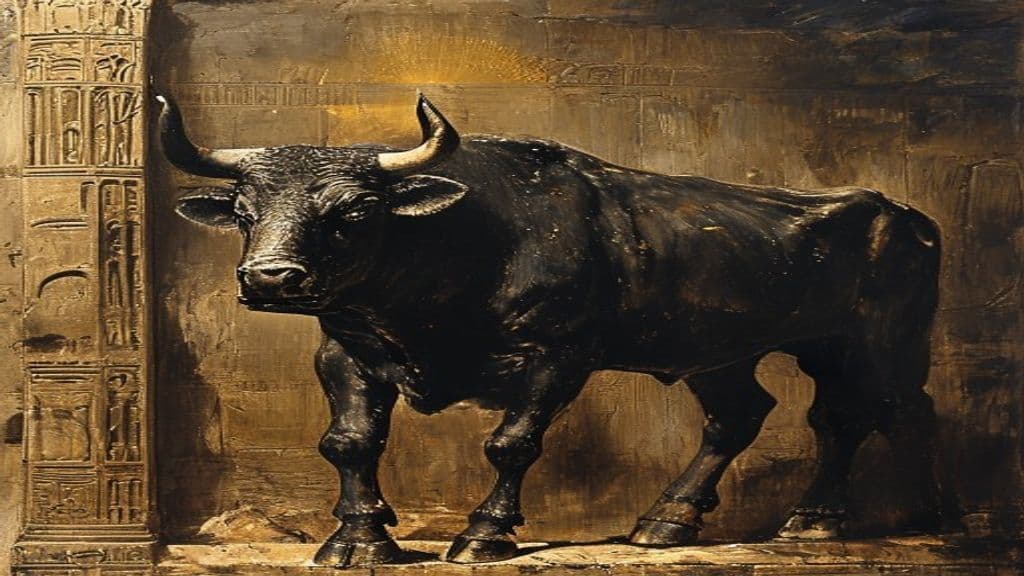
Sources record Mnevis initially as a distinct local bull god of Heliopolis known in Egyptian as Mer-wer or Nem-wer. Over time the cult was theologically assimilated with solar creator theology; Mnevis came to be regarded as the physical manifestation and the ba (divine personality/aspect) of Ra and was linked with the syncretized Atum‑Ra. Priestly traditions later presented genealogical links between Mnevis and other sacred bulls such as Apis.
As a living cult figure Mnevis appeared as a single living bull kept at Heliopolis; replacements were sought after a bull's death and were usually completely black. Iconographically Mnevis is frequently depicted as a black bull bearing a solar disk and uraeus. A modern secondary source notes a specific temple scene depicting a bull-headed, blue‑skinned figure (reported in one modern blog) but that coloration is not widely corroborated in the cited primary summaries.
The living Mnevis bull functioned as an oracular medium whose movements were interpreted as expressions of divine will. The cult understood the bull as embodying solar agency (the ba of Ra) and thus as a physical manifestation of the god. In temple practice the bull was ritually maintained and entitled to two attendant cows representing Hathor and Iusaaset; on death the bull was embalmed and buried with honours in a dedicated necropolis and a replacement was sought and installed.
Weaknesses
- otherNo recorded supernatural vulnerabilities in provided sources
Wards
- otherNo warding practices recorded in the provided sources (Mnevis is a revered cult figure rather than a malign entity)

Hesat
An ancient Egyptian bovine goddess who embodies a nurturing, lactating mother‑figure. Hesat provides milk (called 'the beer of Hesat'), nurses the pharaoh and sacred bull deities, and appears in funerary texts as a regenerating nurse and mother-figure linked to royal ideology and bull cults.

Apis
Apis (also Hapis, Hapi-ankh) is the sacred bull cult of ancient Memphis, Egypt: a living black calf selected by specific markings, housed and worshiped as an embodiment of Ptah in life and assimilated to Osiris after death (Osorapis), later syncretized in Hellenistic times with figures such as Serapis. The Apis bull served as an oracular and healing presence, a symbol of royal strength and a focus of elaborate funerary treatment at Saqqara.
Community Record
- [1]Mnevis — Wikipedia. Wikipedia, 'Mnevis' (summary and cited ancient references)wiki
- [2]Mnevis — Wikidata. Wikidata entry for Mneviswiki
- [3]Met Museum / Archive object record referencing a Mnevis bull tomb. Museum/object record noting provenance 'Said to be from Heliopolis (Ain Shams), tomb of a Mnevis bull'other
- [4]Mnevis in ancient sources — Attalus. Attalus index of ancient references to Mnevis (compilation of classical citations)other
- [5]Mnevis | Amentet Neferet (blog). Modern summary noting an iconographic scene described as 'bull-headed and blue-skinned' (used cautiously; single modern source)other
- [6]Mnevis | Henadology (blog). Modern devotional/neo‑Egyptian summary listing variant modern spellings (Mrwr, Men‑Wer) and interpretationsother
- [7]Hesat — Wikipedia. Wikipedia entry for Hesat (cow goddess related to bovine cult imagery referenced in notes)wiki