
No single cohesive birth myth for Hesat survives in the provided sources. She is attested in Old Kingdom funerary literature (the Pyramid Texts) where texts present her as a mother and nurse to the deceased king and as mother of Anubis, situating her within royal funerary ideology. Over time her cultic identity persisted and was syncretized with broader goddess traditions; by the Ptolemaic period she is recorded as closely associated with Isis. Her origin in the ritual record is therefore as an enduring bovine mother‑goddess embedded in funerary and bull cult practices rather than as the subject of a discrete cosmogonic birth narrative.
Hesat is depicted in the form of a cow. Ancient attestations describe her as usually portrayed as a white cow—whiteness being symbolically linked to purity and to the milk she produces. Iconographic evidence is scarce but includes later‑period scarab inscriptions and a small number of images showing a recumbent or standing cow form; she is represented within the wider corpus of Egyptian bovine goddesses and sometimes shares general bovine attributes (horns, maternal posture) common to that group. Surviving attestations emphasize bovine form and color rather than a fixed human‑headed hybrid iconography in the provided sources.
Hesat's principal power is life‑giving lactation: she provides milk to humanity (explicitly called 'the beer of Hesat' in the sources) and suckles the pharaoh and several sacred bull deities. In the Pyramid Texts she functions as a nurse and regenerating mother for the deceased king and is described as the mother of Anubis, linking her to funerary protection and royal rebirth. She is integrated into living bull cult practice (notably with Mnevis at Heliopolis), including the burial of mothers of Mnevis bulls in an area dedicated to her. Modern esoteric or electrical reinterpretations exist in contemporary sources but are not attested in the ancient textual and archaeological record cited here.
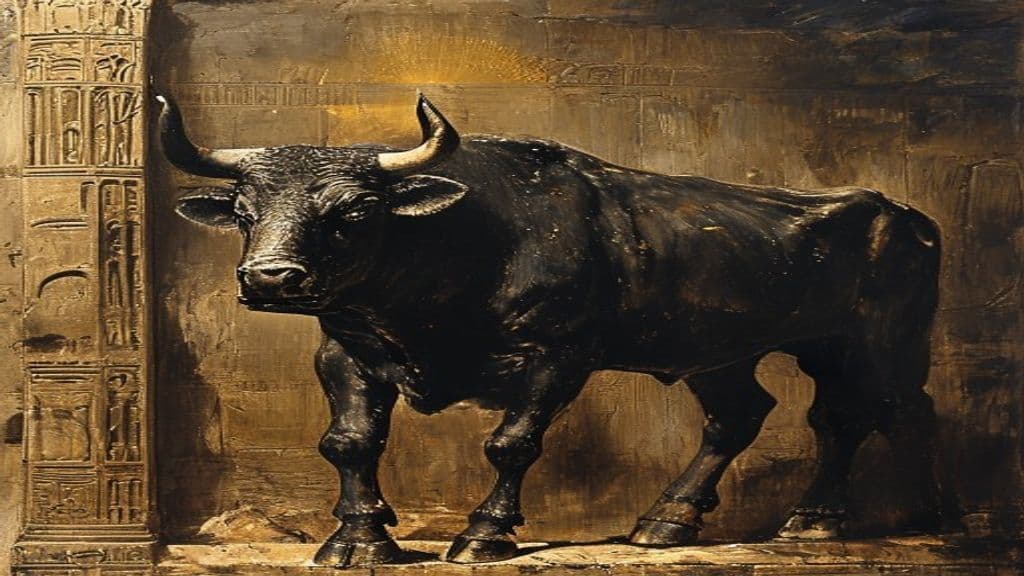
Mnevis
Mnevis is the ancient Egyptian sacred bull cult of Heliopolis (On), regarded as the living manifestation or ba of the solar god Ra and later assimilated with Atum‑Ra. A single living bull served as an oracular and cultic presence, entitled to ritual attendants and embalmed and buried with honours in a dedicated necropolis; the cult persisted into the late Pharaonic and classical periods and was one of the few cults tolerated during Akhenaten's reign.
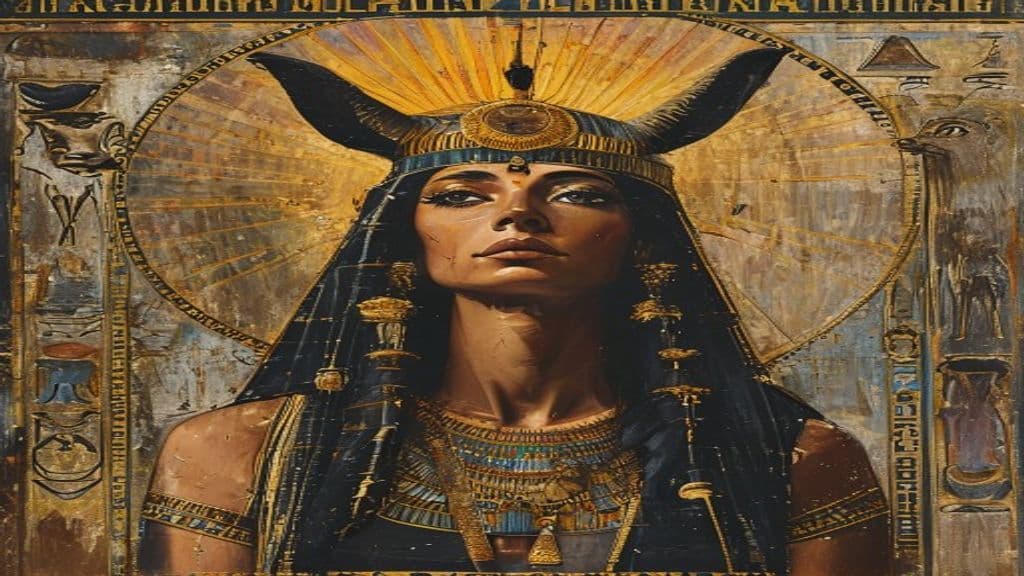
Hathor
Hathor (Ancient Egyptian ḥwt-ḥr, 'House of Horus') is a major polyvalent goddess of ancient Egypt associated with the sky, maternal and royal motherhood, music, joy, fertility, and the Eye of Ra; she appears in multiple local manifestations and assisted the deceased into the afterlife.
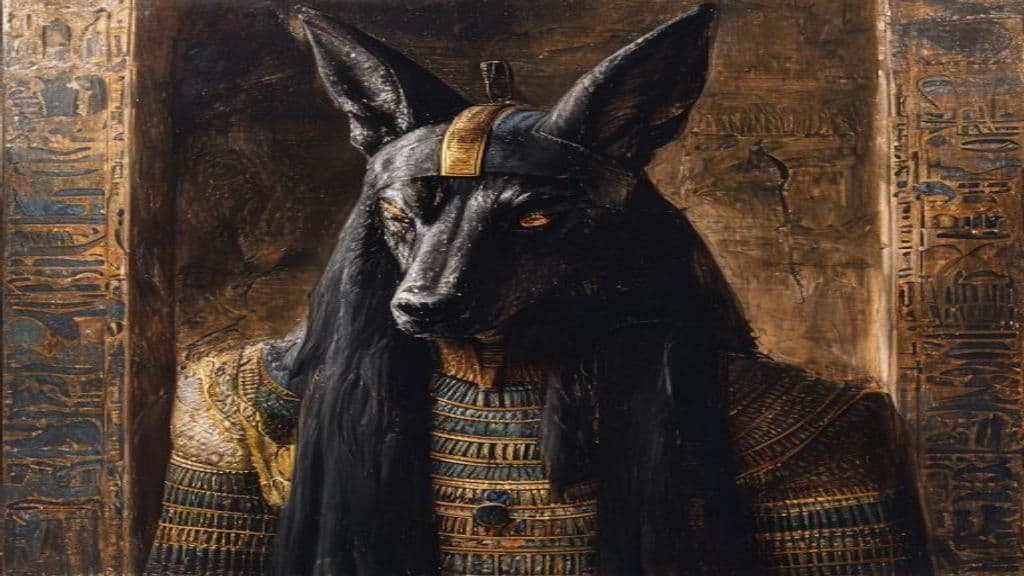
Anubis
Anubis is the ancient Egyptian funerary deity associated with embalming, protection of graves, and guiding the dead into the afterlife. Depicted as a canine or a man with a canine head and shown in black, he presides over mortuary rites and attends the judgment of the deceased, though he is not the central subject of many major myths.
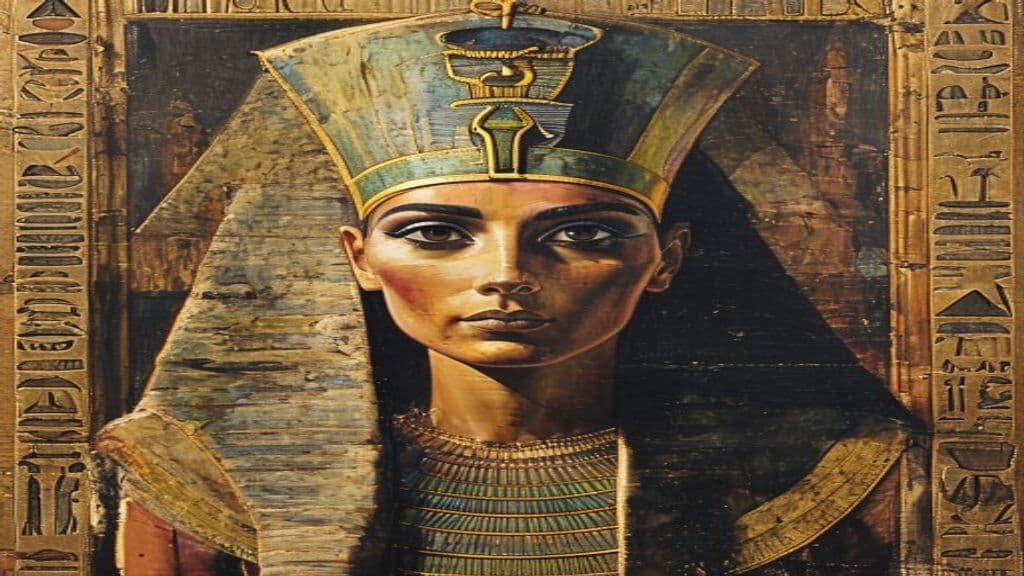
Isis
Isis is a major goddess of ancient Egyptian religion, a member of the Heliopolitan Ennead who functions as sister and consort of Osiris, mother and protector of Horus, a funerary and royal protector, and a locus of potent magic whose cult spread through the Hellenistic and Roman Mediterranean.

Apsara
Celestial dancers and water nymphs of Hindu cosmology — beautiful semi-divine beings who dance at the court of Indra and, by his command, descend to earth to distract sages from excessive asceticism.
Community Record
- [1]Hesat - Wikipedia. Wikipedia entry 'Hesat' (accessed source provided in research notes).wiki
- [2]Hesat | Henadology. Henadology: 'Hesat' (page excerpt discussing depiction, name etymology, and Pyramid Text utterance reference).other
- [3]Hesat | GodElectric.org (modern reinterpretation). GodElectric entry on Hesat (modern esoteric reinterpretation; included in notes and treated as speculative).other
- [4]SaturnianCosmology mirror: Cow page (mirror). Mirror copy material referencing bovine goddess imagery (used in research notes as modern speculative source).other
- [5]Hesat - Mythlok. Mythlok overview page on Hesat (secondary compilation used in research notes).other
- [6]Hesat - Godchecker. Godchecker entry summarizing Hesat (secondary popular reference included in research notes).other