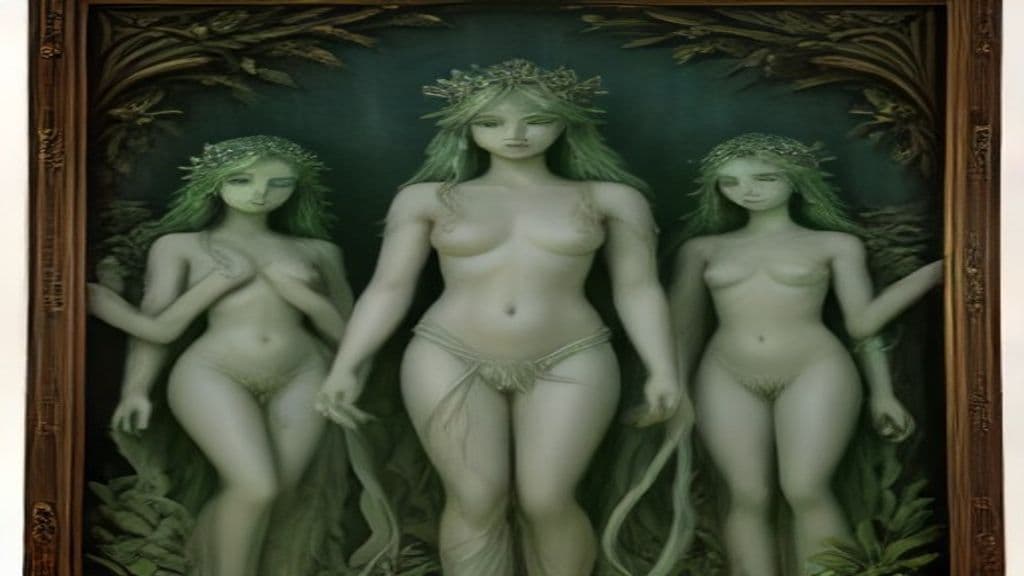
According to Hesiodic and later Greek tradition summarized in the supplied sources, the Oceanids are daughters of the Titans Oceanus (the world-encircling river) and Tethys. Hesiod gives their number as three thousand—a proverbial way of indicating they are innumerable—and says they are "dispersed far and wide," serving the earth and the deep waters. Some named Oceanids function as eponyms or genealogical mothers of other sea- and river-associated figures (for example, Doris is named as mother of the Nereids; Styx and Metis appear in genealogies), while many others are treated as a collective class of nymphs tied to local springs, places, or abstract qualities.
Ancient literary sources present the Oceanids as nymphs—youthful female divine or semi-divine figures. Hesiod calls them "neat-ankled daughters of Ocean" and praises them among goddesses, conveying the conventional image of idealized youthful women in classical poetry. Later artistic receptions (Romantic poetry and 19th-century painting) sometimes add features such as wings or foam-like imagery, but these are later interpretive variations and not part of the core ancient textual description.
The sources portray the Oceanids in varied, largely non-hostile roles rather than as a uniformly empowered class. As a group they are associated with springs and other watery features and may be petitioned by mortals (for example, the Argonauts appeal to the "nymphs, sacred of the race of Oceanus" to reveal a spring). Hesiod assigns them a custodial role over youths alongside Apollo and the Rivers; some Oceanids serve as companions or handmaids to goddesses (Artemis selects Oceanid maidens as her choir). Individual Oceanids are named as mothers or wives in divine genealogies (e.g., Metis, Doris, Styx), and some personify abstract qualities (Metis = wisdom, Plouto = wealth, Tyche = fortune). The supplied material does not ascribe a uniform miraculous act (such as automatic spring-creation) to every Oceanid; rather, petition and poetic episodes record specific interventions.
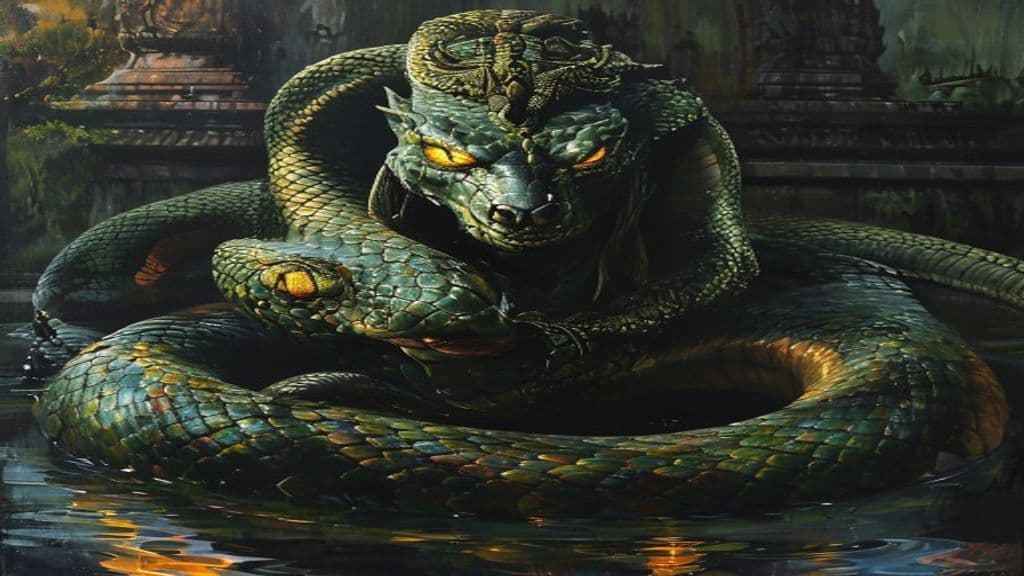
Naga
Divine serpent beings of Hindu, Buddhist, and Jain cosmology — powerful guardians of water, earth, and underground treasures. Revered as deities in South and Southeast Asia.
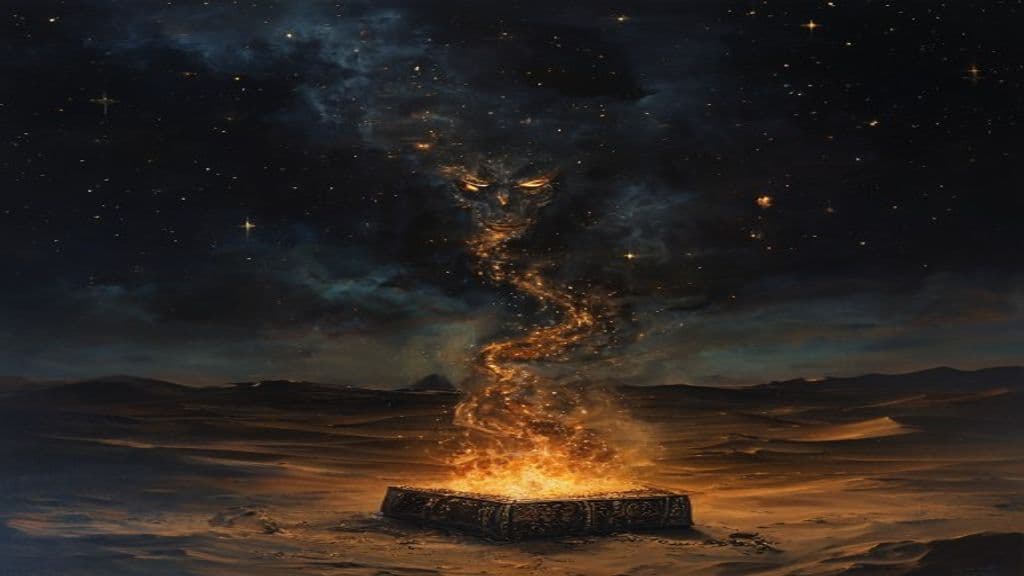
Djinn
The class of supernatural beings created from smokeless fire in Islamic cosmology — a parallel civilization to humanity, capable of belief or unbelief, with their own prophets, society, and judgment before God.
Community Record
- [1]Oceanids — Wikipedia. Wikipedia, 'Oceanids' entry (accessed source summaries provided)wiki
- [2]Wikidata: Oceanids. Wikidata item Q182406 (summary metadata on Oceanids)other
- [3]The Oceanids (archival compilation). Archive compilation 'The Oceanids' (secondary/visual and literary compilation as provided)other
- [4]Argonautica and related mythic episodes (as summarized in sources). Summary referencing Apollonius of Rhodes' Argonautica (as cited in the supplied material) describing petition for a springliterary
- [5]Homeric Hymn to Demeter and Hesiodic accounts (as summarized in sources). Summaries of Homeric Hymn to Demeter and Hesiod on Oceanids' role at Persephone's abduction and their number/dispersalliterary
- [6]Slavic mermaid (contextual archive). Archive item on mermaid traditions (included in provided materials for general comparative context only)other
- [7]The Rape of Proserpina — archival media. Archive media related to mythic episode (contextual source provided)other