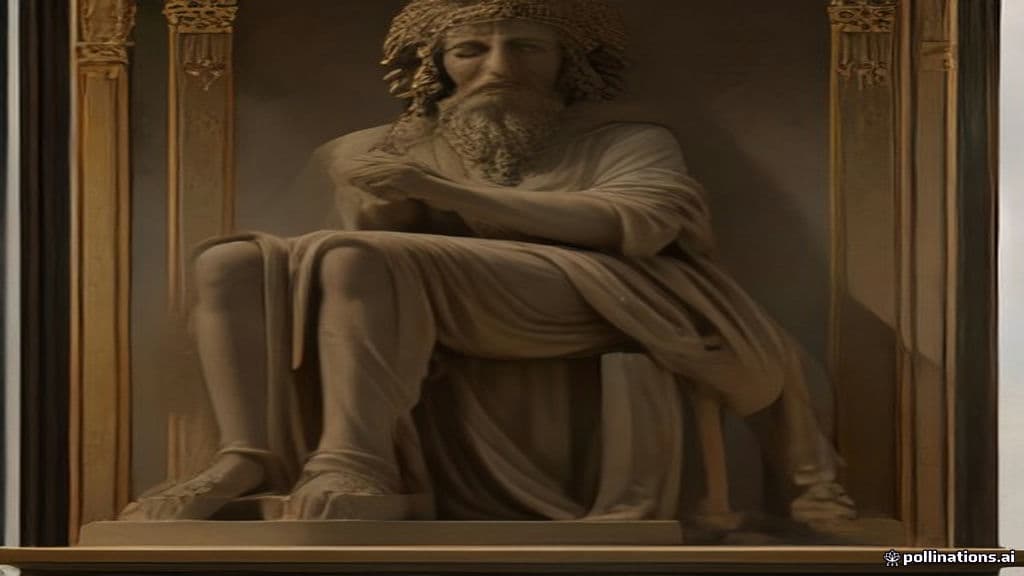
In Greek local tradition Ogyges appears as an aboriginal or foundational king: often described as king of the Ectenes, the earliest inhabitants of Boeotia, and eponymous for Thebes (early poets call Thebes 'Ogygian'). Alternative accounts make him the first king of Attica. He functions chiefly as the named human referent for an ancient catastrophic inundation—the Ogygian deluge—used by ancient chronographers as a terminus for early historical reckoning. Genealogical attributions vary across sources: some make him son of Poseidon, others of Boeotus or Cadmus, one tradition makes him son of Zeus and Eurynome, and a late witness (Theophilus) even lists him among the Titans; these variants are recorded in the sources rather than forming a single settled parentage.
Ancient sources and the supplied summaries represent Ogyges primarily as a mythic human king and eponymous ancestor rather than as a consistently described corporeal apparition. The material contains no sustained physical description; later or comparative mentions of other figures called 'Og' or 'Ogias' (e.g., in Josephus or non‑Greek traditions) are separate identifications and do not provide a unified Greek portrait of Ogyges.
The sources do not ascribe a catalogue of supernatural powers to Ogyges. His principal attributed 'action' is his kingship at the time of the Ogygian deluge and, in narrative, survival of that cataclysm while many perished. Beyond foundational and genealogical functions (as an eponymous ancestor and temporal marker), sources do not record consistent magical or divine abilities, though some genealogical links to gods or Titans imply elevated status in certain traditions.
Weaknesses
- otherNo attested weaknesses — sources supply no rituals or apotropaic measures specific to Ogyges
Wards
- otherNo attested wards — the tradition treats Ogyges as a primordial eponym and flood‑name rather than an active supernatural threat requiring protection
Deucalion
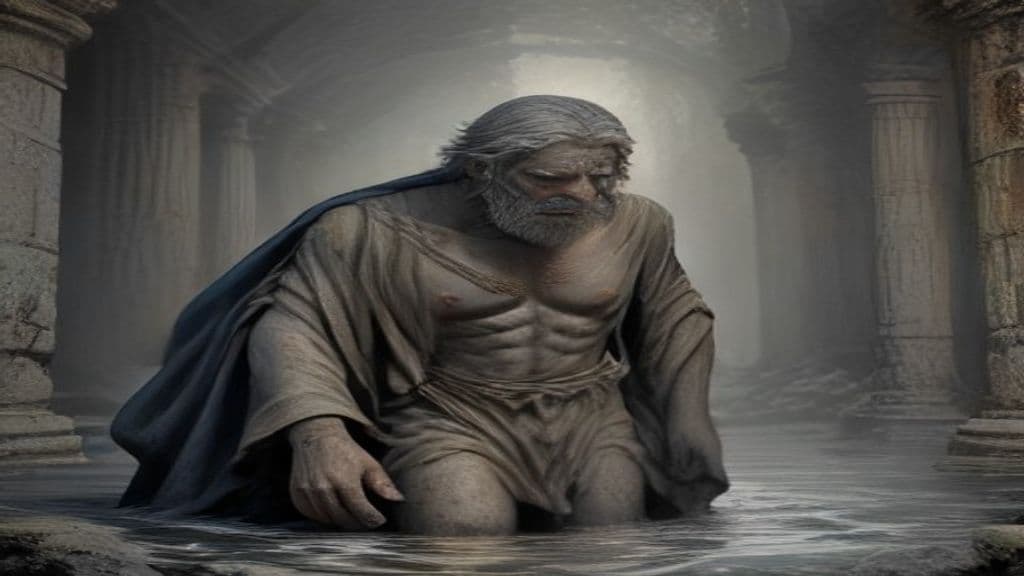
Deucalion (Ancient Greek: Δευκαλίων) is a mortal culture-hero in Greek myth who survives a divinely-sent primeval flood and, with his wife Pyrrha, re-populates the world by throwing stones that become humans. He is portrayed as a king, founder of cities and temples, and son of Prometheus in many traditions.

Phoroneus
Phoroneus is a primordial culture-hero and early king of Argos in Classical Greek tradition. Ancient authors credit him with gathering scattered families into a community, instituting worship (notably of Hera), introducing fire and the forge, founding law, and receiving ongoing cultic veneration at an eternal fire and tomb-sanctuary in Argos.
Titans
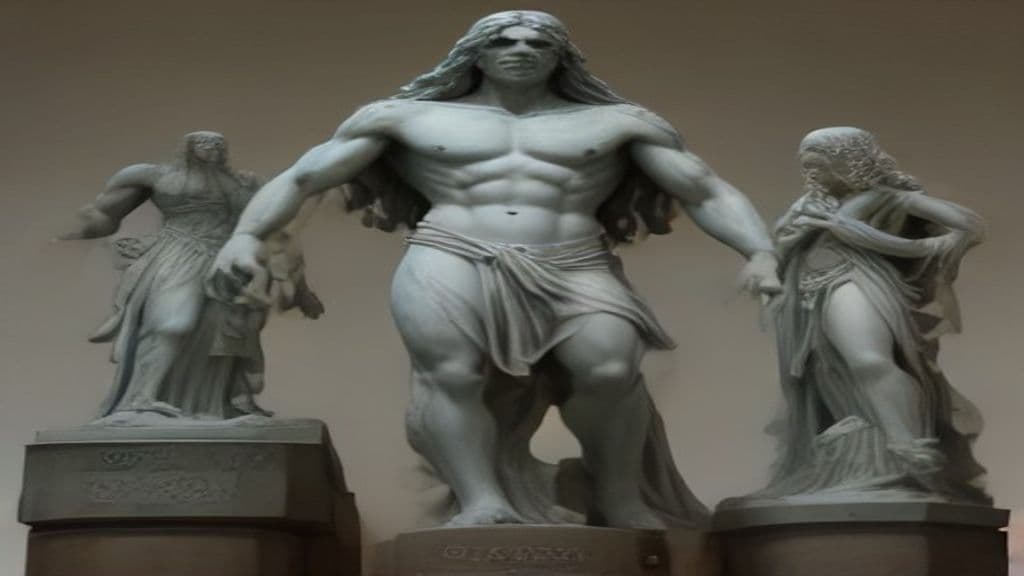
A generation of powerful primordial divine beings in Greek myth who preceded and were overthrown by the Olympian gods. They function as progenitors of many cosmic forces and later become chthonic powers confined beneath the earth (Tartarus) though some traditions allow certain Titans to remain free.
Community Record
- [1]Ogyges (Wikipedia). Wikipedia: 'Ogyges… is a primeval mythological ruler in ancient Greece, generally of Boeotia...' (entry on Ogyges)wiki
- [2]Pausanias (summary cited in sources). Pausanias (summarized): 'The first to occupy the land of Thebes are said to have been the Ectenes, whose king was Ogygus... From his name is derived Ogygian...' (as cited in the compiled notes)literary
- [3]Attalus: Ogyges in ancient sources. Compilation of ancient references to Ogyges and variant traditions (genealogies, place‑names, flood accounts).other
- [4]Saint Augustine, City of God XVIII.8 (citing Varro). Augustine cites Varro's chronology with the Ogygian flood as a terminus for historical narratives.literary
- [5]Chronographers (Varro; Africanus) cited in summaries. Varro's date (2136 BCE) and Africanus' date (1793 BCE) for the Ogygian flood and Africanus' note that Attica remained without a king for 189 years after the flood (as summarized in modern references).other