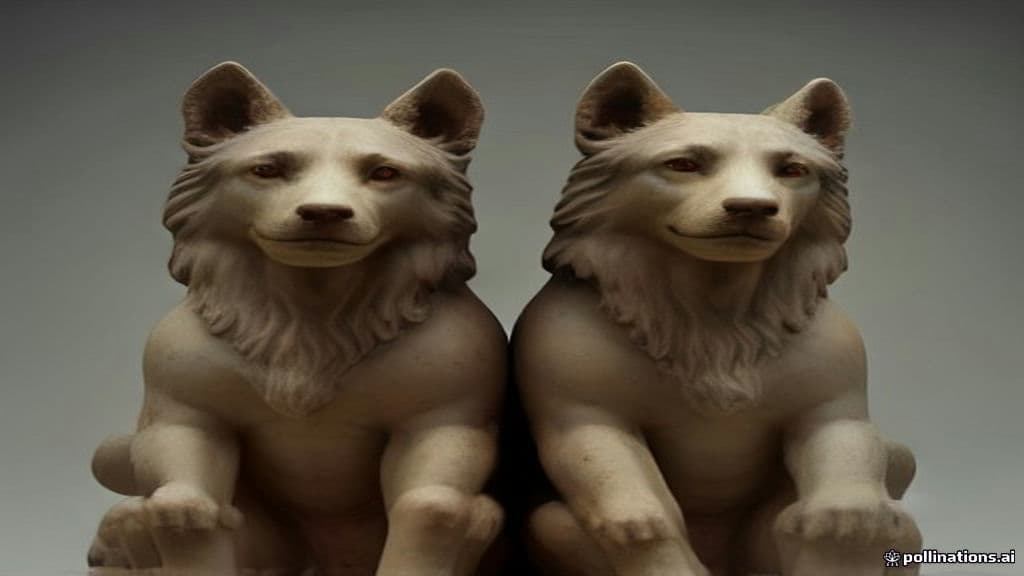
Orthrus is presented in the mythic corpus as a monstrous offspring of the primordial monsters Echidna and Typhon. As such he belongs to the family of hybrid chthonic monsters produced by that pair. Hesiod and later mythographic tradition place Orthrus in this lineage and also name him as the father of other monstrous beings (e.g., the Sphinx and the Nemean Lion in Hesiod), though maternal identity for those offspring is uncertain in the sources.
Literary and artistic sources consistently present Orthrus as a multi-headed dog, with Apollodorus describing him as two-headed. Artistic depictions vary: many show two heads, some show a single head, and at least one early Cypriot relief depicts three heads. The tail is usually shown as a normal dog tail in many representations, while some vase-paintings and reliefs portray a serpentine tail. Other iconographic variants show Orthrus wounded, pierced by arrows, or lying on his back.
Orthrus functions primarily as a guardian-beast: he is charged with watching Geryon's herd of red cattle on Erytheia and serves as a watch/guard hound attached to his master (Eurytion) and to the herd. His parentage (Echidna and Typhon) situates him among dangerous, unnatural monsters in Greek mythic taxonomy. In the narrative of Heracles' tenth labour Orthrus is overcome and killed by Heracles (Apollodorus states Heracles killed him with his club), though visual traditions sometimes portray arrows as the weapon causing his death. Hesiod additionally records Orthrus as sire of later monsters, linking him genealogically to other mythic threats.
Weaknesses
- conditionmartial defeat by a hero (killed by Heracles with club)
- othericonographic tradition of death by arrows (artistic variant rather than prescriptive weakness)
Wards
None recorded.
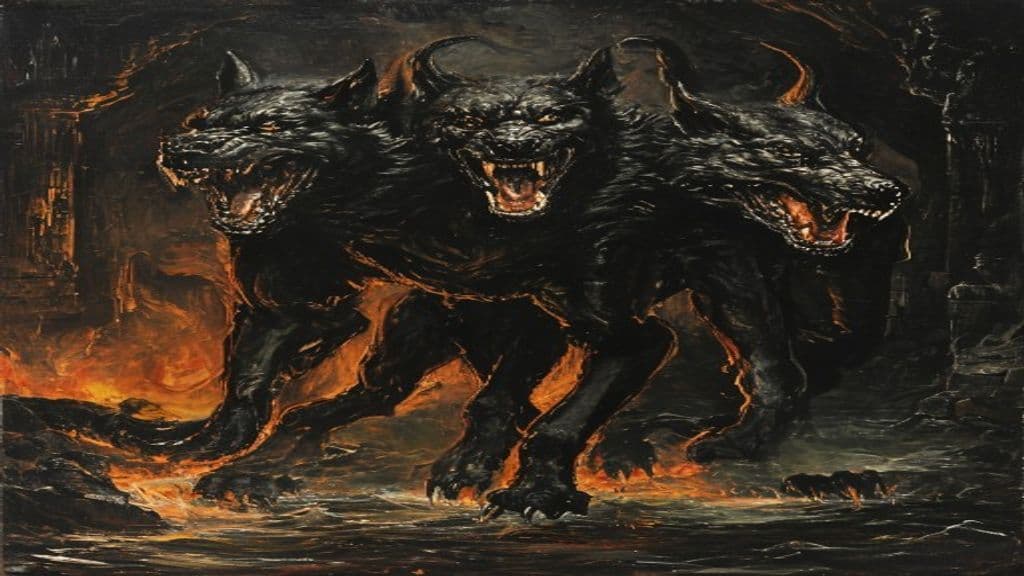
Cerberus
The three-headed hound of Hades, guardian of the underworld's gates — welcoming the dead in but allowing no shade to leave and no living mortal to enter uninvited.
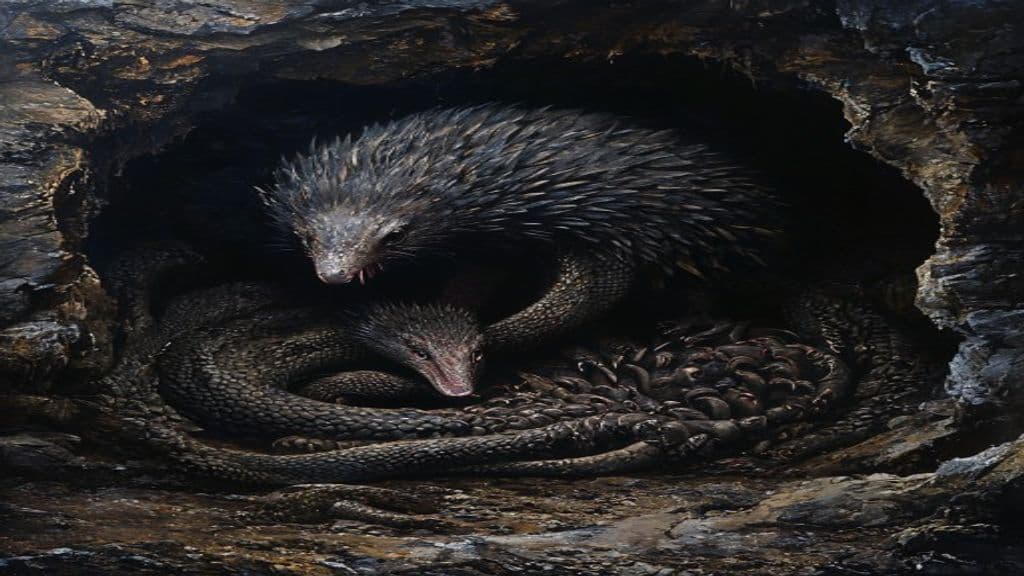
Echidna
The 'Mother of Monsters' — half beautiful woman, half enormous serpent — who with Typhon gave birth to nearly every great monster of Greek mythology.
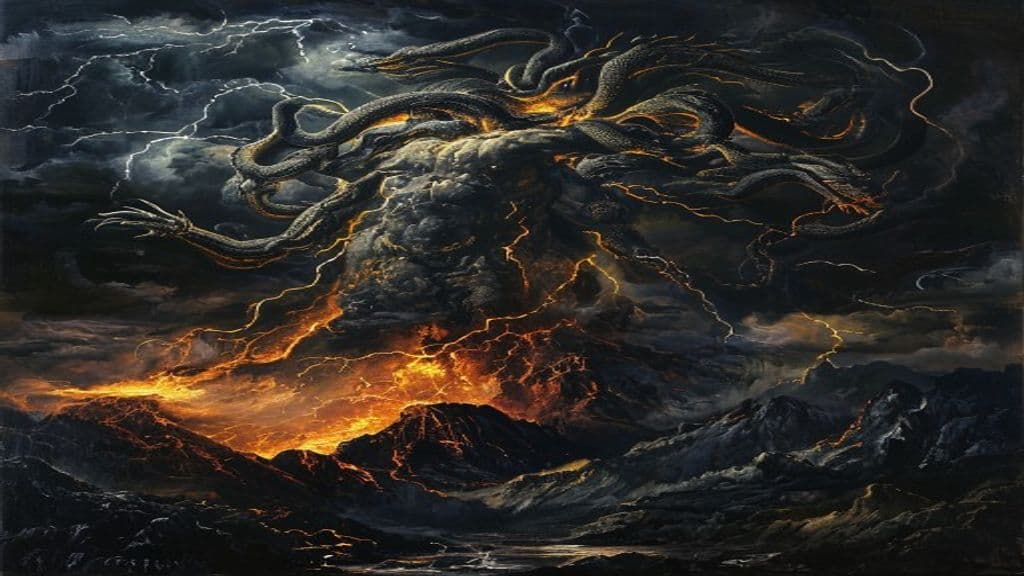
Typhon
The last great monster of Greek mythology — a vast, fire-breathing giant whose shoulders sprouted a hundred serpent heads, nearly toppling Zeus from Olympus.

Nemean Lion
A singular monstrous lion of Greek myth that terrorized the region of Nemea and was slain by Heracles as the first of his Twelve Labours. Noted for an impervious golden hide and claws 'sharper than mortal swords,' its pelt becomes Heracles' emblem and protective mantle.
Geryon
Geryon is a monstrous, martial figure from Greek heroic-age mythology who dwells on the far-western island Erytheia and guards a valuable herd of red cattle; he is best known as the opponent slain by Heracles in the Tenth Labour. Classical sources present multiple, conflicting physical descriptions; later reception (notably Dante) recasts the name as an allegorical composite monster.
Community Record
- [1]Orthrus — Wikipedia. Wikipedia entry 'Orthrus'wiki
- [2]Orthrus — Wikidata. Wikidata item Q248704other
- [3]Apollodorus and Hesiod traditions (summarized in provided notes). Paraphrase of Apollodorus and Hesiod as summarized in the supplied research notesliterary
- [4]Archived multimedia and miscellaneous reuses (name echoes). Archive items listed in the supplied research notes documenting modern reuses of the name 'Orthrus' (non-mythic)other