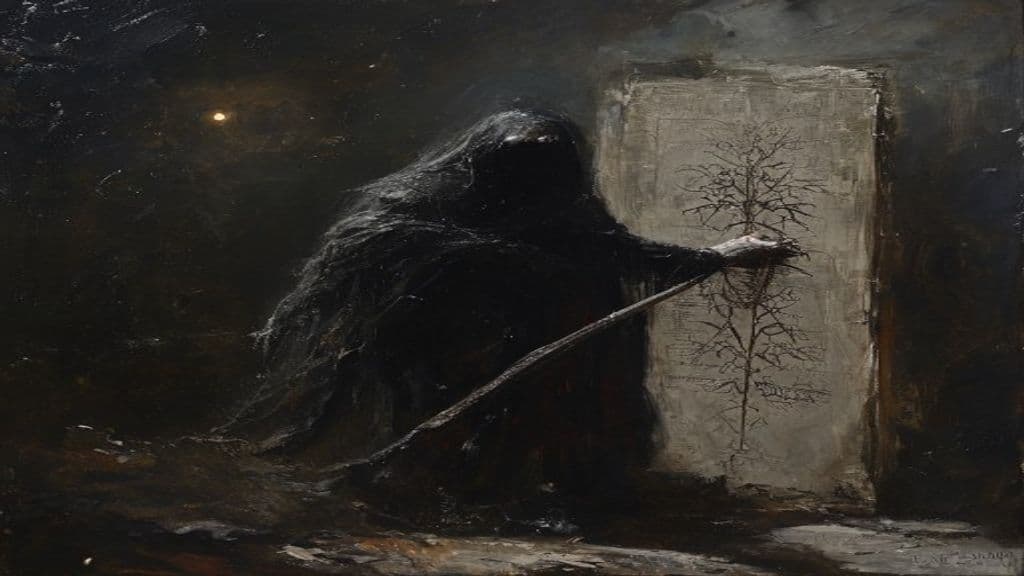
No detailed physical description is provided in the source material.
The Płanetnik may have control over or be able to manipulate weather patterns, embodying atmospheric phenomena.
Weaknesses
- conditionExcessive sunlight
- substanceFire
Wards
- conditionInhabitants of areas where the Płanetnik dwells may be immune or resistant to its powers.
Pyttius
Pyttius is attested in the provided sources solely as a human genealogical figure in Greek mytho-historical tradition, named as the father of Amarynceus, a chief of the Eleans. The sources do not present Pyttius as supernatural, nor do they record deeds, cult, appearance, or rituals associated with him.
Päivätär
Päivätär is the female personification of the Sun in Finnish traditional mythology, depicted in runic songs and Kalevalaic material as a beautiful lady who owns the Sun's silver, spins and weaves silver yarns into clothes, gives jewellery to maidens when petitioned, and appears in regional myths connected to fire, wasps, and mythic households such as Päivölä.
Pökkö / Pekko
No reliable information about a Finnish household spirit named Pökkö or Pekko is present in the supplied sources. The provided materials reference unrelated items (a manga page, an Indonesian island, a podcast mentioning a children's book title, and an academic draft) and do not document folkloric details for this name.
Púca (Pooka / Puca)
A long-standing folkloric spirit from Irish and related Celtic traditions, the púca is a shape‑shifting, ambivalent supernatural being commonly associated with rural and maritime communities and said to bring both good and ill fortune.
Pārśvanātha
Pārśvanātha (also Pārśva, Pārasanātha) is the 23rd of the 24 tīrthaṅkaras in Jainism, venerated as a perfected spiritual teacher (siddha/jina) whose life and teachings model the path of renunciation and liberation. Historians commonly date his life to between c. 8th and 6th century BCE and consider him the earliest tīrthaṅkara with a historical nucleus in later hagiography; he is credited in scholarship with founding a proto-Jaina ascetic community later reformed by Mahāvīra.
Pīwakawaka
The pīwakawaka is the Māori name for the New Zealand fantail (Rhipidura fuliginosa), a small, restless insectivorous bird widely familiar across Aotearoa and present in Māori oral tradition where it appears both as common wildlife and as an actor in mythic narratives (notably a role in a Māui story about the origin of death).
Pūkas
The available sources do not document a Baltic supernatural being named Pūkas. References found in the provided material treat Pūkas as a modern Lithuanian proper name used for a privately owned broadcasting company (founded 1991; radio since 1996; television since 2001; based in Kaunas) and as a surname borne by contemporary individuals mentioned in news reports. No folkloric origin, appearance, powers, rituals, or cosmological placement are attested in the supplied sources.
Q'ero (tradition)
Q'ero (Q'iru) denotes a Quechua-speaking high-Andean people of the Paucartambo province, Cusco Region, Peru, whose living oral literature and ritual practice center on ayni (reciprocity), mountain deities (apus), Pachamama, and specialist practitioners called paqos. The term indexes a cultural-religious tradition rather than a single supernatural being.
Q'ursha
Legendary dog in Georgian mythology, associated with the culture hero Amirani. (Note: 1. Power tier: Based on the description of its abilities (thunderous bark, extraordinary agility and power), it should be classified as a Greater entity, not Minor Spirit. 2. Appearance: The source ma)
Qaban
Qaban is not attested in the provided sources as a supernatural being. The string appears in the supplied corpus as a toponym (Iranian village names) and as an element of personal names in diverse documentary contexts; no myths, powers, appearance descriptions, rituals, or folkloric narratives for a supernatural 'Qaban' are present in these sources.
Qailertetang
Qailertetang is an Inuit sea-associated figure who functions both as a mythic caretaker of marine animals, fishers, and hunters and as a ritual persona enacted during Quviasukvik (the Inuit New Year). She is described as dwelling with Sedna at the bottom of the sea and in performance appears as gigantic masked figures who invoke winds, pair community members, and provide divinatory murmurs.
Qallupilluit
A shoreline-dwelling supernatural being in Inuit oral tradition that inhabits the liminal space between sea and ice. Presented primarily as a cautionary figure, the Qallupilluit lures and steals children who approach hazardous sea-ice edges.
Community Record
- [1]Płanetnikwiki