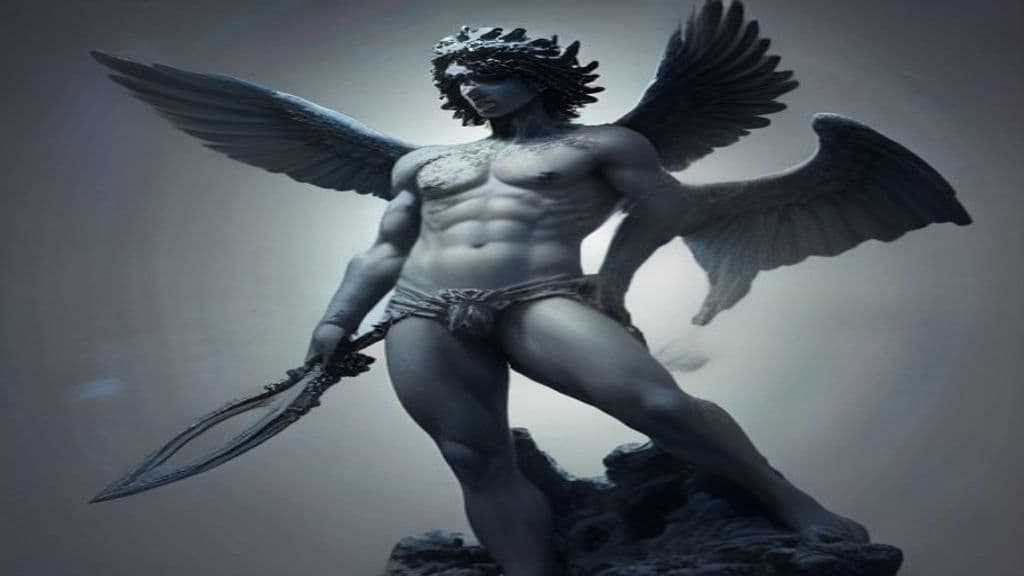
Perseus is presented in Greek myth as the son of Zeus and the mortal Danaë. King Acrisius of Argos, forewarned by oracle, cast Danaë and the infant Perseus into the sea in a wooden chest; they came ashore on Seriphos where Dictys raised Perseus and Polydectes later became his antagonist. As a demigod-hero he undertakes quests (notably to obtain the Gorgon's head) aided by gods—Hermes, Athena, and in some accounts Hades—and is described in literary and later summarizing sources as the legendary founder of the Perseid dynasty and an ancestor figure in heroic genealogies.
Narrative and iconographic sources emphasize Perseus’s heroic youthful figure rather than detailed physical description. Customary attributes in the mythic accounts and later art include winged sandals (associated with Hermes), a harpe or curved sword for beheading Medusa, Hades’s helm of darkness (rendering the wearer unseen), Athena’s polished shield (used reflectively), and a kibisis (a knapsack) to carry the Gorgon's head. Sources note variant traditions about the precise provenance of some items.
Perseus himself is fundamentally mortal and notable for bravery, skill, and cunning rather than inherent supernatural powers; his successes depend on divine patronage and magical implements. In the canonical narrative he uses Hermes’ winged sandals to traverse distance, Hades’s helm to become unseen, Athena’s shield as a reflective surface to avoid Medusa’s gaze, and a sword to behead Medusa. The Gorgon's severed head retains a petrifying power even in death and functions as a potent supernatural implement in the tale. Perseus also uses trickery (e.g., seizing the Graeae’s shared eye) to obtain necessary information.
Weaknesses
- conditionFundamental mortality and reliance on divine aid
- otherVulnerability to normal mortal limits (age, injury) as implied by sources
Wards
None recorded.

Medusa (the Gorgon)
Medusa, also called Gorgo or the Gorgon, is one of the three Gorgons in ancient Greek mythology. She is described as a mortal woman whose hair is composed of living snakes and whose gaze turns onlookers to stone; she is usually named as a daughter of the sea-associated figures Phorcys and Ceto and sister to Euryale and Stheno.
Hermes
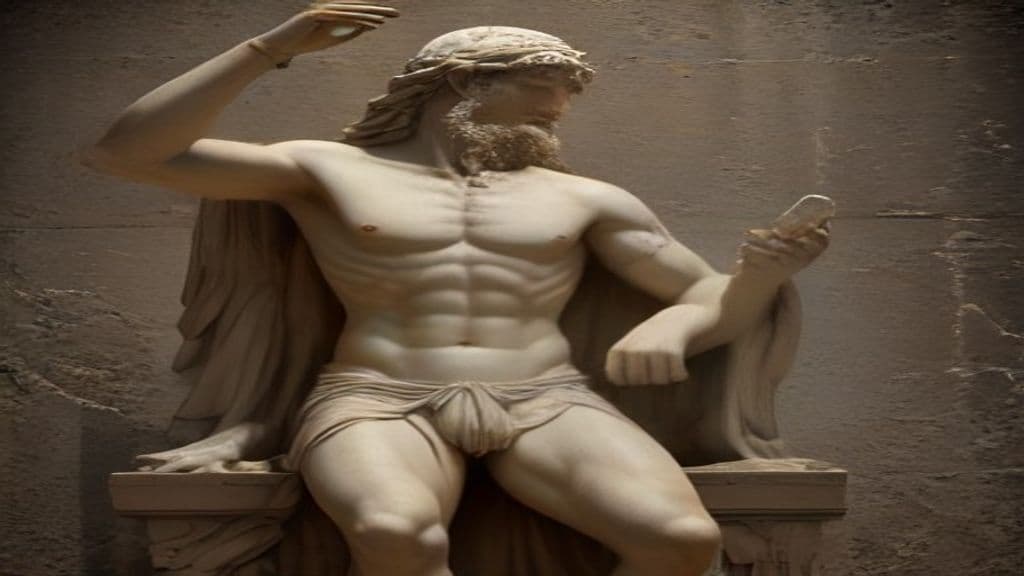
Hermes is an Olympian god in ancient Greek religion who functions as the herald of the gods, an intermediary between mortal and divine realms, and a psychopomp guiding souls to the afterlife. He is associated with travel, boundaries, commerce, thieves, oratory, and liminality; in Hellenistic contexts he is syncretized with Egyptian Thoth as Hermes Trismegistus.

Athena
Athena is a major ancient Greek goddess associated with wisdom, handicraft (notably weaving), and warfare; she serves as a tutelary protector of cities—most prominently Athens—and is central to myth, cult, and civic identity in the Greek world.
Community Record
- [1]Perseus - Wikipedia. Perseus. Wikipedia. (Article summarizing mythic life, parentage, gifts, quests, and dynastic role.)wiki
- [2]Perseus (constellation) - Wikipedia. Perseus (constellation). Wikipedia. (Attests Perseus as one of Ptolemy's 48 ancient constellations and among 88 modern constellations.)wiki
- [3]Perseus - Wikidata. Wikidata entry for Perseus (mythological figure).other
- [4]Perseus Digital Library. Perseus Project / Digital Library (repository for Greek and Latin texts; reference for classical sources and variants).other
- [5]Perseus and Bellerophon – Mythoi Koinoi (chapter). Summarizing account of Perseus’s mythic exploits and comparative placement among early Greek heroes.other
- [6]Perseus - Biblical Cyclopedia. Reference summary of Perseus in encyclopedic compendia.other
- [7]Archive: Episode 8 - Medusa, Perseus, and Pegasus - Blood Moon - 9.23.15. Cultural/media reference discussing Perseus and associated motifs (archival media).other