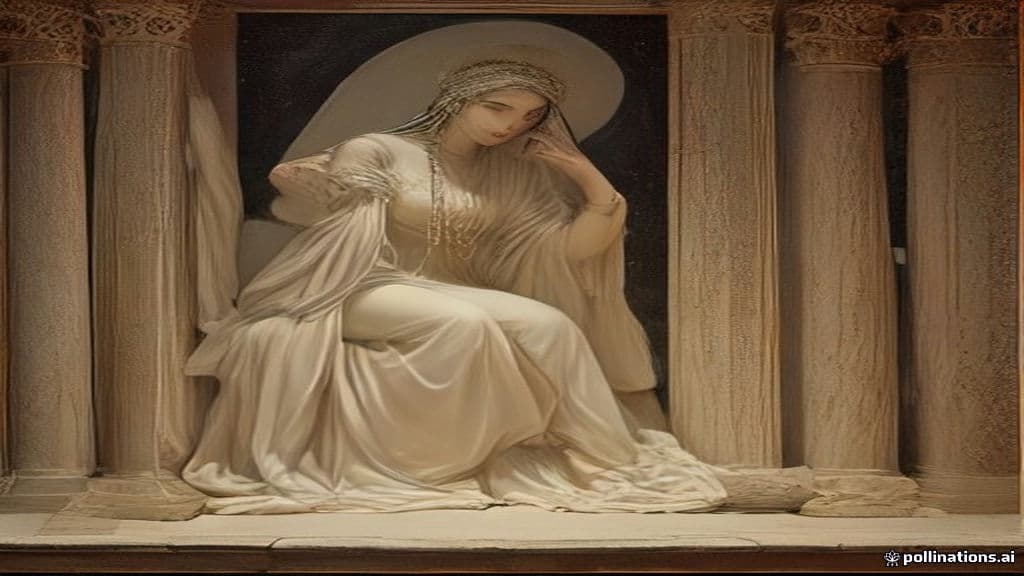
There is no single origin story for Polycaste as the name applies to different women in separate myths. In Homeric tradition (Odyssey) a Polycaste is a daughter of Nestor of Pylos who receives and bathes the visitor Telemachus. Genealogical/mythographic sources record a Polycaste as daughter of Lygaeus who married Icarius and became mother of Penelope, Alyzeus, and Leucadius. Other mythographic summaries identify a Polycaste as sister of Daedalus and mother of Perdix, who is implicated in the Perdix–Daedalus–Icarus narratives. These appearances function within household and lineage narratives rather than as an origin for a single unified character.
The provided sources give no physical description for any woman named Polycaste. She is characterized in the texts by social role and actions (daughter, sister, wife, mother, attendant who bathes a guest) rather than by bodily features, dress, or distinct visual attributes.
No supernatural powers or abilities are attributed to any Polycaste in the cited materials. Their notable actions and roles recorded in the sources are domestic and genealogical: the Pylian Polycaste bathes Telemachus during his visit to Nestor's household (Homeric context) and is later named in genealogical tradition as his wife and mother of Perseptolis in later summaries; another Polycaste is listed as daughter of Lygaeus and wife of Icarius, mothering Penelope and siblings; a third is named sister of Daedalus and mother of Perdix and is mentioned in accounts connected to the Perdix–Daedalus–Icarus cycle. The sources do not present them as possessing magical or supernatural faculties.

Daedalus
Daedalus (Greek Δαίδαλος) is a legendary master craftsman, architect, and inventor of Greek mythic tradition credited with complex constructions (the Labyrinth), ingenious devices (a wooden cow), and mechanical inventions (wings for flight). He functions as an archetypal artisan whose skill alters human affairs and whose pride produces moral and social consequences.
Penelope
Penelope is a legendary mortal queen of Ithaca in the Homeric epic tradition, famed for her marital fidelity to Odysseus and for using weaving as a stratagem to delay remarriage. Later commentators record etiological and folk-etymological tales linking her name to certain birds (pēnelopes) and to motifs of disappearance and return.
Community Record
- [1]Polycaste — Wikipedia. Wikipedia: 'Polycaste (Ancient Greek: Πολυκάστη) is the name of several different women in Greek mythology.' (article summarizing Homer, Apollodorus, and classical reference works)wiki
- [2]Wikidata: Polycaste. Wikidata item listing Polycaste as daughter of Nestor in Greek mythology.other
- [3]Who's Who in Classical Mythology (index / reference). Reference/index entry listing multiple women named Polycaste in classical mythographic sources.literary
- [4]The Library of Apollodorus — Argonauts introduction (catalog/archive). Archive entry for mythographic compilations (Apollodorus) cited in summaries that record genealogical details about women named Polycaste.literary