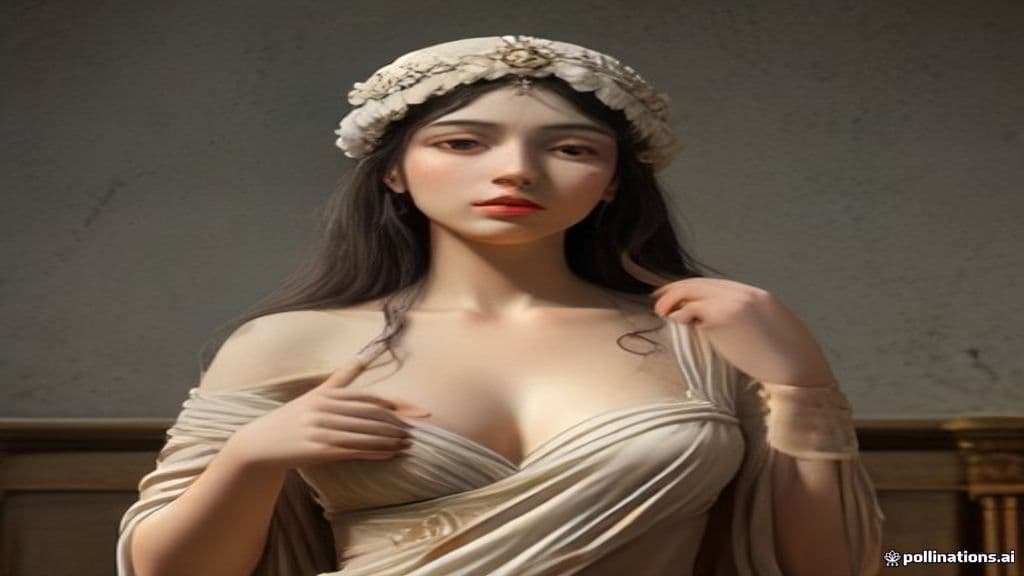
In Homeric tradition Penelope is presented as the daughter of Icarius and the wife of Odysseus; she is queen of Ithaca and an exemplar of fidelity and household stewardship during Odysseus's long absence after the Trojan War. Later and variant traditions recorded in classical scholiasts and glosses offer etiological tales from her youth and the Trojan period in which she is cast into the sea and rescued by birds called pēnelopes; these serve as folk explanations for her name and symbolic associations rather than as canonical Homeric biography.
Homeric and later sources praise Penelope for exceptional beauty and intelligence but provide no sustained or standardized iconographic description. Classical commentary emphasizes her virtue and craft (weaving) rather than fixed physical markers; surviving summaries note she was considered 'exceptional in both beauty and wits' and 'so virtuous it was said that she surpassed even her cousin Helen in the beauty of her virtue.'
Penelope's notable capacities in the sources are social, intellectual, and practical: fidelity to her absent husband; skillful household management and queenship; and cunning use of weaving as a delaying stratagem against more than a hundred suitors. No supernatural powers are attributed to her in the supplied material; her efficacy stems from human wit, reputation, and social authority within the Homeric narrative world.
Weaknesses
- otherNo classical weaknesses recorded; portrayed as mortal without supernatural vulnerabilities
Wards
None recorded.

Antenor
Antenor is a Trojan elder and counsellor in the epic tradition of the Trojan War. Portrayed in Homeric passages and later literature as a prudent diplomat and host, he advocates negotiation (notably advising the return of Helen) and participates in Trojan public councils and hospitable rites.
Asteropaios
Asteropaios is a named Homeric Paeonian leader and warrior in the Iliad, grandson of the river-god Axios (son of Pelagon), noted for ambidexterity (throwing two spears at once), who wounds Achilles' forearm before being slain and whose arms are later awarded as prizes at Patroclus' funeral games.
Automedon
Automedon (Ancient Greek Αὐτομέδων) is a named mortal charioteer in the Homeric epic tradition, best known as the trusted driver of Achilles who manages the immortal horses Balius and Xanthos and acts as a combatant in episodes of the Iliad. He appears in scenes surrounding Patroclus' death and in later Roman reference (Virgil's Aeneid).
Axylus
Axylus (Ancient Greek: Ἄξυλος) is a Trojan warrior featured in Homer's Iliad (Book VI). Portrayed as a wealthy and hospitable man from Arisbe, he is slain in battle by the Greek warrior Diomedes, a brief episode used by Homer to underscore themes of hospitality, mortality, and the costs of war.
Calesius
Calesius (Greek Καλήσιος) is a minor human figure in the Homeric epic: the attendant and charioteer of Axylus who is killed alongside his master on the Trojan battlefield in Book VI of the Iliad. He appears as a named mortal illustrative of loyalty and the human cost of war, with no supernatural attributes in the cited sources.
Cicones
The Cicones (Greek Κίκονες, Latinized Cicones or Ciconians) are a Homeric Thracian tribe associated with the town of Ismarus (Ismara) on the south coast of Thrace. In epic sources they appear as a martial human people who repel Odysseus' raiders after the sack of Ismarus (Odyssey Book IX) and are listed among allies in the Iliad; they are treated as a human ethnic/political group rather than as supernatural beings.
Dardanians (Trojan)
A named human people or subgroup in the Homeric Trojan tradition, repeatedly distinguished from the Trojans in epic formulae (e.g., the Iliad). Later Roman poets and classical writers used the ethnonym in genealogical and territorial discourse (Dardania, Dardanus).
Demoptolemus
Demoptolemus (Ancient Greek: Δημοπτόλεμος) is a mortal figure named among the suitors of Penelope in the Homeric epic tradition. He is listed as one of the suitors present in Odysseus’s hall and is reported in the narrative tradition to have been killed during Odysseus’s slaughter of the suitors (Odyssey Book XXII).
Euphorbus
Euphorbus is a named mortal Trojan youth in the Homeric epic tradition who wounds Patroclus and is later killed by Menelaus; in later classical anecdote he becomes a figure in stories of transmigration of souls in which his shield is said to be recognized in a temple.
Eurycleia
Eurycleia is a mortal household nurse and longtime attendant in the Homeric tradition, famed as the wet-nurse of Odysseus and a trusted domestic figure who recognizes Odysseus on his return by a scar and keeps his secret. She functions as an intimate caregiver, keeper of household memory, and an agent of domestic authority within Odysseus's household in Ithaca.
Eurycleia of Ithaca
Eurycleia is the aged wet-nurse and long-serving household attendant of Odysseus in the Homeric tradition. Portrayed as a loyal, discreet domestic servant, she functions as caretaker, keeper of household secrets, and intermediary within Odysseus's oikos on Ithaca rather than as a supernatural being.
Laertes
Laertes is the mortal father of Odysseus in the Homeric tradition, an aged Ithacan farmer/retired king who embodies ancestral authority, patronymic identity (Odysseus = Laertiades), and appears in the Odyssey's recognition and post-suitors conflict scenes.
Community Record
- [1]Penelope — Wikipedia. Wikipedia contributors, 'Penelope,' Wikipedia, The Free Encyclopedia.wiki
- [2]Wikidata: Penelope. Wikidata entry Q1242905, 'Penelope'.other