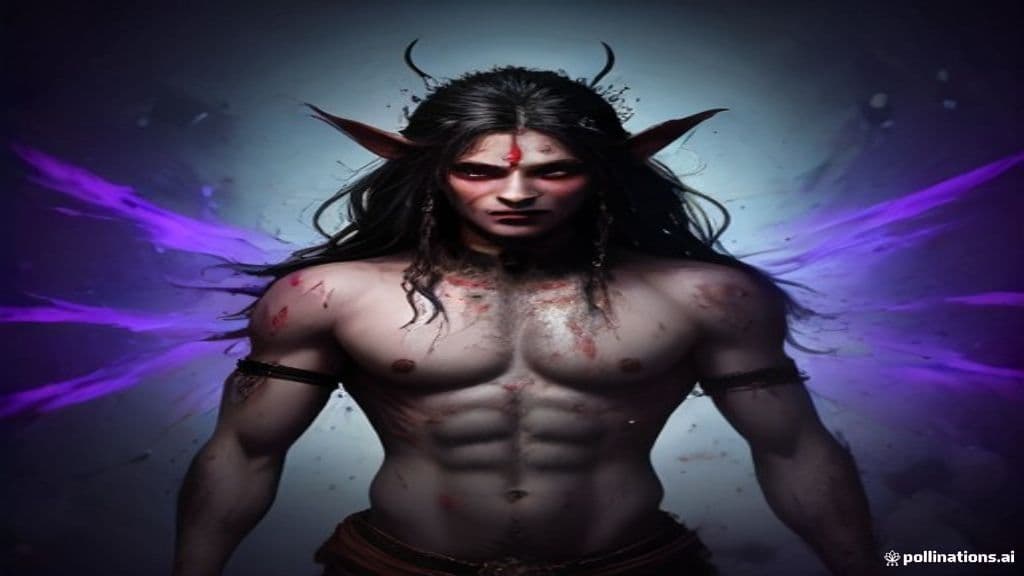
Within the Markandeya Purana / Devi Mahatmya tradition Raktabīja appears as one of the powerful asura-warriors sent by the asura kings Shumbha and Nishumbha to oppose the Devi. According to the account summarized in the supplied sources, he obtained a boon from Śiva by which any drop of blood from his body that fell on the battlefield would give rise to another Raktabīja. He is introduced in the sequence of foes (after figures such as Dhumralochana, Chanda, and Munda) whose combined threat the goddess must dismantle to restore the devas to their rightful place in Svarga.
Sources provide limited direct physical description beyond identifying him as an asura and a formidable warrior. The narrative emphasizes that when wounded he bleeds so profusely that each drop can spawn another Raktabīja; the spawned beings are described as identical to one another in strength, form, and weapons. The texts otherwise do not supply specific anthropometric details, clothing, or unique markings for Raktabīja himself.
Raktabīja's defining supernatural ability is the boon-mediated property of his blood: any drop that falls to the earth generates a new, fully-armed Raktabīja, and those duplicates share his strength, form, and weapons. In combat this produces a self-perpetuating multiplicative threat—wounding him without preventing blood from reaching the ground increases the number of opponents. The narrative records that this made him a specially dangerous offensive asset in the asura host until the goddess coordinated a tactic to prevent the blood from seeding new beings.
Weaknesses
- conditionPrevention of blood contacting the ground
Wards
- ritualKali drinks the blood (Durga's instruction to Cāmuṇḍā)
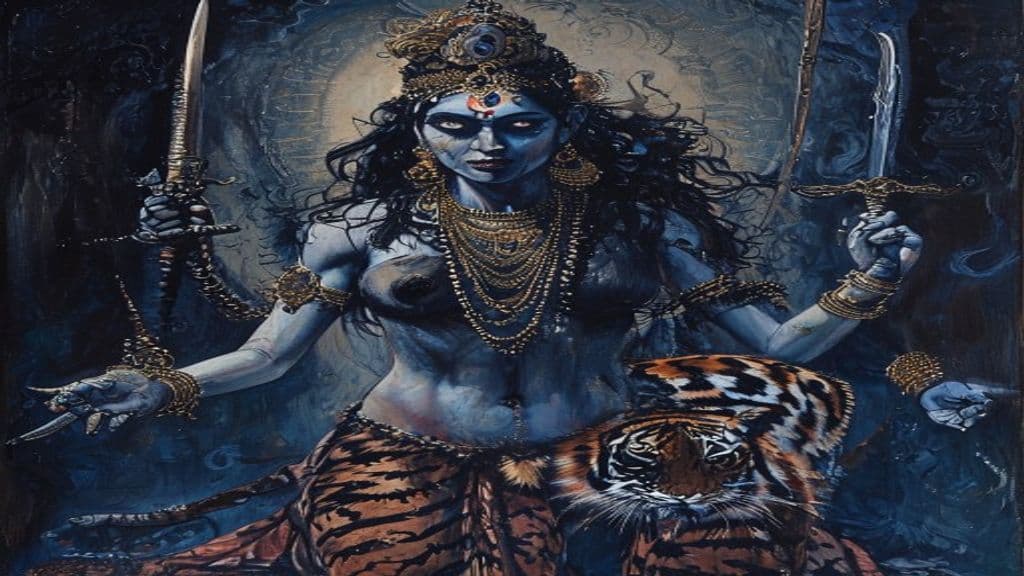
Kali
Kali is a major Hindu goddess associated with time (kāla), death, destruction, and also with liberating knowledge; she appears in Puranic and Tantric texts as a fierce battlefield power and as a protective Divine Mother (Kali Mātā).
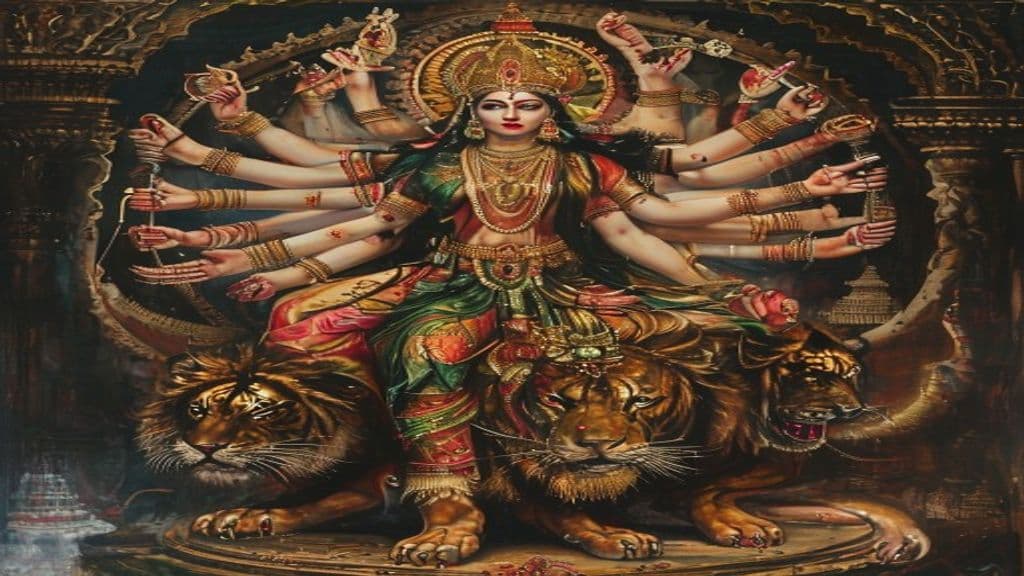
Durga
Durga is a major Hindu goddess, central to the Shakta tradition as an aspect of the Divine Feminine (Mahadevi). She is venerated as a protective, martial mother-goddess who combats demonic forces (notably Mahishasura) to uphold dharma, and is celebrated in major festival cycles such as Navaratri and Durga Puja.
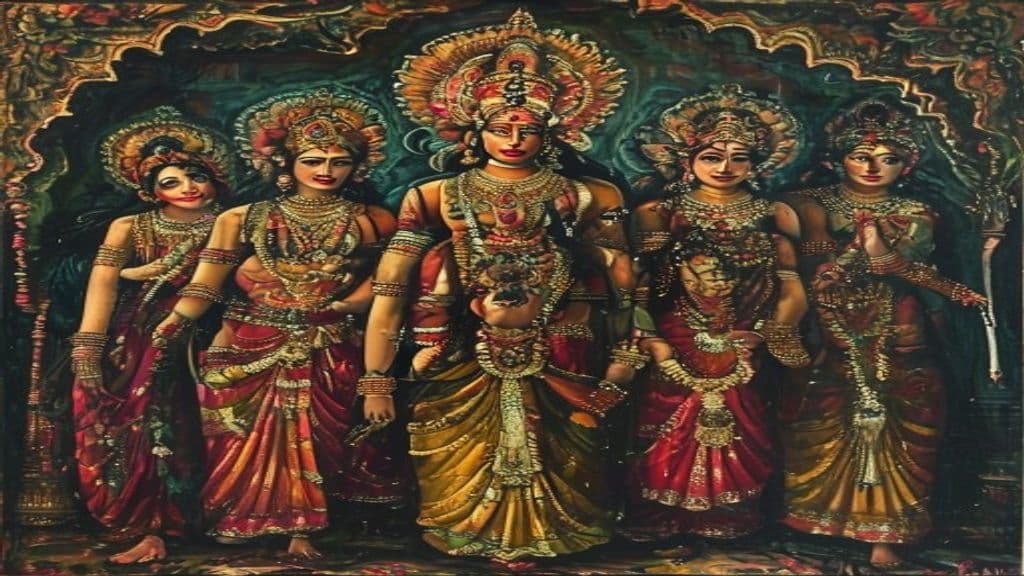
Matrikas
Matrikas (Sanskrit: mātṛkā, 'mothers') are a group of related mother-goddess figures in Hindu tradition, commonly rendered as seven (Saptamatrikas) or eight (Ashtamatrikas). They function ambivalently as protectors and as dangerous female powers tied to fertility, child mortality, disease, and martial activity, and were incorporated into temple and tantric/Shakta practice by the Kushana–Gupta and early medieval periods.
Community Record
- [1]Raktabīja (Wikipedia). Wikipedia entry 'Raktabīja' summarizing the Devi Mahatmya (Markandeya Purana) accountwiki
- [2]The Srimad Devi Bhagavatam (archive listing). Archive listing for The Srimad Devi Bhagavatam (related Devi literature; no direct Raktabīja passage supplied in the provided extracts)literary
- [3]Raktabija - Kali Maa (2014) (archive audio listing). Archive audio listing referencing Raktabīja in contemporary devotional/media context (fragmentary; does not supply classical ritual texts)other
- [4]Key Symptoms: Tension in the abdomen with rumbling. © Pankaj Oudhia (archive listing). Archive listing that mentions a topical remedy labeled 'raktabija' among other items (fragmentary; not a classical ritual prescription in the supplied extracts)other