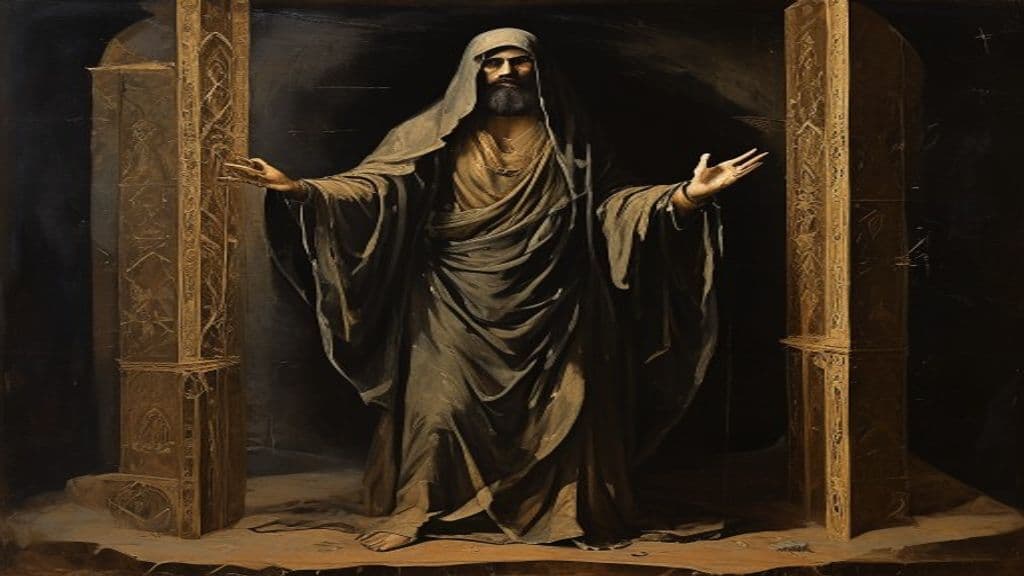
Attestations place Sariel among the named heavenly angels in Jewish apocryphal and sectarian texts. 1 Enoch lists him as one of the holy angels who is 'set over the spirits who sin in the spirit.' He appears in other apocryphal narratives (e.g., Conflict of Adam and Eve with Satan / Suriyel) and in sectarian compilations (Dead Sea Scrolls war manual) and is later incorporated into magical and liturgical materials. The supplied sources do not provide a narrative of primordial origin beyond these attestations.
The supplied primary sources do not provide any physical, iconographic, or anthropomorphic description of Sariel. No attributes, gestures, apparel, or visual motifs tied to Sariel are recorded in the cited extracts. Later iconographic traditions are not attested in the provided material.
Sources attribute administrative and functional roles rather than descriptive supernatural feats. 1 Enoch (as summarized) names Sariel as 'set over the spirits who sin in the spirit.' Other attestations list him among angels who 'look upon the bloodshed on Earth.' In the Conflict of Adam and Eve (variant Suriyel) he bears Adam and Eve from a mountain to the Cave of Treasures. In the Ladder of Jacob he is sent to explain a dream. Late‑antique ritual evidence (a Seleucia demon bowl and Greek magical papyri references in the tradition) shows his name invoked for protective/apotropaic purposes.
Weaknesses
None recorded.
Wards
- ritualInscription of Sariel on shields (1QM)
- ritualInvocation of Sariel on a clay demon-bowl (Seleucia-on-Tigris)
- otherCalendrical/angelic associations in Liber Juratus (month-linked invocation/name-listing)

Gabriel
A principal heavenly messenger in Jewish, Christian, and Islamic literatures, Gabriel is portrayed as an archangel who reveals and explains divine messages, announces births and divine intent, and executes certain divine judgments in apocalyptic texts.

Michael
Michael is presented in the supplied sources as a masculine given name and disambiguation headword applied to people, historical rulers, cultural works, places, and other uses; the provided material treats it as an onomastic item rather than as a single supernatural being.

Uriel
Uriel is an archangel figure in Jewish and Christian apocryphal, liturgical, and popular traditions, variously described as an interpreter of prophecy, guardian of cosmological thresholds (Gate of Eden, Tartarus/pit), regent of light or the sun, and a guide or agent in salvation narratives. His prominence and specific functions vary by tradition (Second Book of Esdras, Ethiopian homily, apocryphal gospels, patristic and later angelologies).
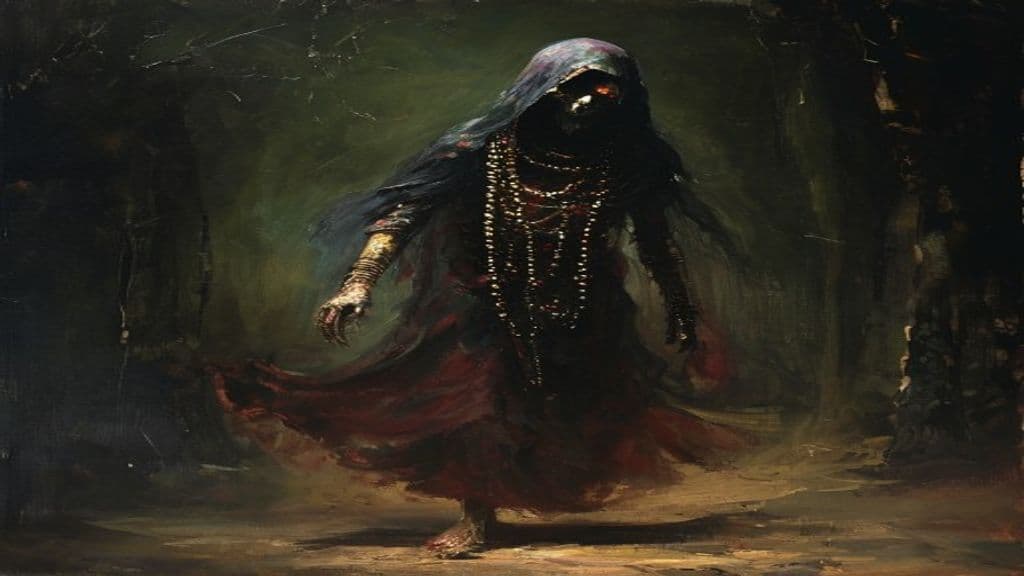
Bhoot (bhoota)
A bhoot (also bhoota, bhoot, bhut) is the culturally specific term across parts of the Indian subcontinent for a perturbed, restless spirit generally understood to be the ghost of a deceased person. Sources describe bhoots as arising when a person's death or post-death circumstances prevent them from moving on — for example violent death, unresolved affairs, or failures in funerary rites — and the term appears frequently in modern South Asian media and discussions.
Ariel
Ariel is named in the provided materials as an angel appearing primarily in Jewish and Christian mysticism and apocrypha. The supplied sources give the Hebrew form אֲרִיאֵל (romanized ʾÁrīʾēl) and identify Ariel as an angelic figure but do not provide further doctrinal, narrative, or ritual detail.
Sankōbō
Sankōbō is attested in a single cited source as a type of tengu in Japan. The available record provides only this classificatory label and supplies no further description, narratives, or ritual information.
Sanmoto Gorōzaemon
Sanmoto Gorōzaemon is a named figure noted on a character list page for the modern manga Nura: Rise of the Yokai Clan. The cited source is a general roster of characters in that fictional work and does not supply narrative, descriptive, or ritual detail specific to this name.
Santa Compaña
A nocturnal folkloric procession of the dead from northwestern Iberia, commonly imagined as a moving host led by a living parishioner compelled to walk each night; in popular belief it announces impending deaths and visits houses where death is due.
Santelmo
Santelmo in Philippine contexts is a luminous fireball or glowing phenomenon treated variously in sources as a folkloric apparition or as a cultural interpretation of the meteorological St. Elmo's fire. It appears in popular media and folklore inventories alongside other Philippine supernatural beings, and accounts emphasize its fiery appearance and association with storms and pointed objects.
Saraca asoca (Buddhist tradition)
A sacred tree in Buddhist tradition, significant to Buddha's life and the Four Trees of his life. (Note: - Power tier should be Ancient (associated with Buddha's life and significant spiritual value) - Origin story needs more detail or context from source material - Appearance is not supported by source )
Saraswati
Saraswati is a principal Hindu goddess (Devi) whose portfolio encompasses knowledge, learning, speech (vac), the arts (poetry, music), language and purification. Originating in Vedic literature as a river goddess, later texts reframe her primarily as the divine personification and patron of speech, learning and creative/intellectual order; she is venerated across Hindu, Buddhist and Jain contexts.
Sarlagab
Sarlagab (also spelled Zarlagab) is attested in the Sumerian King List as a Gutian ruler of southern Mesopotamia, recorded as ruling for six years in the late third millennium BCE. Modern summaries place him roughly c. 2200–2202 BC and note a debated identification with a Gutian king named in an Akkadian year-name as having been captured by Šar-kali-šarri.
Sarpa Kavu
Sacred site or grove in Hindu tradition, inhabited by nagas and other snakes. (Note: - Power tier: Primordial (Sarpa Kavu is a sacred site with deep cultural significance, not just a regional power) - Sensory cues: Provide specific details on how one might sense the presence or energy)
Sarpanit
Sarpanit (also Zarpanitu, Ṣarpānītu) is a Mesopotamian goddess, the principal consort of the Babylonian chief god Marduk. Originating in the village of Zarpan and later worshiped in Babylon and the temple Esagil, she is associated in late sources with queenship among the gods, motherhood, pregnancy, and intercession on behalf of petitioners.
Sarpedon
Sarpedon is a name applied to several figures in Greek myth; the best-known bearer is a son of Zeus who fought for Troy in the Trojan War. Other traditions make him a Cretan royal son of Zeus and Europa, and a separate Thracian Sarpedon is a son of Poseidon and eponym of a cape. The name later appears in non-mythic contexts (ship name, insect genus).
Sarugami
A name that appears in a comparative survey of monkey-related figures under the Japan heading; the provided sources give no independent traditional accounts, descriptions, or rituals for Sarugami itself.
Community Record
- [1]Sariel — Wikipedia. Wikipedia: 'Sariel' article (as supplied in research notes)wiki
- [2]Dead Sea Scrolls — 1QM (War of the Sons of Light Against the Sons of Darkness) 9:15–16. War of the Sons of Light Against the Sons of Darkness (1QM) listing names to be written on shields (as summarized in research notes)literary
- [3]1 Enoch (Watchers lists). 1 Enoch: Sariel listed as 'one of the [seven] holy angels [who watch], who is set over the spirits, who sin in the spirit' (summary in research notes)literary
- [4]Conflict of Adam and Eve with Satan (apocryphal excerpt). Conflict of Adam and Eve with Satan: Suriyel bears Adam and Eve to the Cave of Treasures (summary in research notes)literary
- [5]Seleucia-on-Tigris demon bowl inscription (6th–7th century). Quoted inscription: protective curse‑reversal invoking Sariel and Barakiel (as provided in research notes)literary
- [6]Liber Juratus (Sworn Book) — angelic name lists (excerpted citation). Liber Juratus listings where 'Sariell' appears among names associated with months (as cited in research notes)literary
- [7]Coptic liturgical commemoration (calendar). Coptic Orthodox liturgical calendar: Sariel commemorated on 27 Tobi (as noted in research notes)literary