
Seaxnēat is attested in Old English royal genealogies as the eponymous first ancestor of the kings of Essex, with later versions of the genealogy presenting him as a son of Wōden; the Old Saxon form (Saxnôt) appears in the renunciation passage of the Old Saxon Baptismal Vow alongside Uuôden and Thunaer. These attestations place Seaxnēat in the literate, genealogical, and liturgical record of Saxon communities rather than in preserved narrative myth cycles.
No contemporary or medieval narrative provides descriptions of Seaxnēat's physical appearance. The surviving evidence is textual—genealogical lists and a baptismal renunciation—and contains no iconographic or descriptive passages about his form.
The sources supply no accounts of specific deeds, powers, or behaviors performed by Seaxnēat. Scholarly literature draws inferences from his name and genealogical role: the common etymology seax (the Saxon knife/sword) + -nēat ('companion') has been used to suggest a martial or patronal association with Saxon identity, while other etymological proposals have prompted comparisons with deities such as Týr, Freyr, Nodens, and Nuada. These identifications are interpretive and based on linguistic or functional analogy rather than on attested mythic actions.
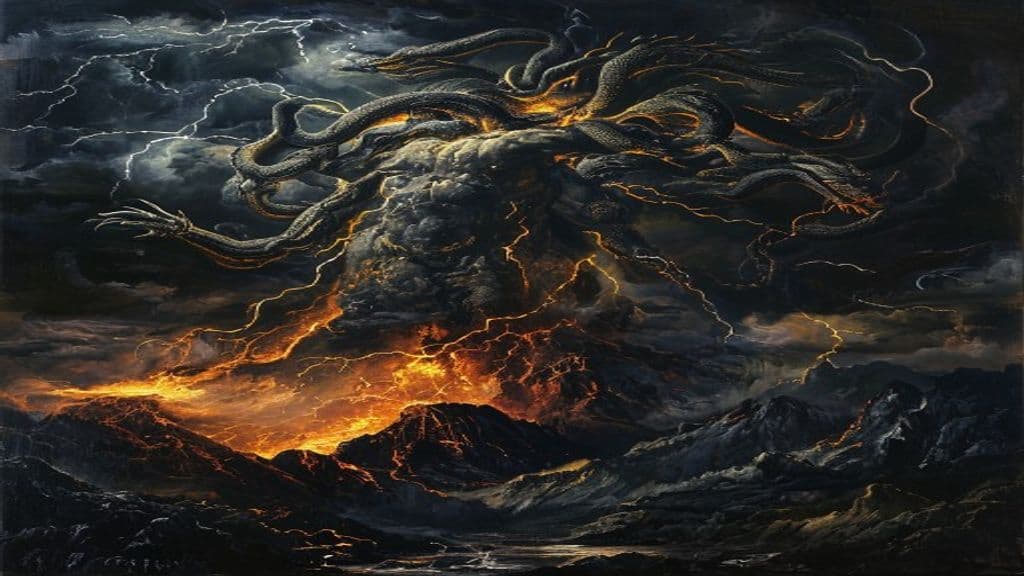
Typhon
The last great monster of Greek mythology — a vast, fire-breathing giant whose shoulders sprouted a hundred serpent heads, nearly toppling Zeus from Olympus.
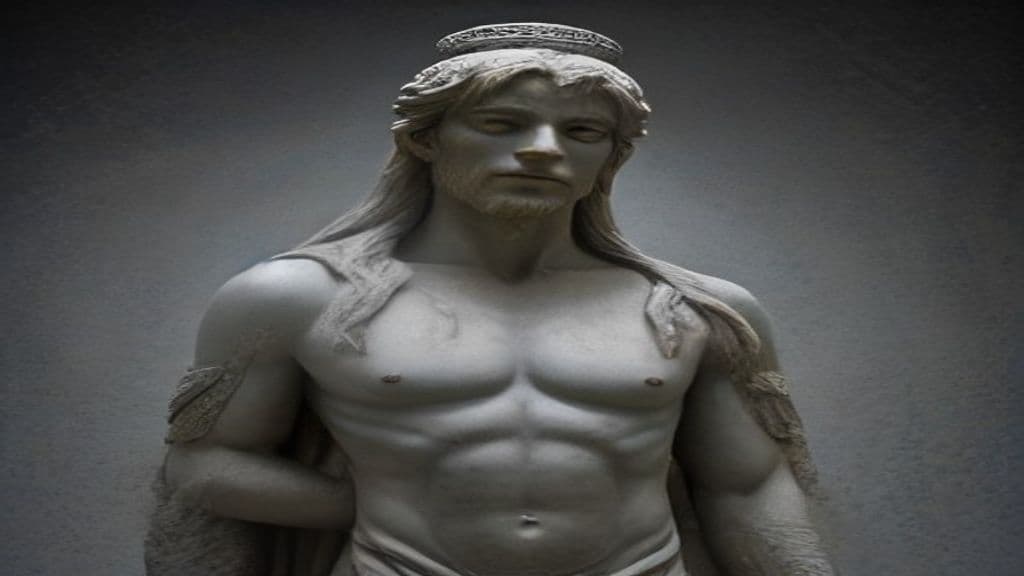
Freyr
Freyr is a major Vanir deity in Old Norse myth associated with kingship, fertility, prosperity, fair weather, peace, and good harvests; he is attested in medieval Icelandic sources (Snorri) and continental reports (Adam of Bremen) and figures in myths of courtship, possession of magical artifacts, and eschatological death at Ragnarök.
Community Record
- [1]Seaxnēat. Wikipedia contributors, 'Seaxnēat', Wikipedia, The Free Encyclopedia.wiki
- [2]Seaxnēat (Wikidata). Wikidata entry Q577777 for Seaxnēat.wiki