In classical Greek cosmology Selene is described as a daughter of the Titans Hyperion and Theia and sister to Helios (the Sun) and Eos (the Dawn). As a member of that divine family she occupies the role of the lunar figure who traverses the night sky; later antiquity sometimes conflated her with other lunar goddesses such as Artemis and Hecate, while Roman practice treated her equivalent as Luna.
Classical hymns and poetic descriptions present Selene as a radiant, crowned goddess who drives a chariot yoked to long-maned horses. She is described with epithets such as 'white-armed,' 'bright-tressed,' 'bull-horned' (crescent), 'torch-bearing,' 'bright-eyed' and 'silvery grey,' and in Homeric description a radiance from her immortal head embraces the earth.
Selene's primary function is the movement and illumination of the Moon: she drives a moon-chariot across the heavens, her course and waxing mark the month's progression and serve as a 'sure token and a sign to mortal men.' Poetic and Orphic sources attribute to her the granting of favor and fulfillment in verse and portray her in mythic romances (notably with Endymion and other lovers), but classical sources frame her chiefly as the celestial personification whose beams wax and wane and whose visibility signals calendrical time.
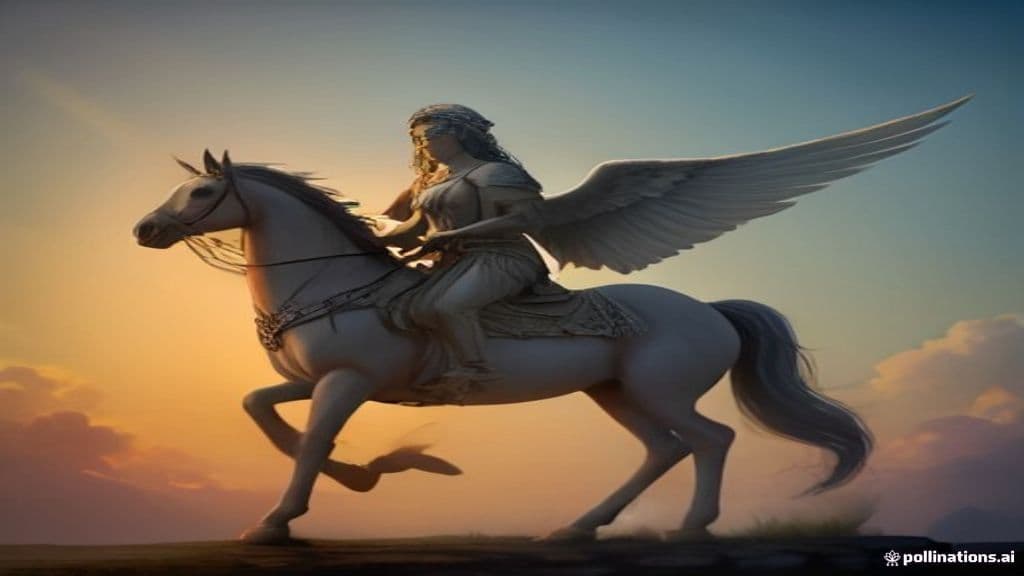
Eos
Eos is the ancient Greek goddess and personification of the dawn who rises each morning from the edge of Oceanus to bring light, open the gates of heaven for her brother Helios, and usher in the day; she is a daughter of the Titans Hyperion and Theia, sister to Helios and Selene, and mother of several winds and astral figures.

Artemis
Artemis is an ancient Greek goddess of hunting, the wilderness and wild animals, transitions (especially childbirth and puberty), vegetation, and chastity. Twin sister of Apollo and daughter of Zeus and Leto, she functions as a protector of young children and maidens while also capable of inflicting disease or punishment for transgressions against her sacred laws.
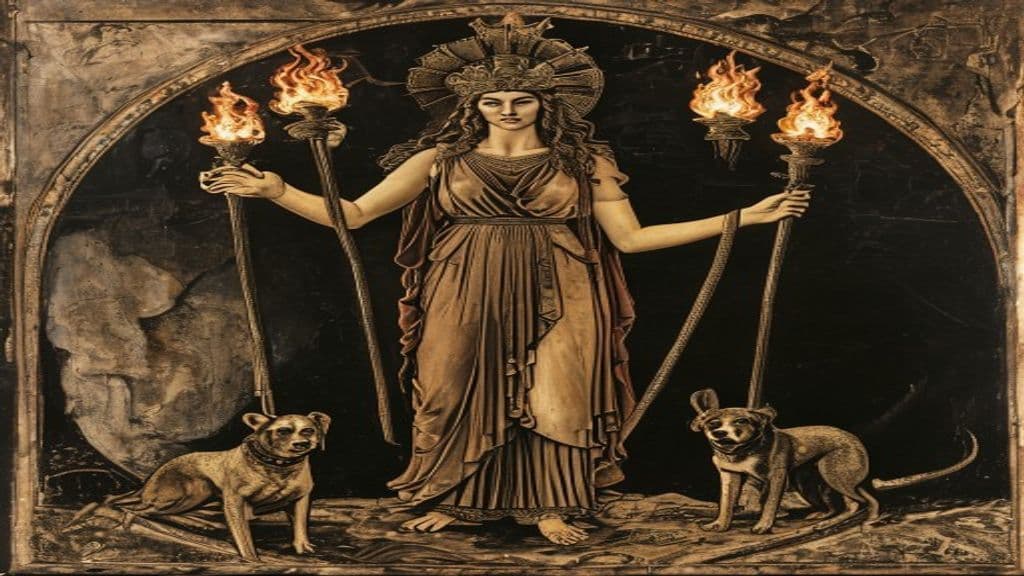
Hecate
Hecate (Ancient Greek: Ἑκάτη) is a liminal goddess in ancient Greek religion associated with crossroads, night, light, magic/witchcraft, the Moon, and household protection. She appears in early Greek poetry (Hesiod) with broad domains and in later traditions (notably the Chaldean Oracles) with expanded cosmological roles; she retained important regional cults, especially in Anatolia (Lagina) and had popular associations with witches in Thessaly.
Community Record
- [1]Selene — Wikipedia. Wikipedia contributors, 'Selene,' Wikipedia, The Free Encyclopedia.wiki
- [2]Wikidata entry Q3954739 — Selene. Wikidata, Q3954739.other
- [3]Archive references (name occurrences). Archive.org item referencing the personal name 'Selene' (administrative/archive material).other