
Mythic accounts vary: some traditions make the Sirens daughters of the river-god Achelous (hence 'Acheloides'), while other versions name Phorcys as their progenitor. They occupy the mythic landscape of Greek epic as recurring dangers encountered by voyagers, incorporated into genealogies linking them to river- or sea-related divine networks.
Early Greek literary and pictorial traditions present Sirens as hybrids combining female and avian features: described as part virgins and part birds with wings and bird-like feet. In early art they are often shown as birds with large women's heads, feathers, and scaly/bird feet; literary passages also portray them as a small group of women who between them sing and play instruments (lyre, flute). Sources indicate variation over time in their depiction but consistently emphasize both feminine and birdlike elements.
Sirens use irresistible song and music to beguile sailors and draw them to shipwreck or other ruin. Accounts describe them working as a group with distinct musical roles (one singing, another playing flute, another the lyre) to lure passing seafarers. In epic contexts (notably the Odyssey cycle) they are encountered from a fixed locale along voyaging routes and present a persistent temptational peril rather than merely symbolic obstacles.
Weaknesses
- otherNot specified in provided sources
Wards
- otherNot specified in provided sources
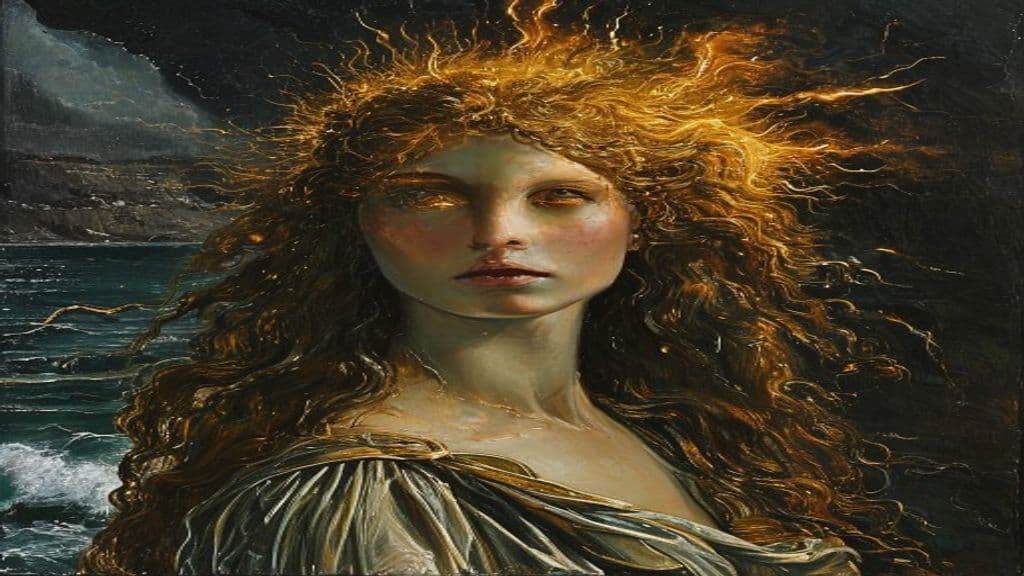
Circe
Circe is a figure of Greek myth known as a practitioner of potent pharmacological and ritual arts who occupies a liminal status between goddess, nymph, and witch. She is famed for her knowledge of herbs and potions, her ability to transform humans into animals in narrative episodes, and for performing ritual purification in at least one classical source.

Naga
Divine serpent beings of Hindu, Buddhist, and Jain cosmology — powerful guardians of water, earth, and underground treasures. Revered as deities in South and Southeast Asia.

Mermaid
An aquatic folkloric being with the head and upper body of a female human and the tail of a fish, appearing across many cultures as both omen of maritime danger and occasional benefactor or romantic partner to humans.
Community Record
- [1]Siren (mythology) - Wikipedia. "They, the Greeks, imagine that, there were three sirens, part virgins, part birds, with wings and claws. One of them sang, another played the flute, the third the lyre. They drew sailors, decoyed by song, to shipwreck."wiki
- [2]Sirens — Manual of Mythology (summary) — Elfinspell. "According to one version of the myth, were daughters of the river-god. Achelous. hence their other name. Acheloides. and a. Muse. According to another version, they were daughters of. Phorcys."literary
- [3]The Odyssey: Books 9-12: The Great Wandering (Cyclops, Sirens, Circe etc.) — Bibliomania. Reference placement in epic: "The Odyssey Books 9-12: The Great Wandering, Cyclops, Sirens, Circe etc."literary
- [4]Anatomically Correct Siren? — Worldbuilding Stackexchange. "In early Greek art, Sirens were represented as birds with large women's heads, bird feathers and scaly feet"other
- [5]Textkit forum: Sirens, Mermaids, and Gorgons, Oh My!. Discussion noting shifting portrayals and Homeric influence on later depictions (fragmentary forum commentary).other