The motif appears in early literary and folkloric sources: an influential literary precursor appears in Giambattista Basile's early seventeenth-century tale (Sun, Moon and Talia, where the heroine is named Talia), later put into courtly/fairy form by Charles Perrault (1697) as La Belle au bois dormant and collected in a variant by the Brothers Grimm (Dornröschen). Scholars trace thematic antecedents further back (e.g., medieval romances such as Perceforest) but the fully developed tale-type is documented in Basile, Perrault, and Grimm traditions as the primary literary lineages.
The central figure is consistently portrayed as a human princess or beautiful young woman of royal birth. Visual specifics vary by version but commonly include an infant or princess born to a king and queen who later lies unconscious on a bed, throne, or within a palace. Perrault/Grimm variants emphasize the palace overgrown by thorns or briar (hence Dornröschen, 'Little Briar Rose'); Basile's Talia is described as seated on a velvet throne while unconscious.
As a narrative character she is primarily passive: the defining 'ability' is prolonged enchanted sleep or unconsciousness induced by an external cause (an evil fairy's curse in Perrault, a prick from a spindle/flax splinter in Perrault/Grimm/Basile respectively). In Basile's version the heroine remains physiologically alive during unconsciousness to the extent of bearing children when violated, and awakening is effected by physical removal of the causal object (the flax splinter). In other variants awakening follows the arrival or action of another agent (a prince/king or a good fairy's contrivance to make the surroundings sleep until she wakes).
Weaknesses
- conditionremoval of causal object or arrival of rescuer
- otherbeing asleep (the heroine is by definition unconscious and passive)
Wards
- ritualremoval/destruction of spindles and hazardous sharp objects
- otherappeal to a benevolent fairy to mitigate consequences (Perrault)
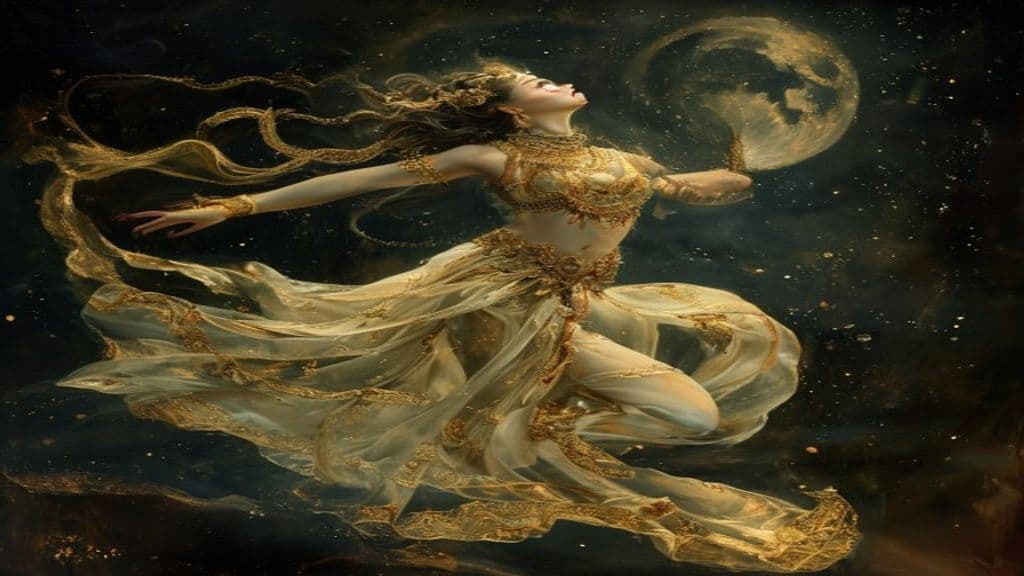
Apsara
Celestial dancers and water nymphs of Hindu cosmology — beautiful semi-divine beings who dance at the court of Indra and, by his command, descend to earth to distract sages from excessive asceticism.
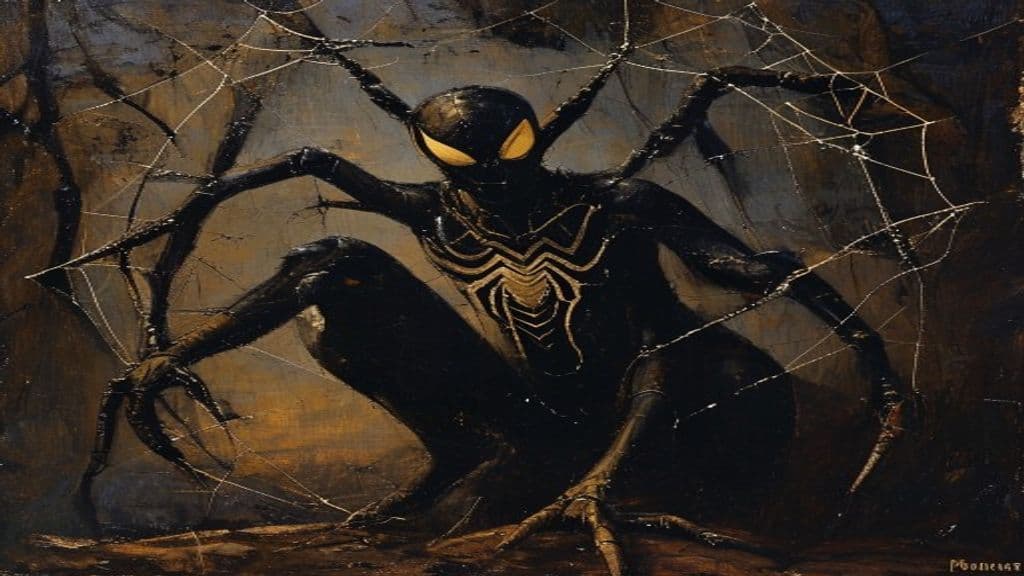
Anansi
The spider trickster god of Akan folklore — cunning, mischievous, and wise. Keeper of stories and teacher of human beings, brought through the slave trade into Caribbean and African-American tradition.
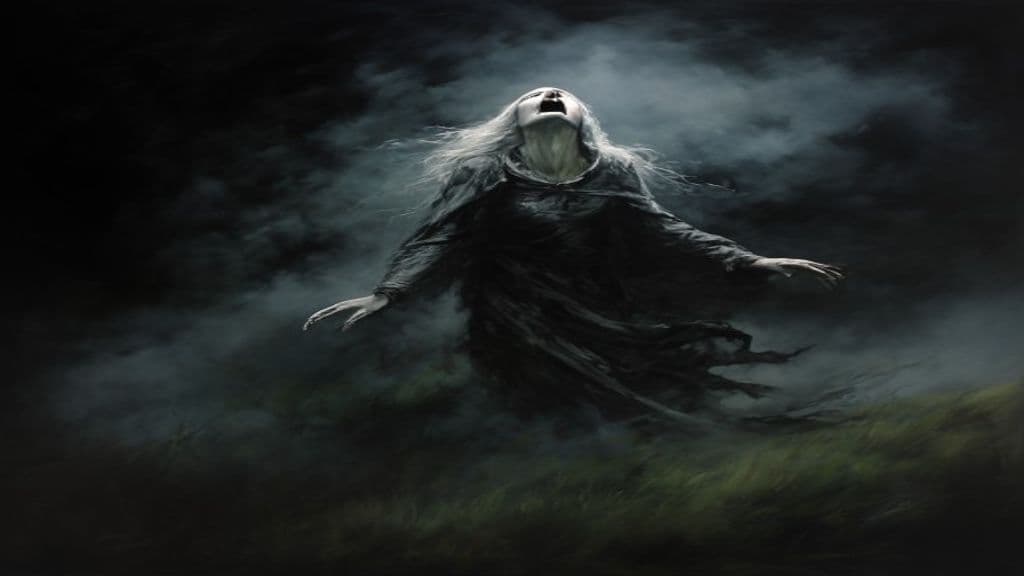
Banshee
A female spirit of Irish and Scottish folklore whose wail heralds an impending death in a family of Gaelic descent. Not a cause of death — a witness to it.
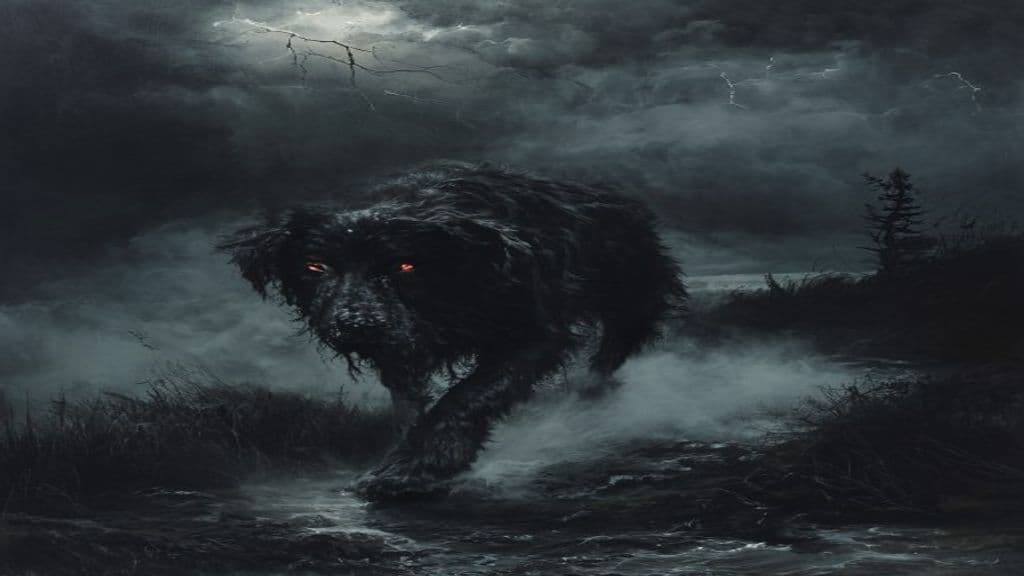
Black Shuck
A spectral black dog of East Anglian legend, with glowing red or green eyes. Its appearance is an omen of death. Its howl has been heard on clifftops during storms for centuries.
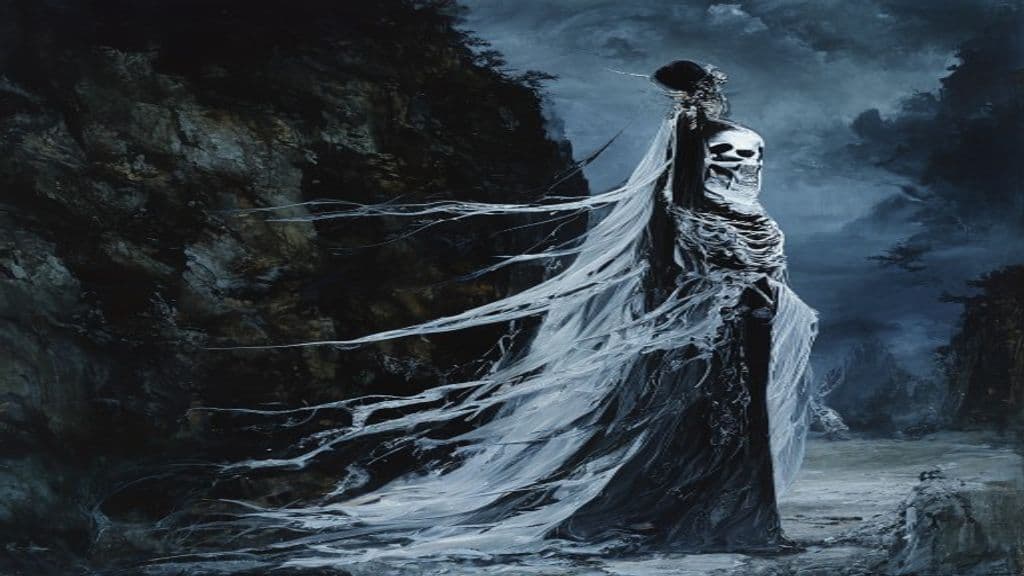
Báigǔ Jīng
The White Bone Demon of Journey to the West — a skeletal demoness who shapeshifts into innocent humans three times to attempt to capture and devour the monk Tripitaka.
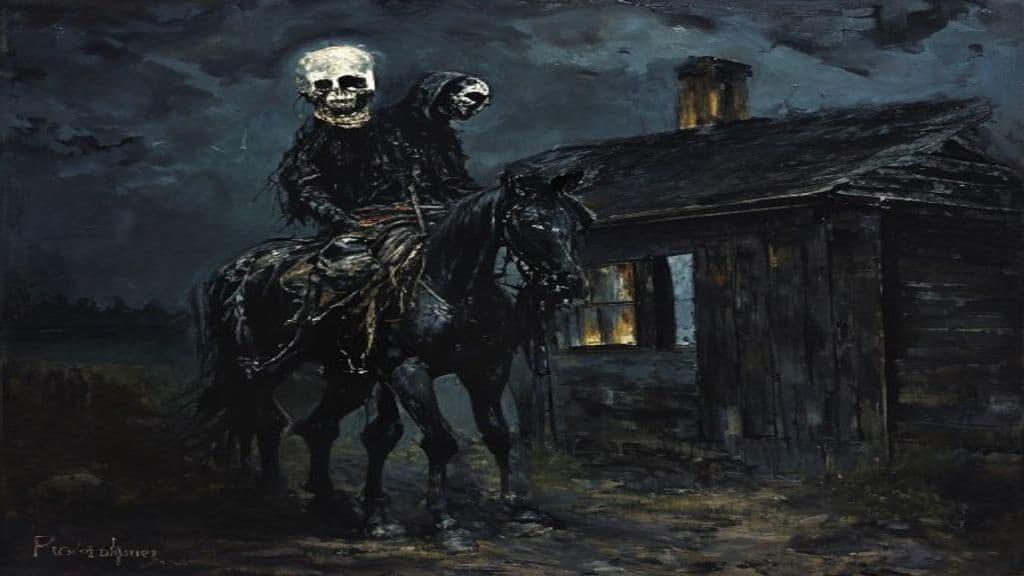
Dullahan
The headless horseman of Irish legend who carries his own rotting head under one arm, stops at the door of those about to die, and cannot be kept out by any lock.
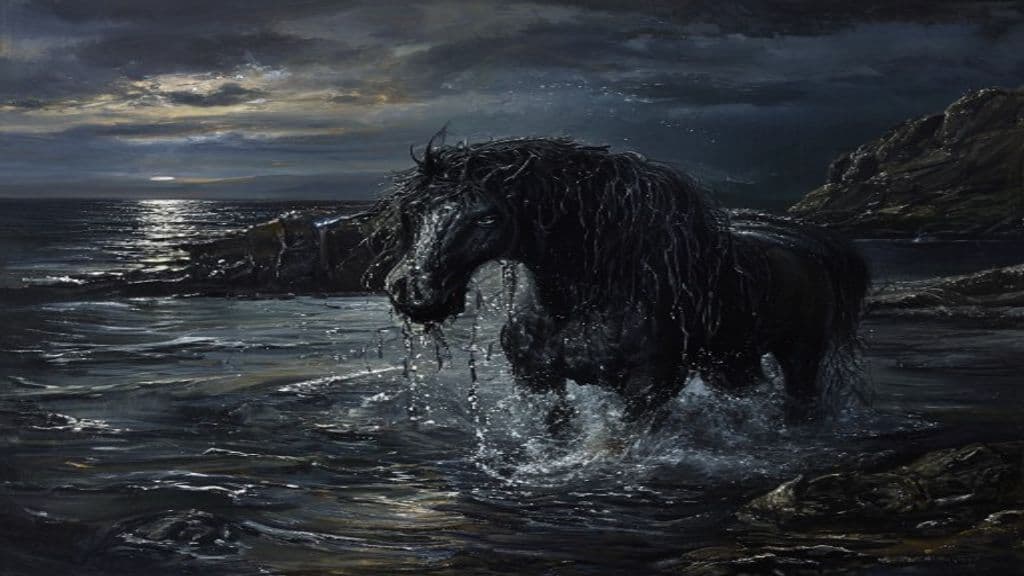
Each-Uisge
The most dangerous water horse in Scottish Highland folklore — haunting sea-lochs and mountain lakes, more violent than the river kelpie, known for consuming its victims whole.
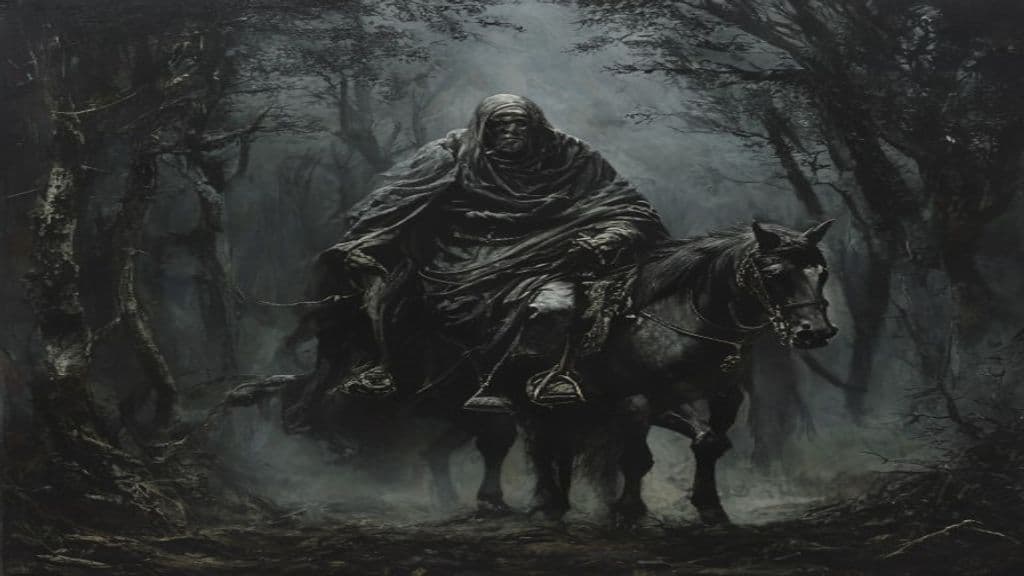
Erlking
A sinister Germanic spirit of forest and mist who takes children — appearing to them as a welcoming figure while adults see nothing, the child dying in its parent's arms.
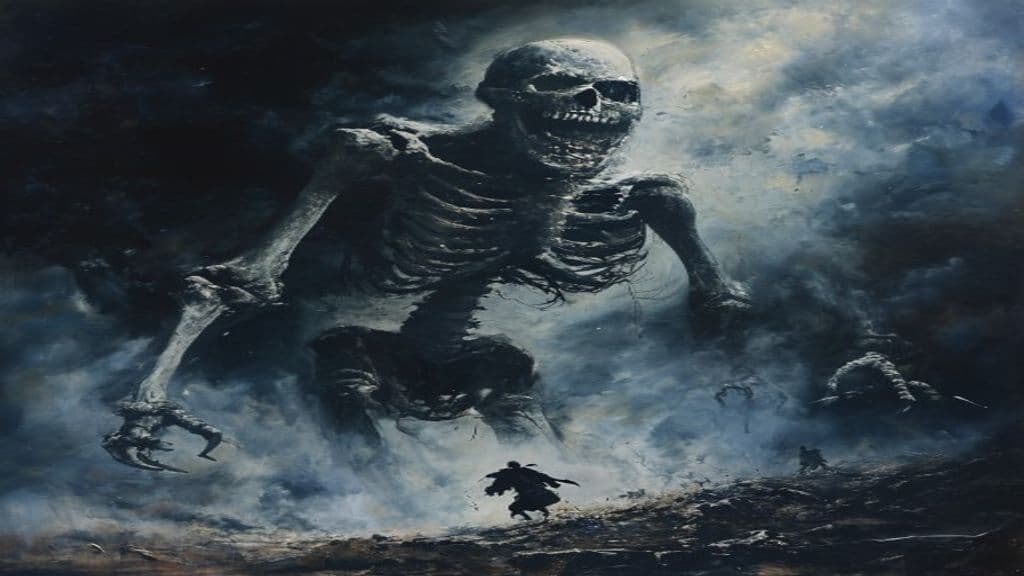
Gashadokuro
A fifteen-times-human-height skeletal yokai formed from the bones of those who starved to death or died on battlefields, their unburied remains fused together into a hungry colossus.
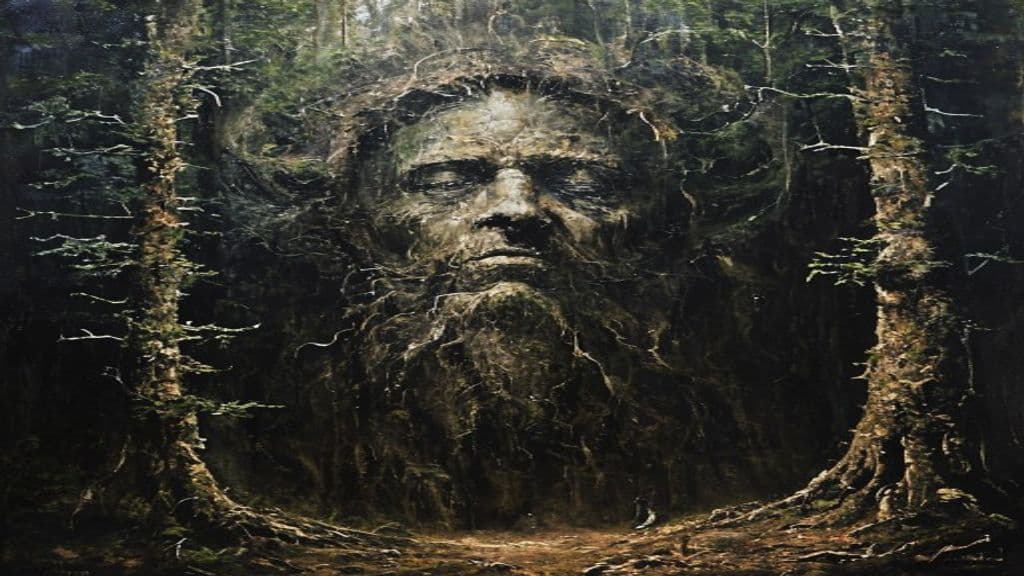
Humbaba
The divine guardian of the Cedar Forest appointed by Enlil, a terrifying giant whose roar was the flood, whose breath was fire, and whose gaze was death — slain by Gilgamesh and Enkidu.
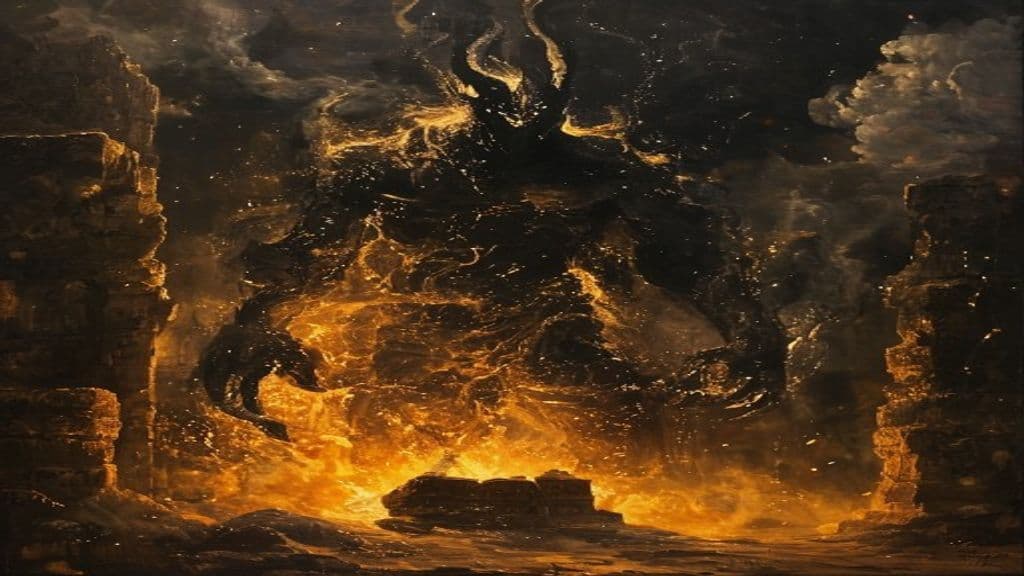
Ifrit
One of the most powerful classes of jinn in Islamic and pre-Islamic Arab tradition — a fire-born being of immense strength and cunning, capable of great works of engineering and terrible violence.
Community Record
- [1]Sleeping Beauty - Wikipedia. Wikipedia: 'Sleeping Beauty' article and plot-summary variants referencing Basile, Perrault, and Grimmwiki
- [2]Sun, Moon, and Talia (Giambattista Basile) - uncoy. Basile, 'Sun, Moon and Talia' (early literary version, heroine named Talia) as presented in online translationliterary
- [3]Sleeping Beauty - Petipa Libretto for Tchaikovsky (ballet). Petipa libretto (demonstrates later adaptation and courtly framing of the Perrault tale)literary
- [4]Walt Disney's Sleeping Beauty (script). Disney film script (modern adaptation summarizing Perrault-style motifs)other
- [5]Sleeping Beauty (1959 film) - Wikipedia. Article on Disney's 1959 film adaptation reflecting common modern motifs (thorn hedge, good fairy, prince awakening)wiki