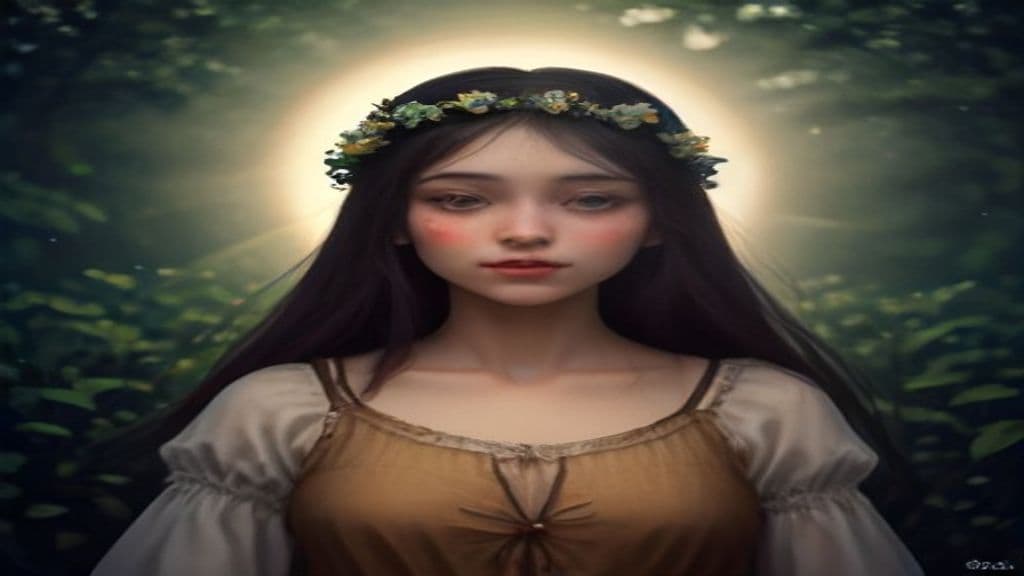
The folk name Sânziană (plural Sânziene) is etymologically connected in the sources to Latin Sancta Diana, linking the seasonal maiden-fairy figure to the Roman goddess Diana as interpreted in Romanian tradition. Sources treat this as an interpretive/etymological connection that frames Sânziene as vernacular continuations or overlays of older maiden-goddess imagery incorporated into local midsummer rites centered on the Nativity of Saint John the Baptist (June 24) and older solstitial practices.
Source accounts describe Sânziene as gentle fairies associated with maidens, floral crowns, and luminous/maid imagery (a colinda calls a Sânziană the "sister of the Sun"). Folklore emphasizes ritual maidens who dress in white, braid crowns of flowers (notably Galium verum, called Sânziànă), and dance around bonfires; however, no consistent, detailed physical description (size, wings, exact coloration) of the supernatural beings is provided in the supplied material.
Sânziene bless crops and bestow health on people; they make Sânziene Eve a liminal night when "the heavens open" and magic — particularly love spells — is strongest. Plants gathered on that night are believed to possess heightened magical potency. They also can punish transgressions: according to sources they dislike being seen by males, and a male who sees them risks maiming, loss of hearing or speech, or madness. Ritual actions during the festival (crown-throwing, bonfire practices) serve divinatory and communal protective/purificatory functions tied to these beliefs.
Weaknesses
- conditionavoidance by absence at night during Sânziene Eve
- conditiondislike of being seen by males (men are warned to stay away from dancing fairies)
Wards
- ritualparticipation in Sânziene festival rites (flower crowns, bonfire, jumping embers)
- ritualthrowing floral crown over a house (divinatory omen; crown staying = good harvest/wealth, crown falling = death omen)
- ritualjumping over embers (purification and bringing health)
Syrinx
Syrinx is an Arcadian wood-nymph of classical Greek myth, a devotee of Artemis famed for her chastity who, pursued by the god Pan, is transformed into hollow reeds that Pan fashions into the first panpipes (syrinx). The story variously frames the metamorphosis as an answered plea to river-nymphs or as disappearance into marsh reeds.
Sytry
Sytry (also spelled Sitri) is a named spirit from the goetic/grimorial tradition (Ars Goetia) described as a 'great prince' who commands legions, appears as a leopard-headed, griffin-winged hybrid, and is said in the grimoire tradition to procure love between the sexes and assume a beautiful human form at a magician's command.
Syöjätär
A malevolent entity associated with disease and unpleasant creatures in Finnish folklore, connected to fertility and maternal powers. (Note: 1. Power tier: Downgrade to Ancient (deity-level) since Syöjätär's connection to fertility and maternal powers is not explicitly primordial in nature. 2. Appearance: Add a note stating that no specifi)
Szelanya
Szelanya is presented in the supplied sources as a named wind or air deity (often called a goddess) found in brief Turkish and Hungarian mythic listings and modern popular summaries. Traditional descriptions are fragmentary; later fantasy and fandom materials expand her image beyond the concise encyclopedic entries.
Szélatya
Szélatya (also attested as Szélkirály) is presented in the cited sources as a deity associated with wind. The available references identify the figure as a wind god but provide only minimal details; one source labels the figure 'Turkic' while another describes it as 'Hungarian.'
Sáráhkká
Sáráhkká is a Sámi female household/divine spirit primarily associated with childbirth, the embodiment of fetuses, and the protection of pregnant women and birthing reindeer. She inhabits the domestic locus beneath the goahti hearth and is attended by offerings, taboos, and lifecycle rites in Sámi communities of northern Norway and Sweden.
Sādhya / Sadhyas
The Sādhyas are a class (gaṇa) of minor divine beings in classical Hindu cosmology, variously attested as embodiments of Vedic ritual, attendants of greater deities, members of Puranic divine lists, and as one of the hosts produced in certain cosmogonic passages of the Śrīmad-Bhāgavatam.
Sāsān (Sasan)
Sāsān is attested in medieval Persian historiography as the eponymous ancestor of the Sasanian (Sassanid) dynasty and is described as a Zoroastrian high priest, warrior, and hunter from Pars (Fars) near the fall of the Arsacid (Parthian) Empire in the early 3rd century. Modern uses of 'Sasan' include a male given name and various contemporary personal and corporate names; no supplied sources treat Sasan as a supernatural being.
Sơn Tinh – Thủy Tinh
A pair of supernatural entities in Vietnamese mythology, embodying opposing natural forces as mountain god and sea god. (Note: 1. Power tier: There is no indication that they are paired, so it should be Primordial. 2. Origin story: Remove reference to "agriculture" as there's no source material supporting this claim. 3. Appea)
Tablet of Destinies
A supernatural object in Mesopotamian mythology that confers supreme authority on the god Enlil, allowing him to redefine fate. (Note: - Power tier should be Ancient (deity-level) since it confers authority on a god. - The description of abilities implies a high level of cosmic power but does not necessarily imply primordial powers; )
Tabris
Tabris is attested in the provided sources in two unrelated senses: as the 'real name' of the fictional Neon Genesis Evangelion character Kaworu Nagisa (an Angel in that franchise) and as a taxonomic genus name for algae. No traditional folkloric or historical spirit named Tabris is documented in the supplied materials.
Taenarum
A geographical term referring to Cape Matapan or Cape Tenaro, a cape located at the end of the Mani Peninsula in ancient Greece. There is no associated supernatural entity. (Note: - The entity article claims there is no associated supernatural entity with Taenarum, but since we're creating an entry for a specific entity, this statement should be revised or removed. - Power tier)
Community Record
- [1]Sânziană — Wikipedia. Wikipedia article 'Sânziană' (summary of folk beliefs, festival customs, etymology linking to Sancta Diana)wiki
- [2]Sânziană — Wikidata. Wikidata entry for Sânziană (label confirming role as fairies in Romanian folklore)wiki
- [3]Alecsandri, Vasile — Sânziana și Pepelea (feerie). Archive scan of Alecsandri play 'Sânziana și Pepelea' referenced as cultural-literal usage of the nameliterary
- [4]Mircea Eliade — Noaptea de Sânziene (The Forbidden Forest) references. Wikipedia mentions Eliade's novel referencing Sânziene and the motif of the heavens opening on Sânziene Eveliterary
- [5]Băneasa forest / Baciu forest mentions (ethereal activity locales). Wikipedia notes Băneasa and Baciu forests as attested sites of strange ethereal activity during the Sânziene periodwiki
- [6]Sanziana (2025) short film review. Contemporary cultural reference showing persistence of the Sânziană motif in modern media (as cited on the Wikipedia page)other