Thelxinoë functions as a proper name applied across several distinct Greek mythic roles rather than as a single origin-storyed being. Attestations listed in modern summaries identify (1) Thelxinoë as one of the sirens (name-variants include Thelxiopê, Thelxiepeia), (2) Thelxinoë as one of an early group of Muses (a quartet alongside Aoede, Arche, and Melete), (3) Thelxinoë as an attendant of Semele in Dionysian-theophanic contexts, and (4) a form of the name among the Praxidicae, daughters of King Ogyges of Boeotia (alongside Alacomenia and Aulis). These multiple appearances reflect the Greek tendency to reuse meaningful epithets as personal names in different local and poetic traditions (sources summarized in the Wikipedia entry and linked authority records).
Primary sources cited in the provided material give no explicit, consistent physical description for Thelxinoë herself. Where she appears as a siren, standard siren iconography (not supplied in the cited excerpts) would conventionally indicate a creature associated with song; where she appears as a Muse or attendant she would be represented as a divine or semi-divine maiden in keeping with those categories. The supplied sources do not provide direct, source-backed details of garments, attributes, or morphology for any specific Thelxinoë attestation.
The name's literal meaning, "mind-charming," underlies the thematic abilities associated with the different roles in which the name occurs. As a siren-attestation the name implies the traditional sirenic function of charming or luring listeners by song; as one of the early Muses she is associated with charming the mind and inspiring song, thought, or creative faculties. The other attestations (attendant of Semele; one of the Praxidicae) are social or genealogical placements recorded in mythographic lists and do not in the provided sources describe distinct supernatural powers beyond their role-category associations.
Weaknesses
- otherNo weaknesses attested in provided sources
Wards
- otherNo apotropaic measures or wards against Thelxinoë recorded in the provided sources
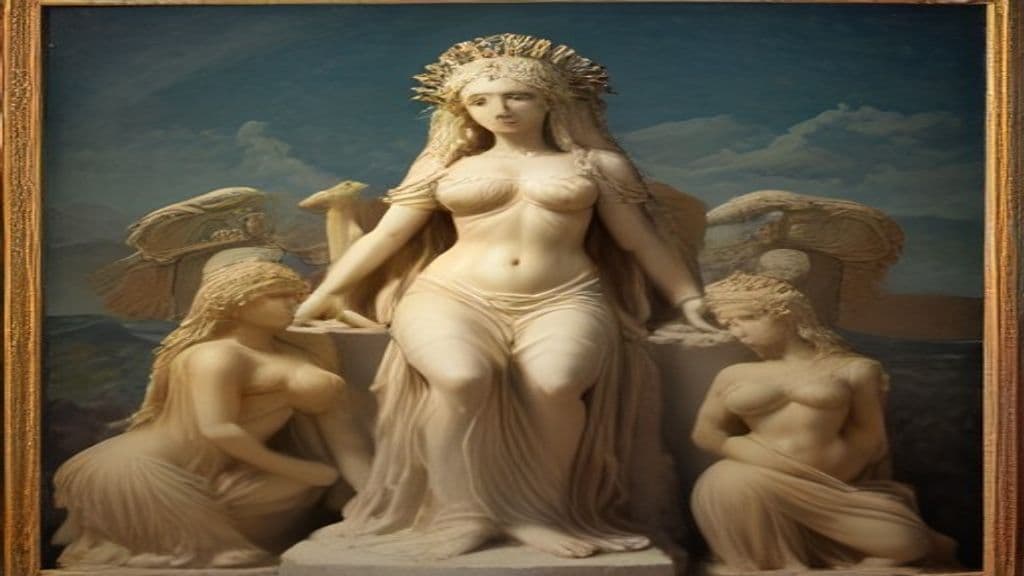
Muses
Divine inspirational figures of ancient Greek religion and mythology who personify and authorize the arts, literature, and learned knowledge; traditionally enumerated as nine daughters of Zeus and Mnemosyne in the Hesiodic account and associated with sacred springs and cult sites such as Mount Helicon and Delphi.
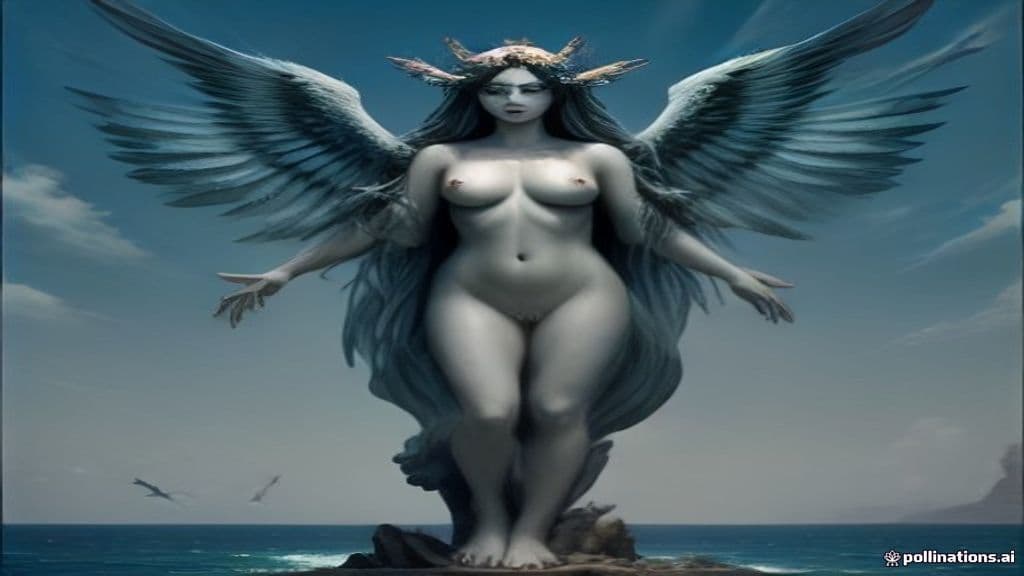
Sirens
In Greek myth, Sirens are female-associated supernatural beings whose enchanting music lures sailors to ruin; they appear in epic voyages (notably the Odyssey) as maritime hazards and are depicted in early art as hybrid bird-women. Their role is chiefly as temptresses whose song causes the downfall or shipwreck of those who hear it.
Community Record
- [1]Thelxinoë (Wikipedia). Wikipedia, 'Thelxinoë' entry (summarizes multiple attestations and gives the literal meaning 'mind-charming').wiki
- [2]Thelxinoë (Wikidata). Wikidata item Q3523555 (corroborates identification including a Muse-attestation).other
- [3]Jupiter Showing Moon Orbits (Archive visual). Archive visual listing outer moons including Aoede, Thelxinoe, Arche (modern astronomical reuse of the Muse-name-set noted in the Wikipedia entry).other
- [4]Thelxinoe - Inner Subspace (Archive audio). Modern musical release titled with the name 'Thelxinoe' (modern cultural reuse, no primary mythic information).other
- [5]Sadayatana 106: Pitch Blackness (Archive audio). Modern artistic usage of the name 'Thelxinoe' in archive listing (cultural reuse, not a primary-source mythological citation).other