
Sources present the tiyanak in two related origin frames. In Spanish‑era missionary texts the related form patianac is described as a spirit or witch‑figure that interferes with childbirth and could be heard lamenting when a woman died in labour; these accounts link community countermeasures specifically to preventing that obstetric obstruction. In later and contemporary popular belief the tiyanak is commonly explained as the earth‑bound spirit of an infant who died before receiving a name or baptism, and thus cannot enter the afterlife until ritual obligations (a name, rites, or guiding offerings) are performed. Both frames — the colonial obstetric spirit and the unnamed/unbaptized infant soul — coexist in the recorded tradition and inform local practices for protecting births and for returning restless infant souls to the world of the dead.
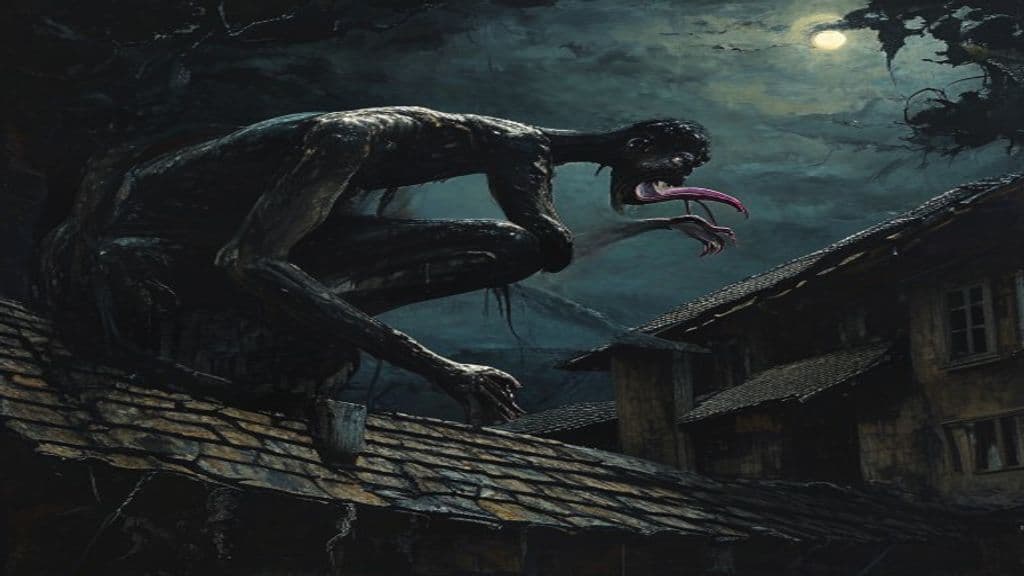
The canonical guise of the tiyanak is that of a newborn or toddler whose cries are used to lure people. Regional and variant descriptions differ: some modern summaries describe the creature as maintaining baby form until attacking, when it reveals claws and fangs; a Pampanga/Central Luzon variant portrays it as small nut‑brown people who float with large noses and fierce eyes; a Batangas version treats it as the apparition of a lost or dead real infant; a Mindoro tale records a transforming form that becomes a black bird before flying away; and some tellings depict a strange little old man with wrinkled skin, long beard, coin‑sized eyes and a shortened leg so it leaps or crawls. Sources present these as alternate or regional portrayals rather than a single uniform morphology.
Across sources the primary behaviour is mimicry of infant cries to attract unwary travelers or caretakers; when picked up or after luring victims off course the being is said to revert to its true, harmful form and attack, abduct children, or lead travelers astray. Spanish missionary accounts and their summaries describe a closely related patianac that obstructs childbirth and is believed to 'suck out the souls of children,' prompting communal defensive measures during labour. Folk healers (albularyos) reported in modern interviews claim certain sounds (e.g., guitar playing) repel the creature; such claims are recorded as folk testimony rather than empirical fact.
Weaknesses
- conditionbeing given a name and guided with a white candle
- conditionloud noise (startling or communal revelry)
- conditioninversion of clothing (turning clothes inside out)
- substancegarlic (reported as item also used against aswang and applied to repel tiyanak)
- otherclinking coins (Batangas variant sonic repellent)
- otherguitar music (reported by some rural albularyos as a repellant)
Wards
- ritualarmament and fencing gestures during childbirth
- conditionrelocation of labour to another house
- ritualmaking loud noise (New Year’s revelry, drums, bells)
- ritualturning clothes inside out (to break enchantment)
- substancegarlic / rosary or rosemary (sources conflate rosary and rosemary; both reported as aswang‑type repellents applied against tiyanak)
- otherclinking coins
- otherplaying guitar
Aswang
The most feared supernatural being in Philippine folklore — a shape-shifting monster that appears human by day but transforms at night to prey on pregnant women and children.

Pontianak (Kuntilanak)
A Southeast Asian female vengeful spirit common in Malay‑language traditions, often portrayed as the restless ghost of a woman who died in traumatic circumstances; she commonly appears as a beautiful woman who may reveal a monstrous form and is associated with banana and banyan trees.
Community Record
- [1]Tiyanak. Wikipedia article 'Tiyanak' (accessed source material cited in research notes)wiki
- [2]Wikidata: Tiyanak (Q12971963). Wikidata entry Q12971963wiki
- [3]Tiyanak (1988) — Archive listing. Archive film listing for 1988 film 'Tiyanak' (popular culture reference)other
- [4]Stories Philippines Podcast - The Tiyanak: Baby in the Woods. Archive podcast episode retelling Tiyanak folklorefolk
- [5]Francisco de San Antonio — chronicle excerpt (as cited). Spanish missionary account cited in modern summaries (San Antonio) describing armed fencing during labour to keep the patiànac and osuàng away (quoted in secondary sources and Wikipedia)other
- [6]Juan de Plasencia (1589) — missionary account (as cited). Fr. Juan de Plasencia cited in secondary summaries describing the patianac and childbirth lamenting (quoted in modern overviews and Wikipedia)other
- [7]Meet The Aswang (overview article). Modern popular commentary grouping Philippine night/danger spirits and noting overlaps in repellents and cultural contextother
- [8]Selected modern interviews and essays (popular commentary). Modern commentary and interviews cited in research notes discussing cultural interpretations and contemporary variantsfolk