Tydeus is presented in the tradition as a son of Oeneus (mother given variously as Periboea or Gorge) of Calydon. After killing kin or becoming embroiled in local strife he was banished from Calydon and took refuge at Argos under King Adrastus; there he married Deipyle (one of Adrastus's daughters) and later became one of the leaders known as the Seven against Thebes. He fathers Diomedes (later a major Achaean hero) and participates in the expedition to restore Polynices to the Theban throne. Versions of his story place him at the founding moment of the Nemean Games and at the embassy to Thebes where he fights single combat and is later mortally wounded on the Theban battlefield.
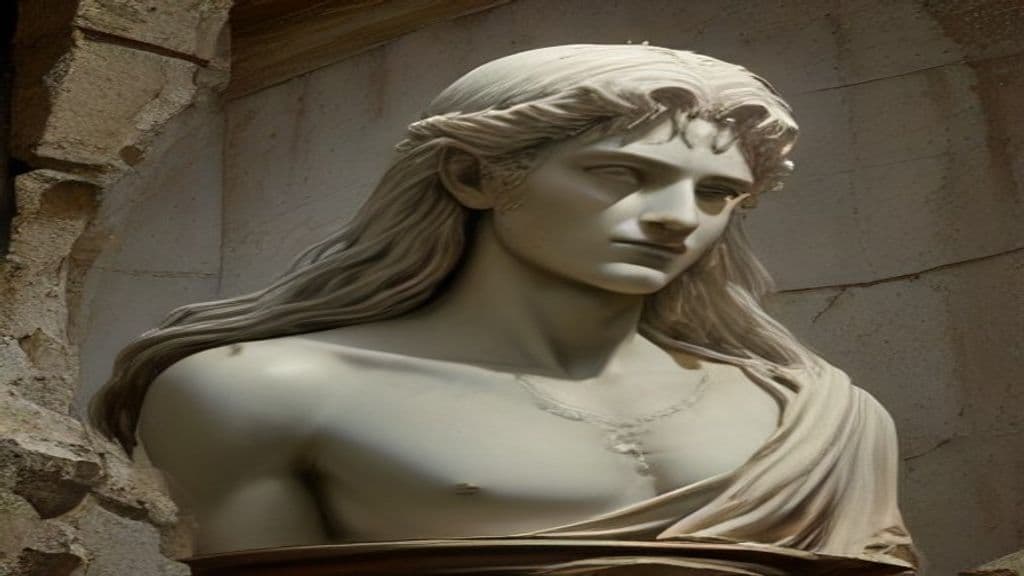
The surviving texts give no detailed standardized portrait of Tydeus's physical features; he is depicted through his martial trappings and actions typical of archaic Greek heroes. Literary accounts associate him with weaponry and athletic attire appropriate to a warrior and games competitor (he is said to have won the boxing at the first Nemean Games in one tradition). In some motifs he and Polynices are identified with animal imagery (Tydeus likened to a boar while Polynices is likened to a lion). Tydeus is also attested in archaic iconography (for example a 6th-century Corinthian black-figure amphora in the Louvre depicts a scene—murder of Ismene—linked to his narrative), and he is invoked across epic, lyric, and tragic literature rather than described by a single standardized physical form.
Tydeus's primary attributes are martial prowess and success in single combat and athletic contest: accounts state he won boxing at the first Nemean Games and that, as an envoy at Cithaeron, he issued one-on-one challenges and "vanquished each one with power granted to him by Athena" in one tradition. He is repeatedly represented as ferocious and effective in battle—ambushed and killing many attackers in one episode—and in certain versions commits extreme violence, most famously the episode in which he eats the brains of Melanippus (the Theban who wounded him). His interactions with the divine include being empowered by Athena in combat and a later episode in which Athena contemplates making him immortal after he is mortally wounded but rescinds that plan when the cannibalistic act is revealed.
Weaknesses
- conditionmortality and loss of divine favour
Wards
- otherNo warding rituals recorded in the provided sources

Athena
Athena is a major ancient Greek goddess associated with wisdom, handicraft (notably weaving), and warfare; she serves as a tutelary protector of cities—most prominently Athens—and is central to myth, cult, and civic identity in the Greek world.
Adrastus
Adrastus (Ancient Greek: Ἄδραστος or Ἄδρηστος) is a legendary king of Argos in the Greek mythic-historical tradition, best known as the leader of the expedition of the Seven against Thebes and as a figure tied to oracular counsel, dynastic marriages, and local hero cults.

Diomedes
Diomedes (Ancient Greek: Διομήδης) is a hero of Greek myth, foremost among Achaean warriors in the Trojan War, later a king of Argos and a legendary founder of cities in Italy; some traditions report he received cult after death. The name also appears for other historical and modern persons and places but within the supplied sources refers primarily to the mortal heroic figure(s) of classical tradition.

Amphiaraus
Amphiaraus is a legendary Greek seer and chthonic hero, famed as one of the Seven against Thebes. After his death—when the earth opened and swallowed him—he was venerated at the Amphiareion of Oropos as a healing and oracular figure whose sanctuary received petitioners seeking dream-delivered solutions.
Community Record
- [1]Tydeus — Wikipedia. Wikipedia contributors, 'Tydeus,' Wikipedia, The Free Encyclopedia.wiki
- [2]Tydeus — Wikidata (taxonomic homonym noted). Wikidata entry Q7859777 (noting modern homonym as a genus of arachnids; distinct from the mythic figure)other