In Journey to the West the being is a dragon prince, son of the Dragon King of the West Sea, who was punished—banished to Yingchou Stream at Shepan Mountain—after an offense (narrative variants cite burning a pearl). Guanyin intercedes on his behalf and arranges that he serve Tang Sanzang as a white horse for the pilgrimage; at the journey's conclusion he is ordained as Babu Tianlong Guangli Bodhisattva (八部天龍廣力菩薩) and resumes dragon form with a temple role.
In the novel he appears both as a gigantic white dragon and as the monk Tang Sanzang's white horse during the pilgrimage. He is described as a white (or jade‑tinged) dragon in dragon form, and as an ordinary white horse while serving as a mount. At the end of the story he resumes full white dragon form and coils around a pillar in the Great Leiyin Temple. Adaptations (e.g., 1986 television) add variant backstory details but preserve the dragon/horse duality.
Can transform between a dragon and a horse, demonstrating considerable physical strength in dragon form (notably swallowing Tang Sanzang's horse whole in the initial episode). He engages in combat on occasion—including the initial fight with Sun Wukong when the white horse is swallowed—and later returns to dragon form to fight when the pilgrimage party is endangered. His eventual ordination as a bodhisattva in the narrative denotes elevated spiritual status, but the provided sources describe his powers only in terms of transformation, physical might, and episodic combat.
Weaknesses
- conditionSubject to divine/legal punishment (banishment) by higher authorities
- conditionCan be defeated in single combat (defeated by Sun Wukong in initial encounter)
Wards
None recorded.
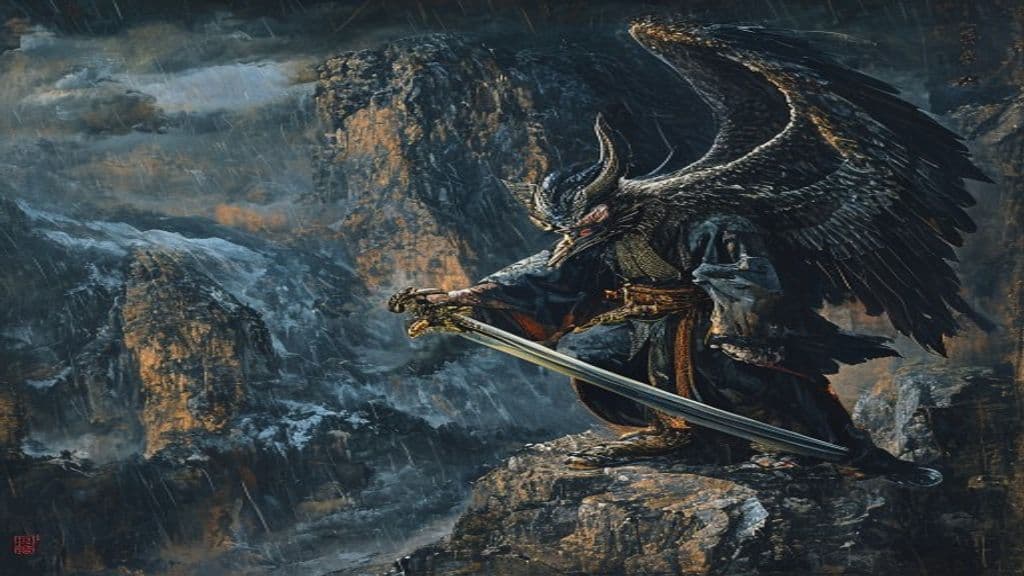
Tengu
Proud, warrior-like mountain spirits of Japan, associated with martial arts, pride, and the wild mountains. Neither fully good nor evil — they test and train warriors and monks, but punish the arrogant.

Sun Wukong
Sun Wukong (孫悟空, Sūn Wùkōng), popularly the "Monkey King," is a mythic non-human sapient figure from Chinese literary and religious tradition best known from the 16th‑century novel Journey to the West. Portrayed as an exceptional stone-born monkey who acquires supernatural powers through Taoist practice, he is alternately a rebellious trickster who challenges Heaven and, after punishment, a protector and disciple who accompanies the monk Tang Sanzang on a Buddhist pilgrimage.

Tang Sanzang
Tang Sanzang is the fictionalized monk-protagonist of the 16th-century novel Journey to the West, modelled on the historical Xuanzang. In the novel he is a devout, compassionate pilgrim sent from Chang'an to Tianzhu to retrieve the Tripiṭaka; portrayed as a reincarnation of the Golden Cicada, he is protected by supernatural disciples and is ultimately elevated to the Buddha of Sandalwood Merit.

Dragon King
A high-ranking serpent/dragon ruler associated with water, weather, and territorial guardianship across East, South and Southeast Asian folk-religious traditions. Treated as a divine or semi-divine authority (Nāgarāja / lóng / Ryū / Yongwang) who presides over seas, rivers, wells and rainfall and is an object of ritual supplication, especially in rainmaking and agricultural contexts.
Community Record
- [1]White Dragon Horse — Wikipedia. Wikipedia, entry 'White Dragon Horse'.wiki
- [2]Wikidata: White Dragon Horse (Q2913871). Wikidata entity Q2913871.other