
Born c. 1077/1078 (sources vary on exact birthplace; medieval claims differ but modern historians favor Gilan), he migrated to Baghdad in 1095. In Baghdad he studied jurisprudence and hadith (teachers named in sources include Abu Saeed Mubarak Makhzoomi and Ibn Aqil) and pursued Sufi spiritual training (with Abu'l‑Khair Hammad al‑Dabbas cited as a guide). Hagiographical and biographical traditions report a prolonged period of ascetic retreat—traditionally rendered as some twenty‑five years of wandering and seclusion in the deserts of Iraq—after which he returned to public teaching and preaching, reportedly resuming teaching in Baghdad around the early 12th century, establishing the Madrasa al‑Qadiriyya, producing a corpus of devotional and doctrinal works (e.g., Futuh al‑Ghayb, Al‑Ghunya, Jila' al‑Khatir), and dying in 1166. His shrine in Baghdad became a long‑standing locus of veneration (destroyed in 1508; rebuilt under Ottoman patronage by Suleiman in 1535) and his death anniversary (urs) is traditionally observed on 11 Rabi' al‑Thani.
The supplied sources do not provide a consistent historical physical description. Biographical and institutional materials emphasize his roles as jurist, teacher, and spiritual master rather than corporeal features. Later devotional imagery and shrine iconography exist in the popular record, but specific, reliable contemporaneous physical details are not attested in the provided materials.
Historically attested activities include teaching Hadith and Qur'anic exegesis, delivering lectures on spiritual discipline (ilm al‑Qulub), founding and directing a madrasa (Madrasa al‑Qadiriyya), writing a number of influential Sufi and devotional works, and exerting social influence as a moral and spiritual advisor to diverse followers and political figures. Hagiographical sources attribute to him very high spiritual stations in Sufi cosmology (honorifics such as Muḥi al‑Dīn, and the maqam of Ghawth, the succour), framing him as an efficacious intercessor and exemplar; such exalted spiritual claims are part of devotional tradition rather than verifiable historical acts in the supplied corpus.

Apsara
Celestial dancers and water nymphs of Hindu cosmology — beautiful semi-divine beings who dance at the court of Indra and, by his command, descend to earth to distract sages from excessive asceticism.

Marid
The most powerful class of jinn in Islamic tradition — beings of the sea, associated with the deep ocean, storms, and the granting of wishes at terrible cost. The classic genie of the Arabian Nights.
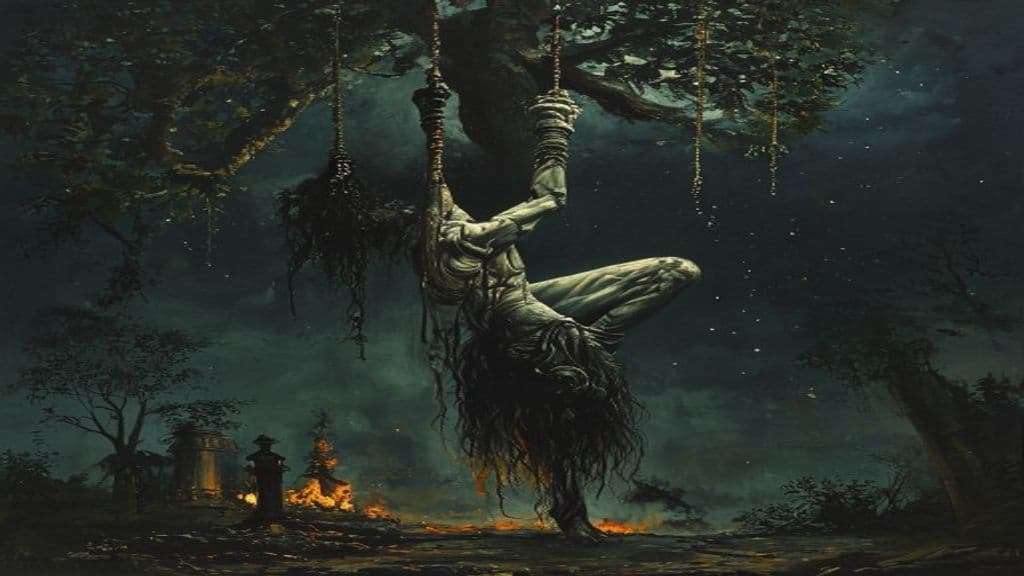
Vetala
A spirit that inhabits and reanimates corpses, possessing supernatural knowledge and the power to prophesy. One of the most feared beings in Shaiva tradition.

Naga
Divine serpent beings of Hindu, Buddhist, and Jain cosmology — powerful guardians of water, earth, and underground treasures. Revered as deities in South and Southeast Asia.

Baba Yaga
Baba Yaga is an ambivalent female figure of East Slavic folktale tradition, depicted variously as a fearsome, child-eating crone or as a helpful, maternal donor. She is associated with the deep forest, a hut described as standing on chicken legs, and the motific accoutrements of a mortar and pestle.
Al‑Masih ad‑Dajjal
An Islamic eschatological antagonist described in hadith and later apocalyptic literature as a false Messiah who will deceive many before the Day of Judgment. He is depicted variously as an individual man or as a devil in human form, performs counterfeit miracles, and is ultimately defeated by the return of ʿĪsā (Jesus).
ʿAbd al‑Qādir al‑Jīlānī
Historical Sunni Muslim preacher, Hanbali jurist, and Sufi shaykh who is the eponym and authoritative exemplar of the Qādiriyya Sufi order; remembered for his recorded discourses (majalis), juridical learning, and role as a transmitter of Sufi training and khirqa investiture. Active in Baghdad in the 12th century, his writings and shrine remain central to Qādirī devotional and institutional life.
Abatwa (Twa / Batwa)
Abatwa (also recorded as Twa, Batwa, Mutwa; singular forms Barhwa or Murhwa in some transcriptions) are indigenous hunter‑gatherer peoples of the Great Lakes region of Central Africa, historically identified as some of the earliest inhabitants of the area. The available sources treat them as human ethnic groups whose livelihoods, lands, and populations have been severely affected by conservation policies and modern violence.
Abcán (Abhcán)
Abcán (modern spelling Abhcán) is a named dwarf poet and musician of the Tuatha Dé Danann in Irish myth. He appears in a small number of narratives as a musician whose art has soporific power and as the ferryman who brings the goddess Ruad from the Otherworld to the human world.
Abdel Messih El-Makari
Abdel Messih El-Makari (1892–1963) was a Coptic Orthodox monk and priest venerated as a 20th‑century Coptic saint. Associated with the Monastery of Saint Samuel the Confessor and the Monastery of Saint Macarius (Scetes/Wadi El‑Natrun), he is remembered for humility, asceticism, charity, and reported spiritual gifts such as prescience, discerning of spirits, and healing.
Abderus
Abderus (Ancient Greek: Ἄβδηρος, romanized Ábdēros) is a mortal heroic figure in Greek myth closely associated with Heracles, remembered as the youth left in charge of the Mares of Diomedes who was killed by them. He functions as an eponymous local/divine-hero ancestor for the city of Abdera and received funerary commemoration and athletic agones at his tomb.
Abdiel
Abdiel (Hebrew עֲבְדִּיאֵל) is primarily a theophoric Hebrew personal name meaning "servant of El/servant of God," attested once in the Hebrew Bible (1 Chronicles 5:15). In later literature—most notably John Milton's Paradise Lost—Abdiel is reimagined as a faithful seraph who opposes Satan's revolt. The provided sources do not treat Abdiel as an autonomous folkloric spirit type or record rituals or wards associated with the name.
Abel
Abel is the second son of Adam and Eve in the Genesis narrative, a shepherd whose accepted offering and subsequent murder by his brother Cain form the biblical account of the first death. Later interpretive traditions expand his role, treating him as an archetypal righteous victim, a postmortem avenging or adjudicating figure, and in some systems (notably Mandaean) identifying him with an angelic lightbeing.
Abellio
Abellio is a theonym attested in Roman‑period inscriptions from the Comminges area of the Pyrenees and reported as worshipped in the Garonne Valley of ancient Gallia Aquitania. Surviving evidence is limited to a small number of inscriptions; scholars have variously hypothesized solar or arboreal associations and compared the name to forms of Apollo or to Celtic Belenus, but the deity's precise role in local cosmology remains uncertain.
Abena Mansa
A name attested in a single contemporary Ghanaian blog anecdote as a 'mysterious being'; available sources do not establish Abena Mansa as a coherent, traditional supernatural figure or provide corroborating ethnographic detail.
Abgal
Abgal (Arabic: أبغال) is a pre‑Islamic local tutelary figure attested in the Palmyrene cultural sphere (c. 154–270 AD), primarily venerated by nomadic Arab groups in the Syrian desert. He appears in inscriptions and reliefs as one of a constellation of armed, mounted protective deities associated with caravan and nomadic protection, though no ritual texts survive in the cited sources.
Abhean
Abhean is a named poet of the Tuatha Dé Danann in medieval Irish literature, described as a poet in particular of Lugh and recorded as having been killed by Óengus before Midir in a poem by Fland Mainistreach preserved in the Lebor Gabála Érenn.
Community Record
- [1]Abdul Qadir Gilani (Wikipedia). Wikipedia, 'Abdul Qadir Gilani' (accessed source material provided).wiki
- [2]Wikidata: Abdul Qadir Gilani. Wikidata entry for Abdul Qadir Gilani.other
- [3]Abdul Qadir Gilani Mosque, Jordan (Wikipedia). Wikipedia article on a modern mosque named after Abdul Qadir Gilani.wiki
- [4]Geography Al Baaz Al Ash Hab By Dr Jamal Uddin Gilani. Archive.org item referencing Gilani family geography and related material.other
- [5]Abdul Qadir Gilani and the Fruits of Paradise: From Serving the Guest. Essay discussing Abdul Qadir Gilani in a devotional/cultural context.other
- [6]Hazrat Abdul Qadir Jalani - meherbabatravels. Popular devotional biographical page on Abdul Qadir Jalani.other
- [7]Pearl Publishing House: Endowment of Divine Grace, Pref.. Publisher page referencing devotional literature related to Gilani.other
- [8]My Ancestral Past: Visiting the Gilanis in Iran | Sacred Footsteps. Blog-post discussing Gilan family origins and commemoration.other
- [9]Kids Kiddle: Abdul Qadir Gilani. Children's encyclopedia entry summarizing basic biographical facts.other