
Abellio is not known from mythic narrative but from epigraphic evidence: the theonym appears in inscriptions discovered in Comminges in the Pyrenees and is reported as a deity worshipped in the Garonne Valley of Gallia Aquitania. The primary attestation is epigraphic rather than literary; modern summaries note the name in a small number of Roman‑period inscriptions (see cited sources). Scholarly discussion of origin focuses on comparative etymology: some have linked the name to Greek or Italic forms of Apollo (Greek Abelios / Apello) and others have compared it to Celtic solar names such as Belenus. These etymological proposals are offered as hypotheses to situate the obscure theonym within broader Mediterranean and Celtic name‑patterns, but the sources emphasize that Abellio is attested only among the Aquitani, a people neither Greek nor Celtic, and thus caution against equating the local theonym uncritically with better‑known gods.
No primary source provides an iconographic or descriptive portrayal of Abellio. The inscriptions record the name forms Abellio and Abelio (and the variant Abelionni in some summaries), but contain no surviving depiction or detailed epithet preserved in the reviewed material. Consequently, there is no attested costume, emblem, or statue description in the supplied sources; the absence of pictorial or literary description in the inscriptional record leaves appearance undocumented.
Direct statements of powers or deeds are not preserved in the available inscriptions. Scholarly conjecture, grounded in name comparison and patterns of local syncretism in the Roman world, suggests possible domains: some scholars have postulated solar associations by linking Abellio to Abelios/Apello (Apollo) and to Celtic solar/healing deities such as Belenus; other commentators have proposed an agrarian or arboreal function, specifically a possible connection to apple trees. These proposals are explicitly hypothetical in the sources and derive from onomastic similarity and comparative religion rather than from ritual texts or narrative accounts that document the deity's actions or capabilities.
Weaknesses
- othernone attested in sources
Wards
- othernone attested in sources
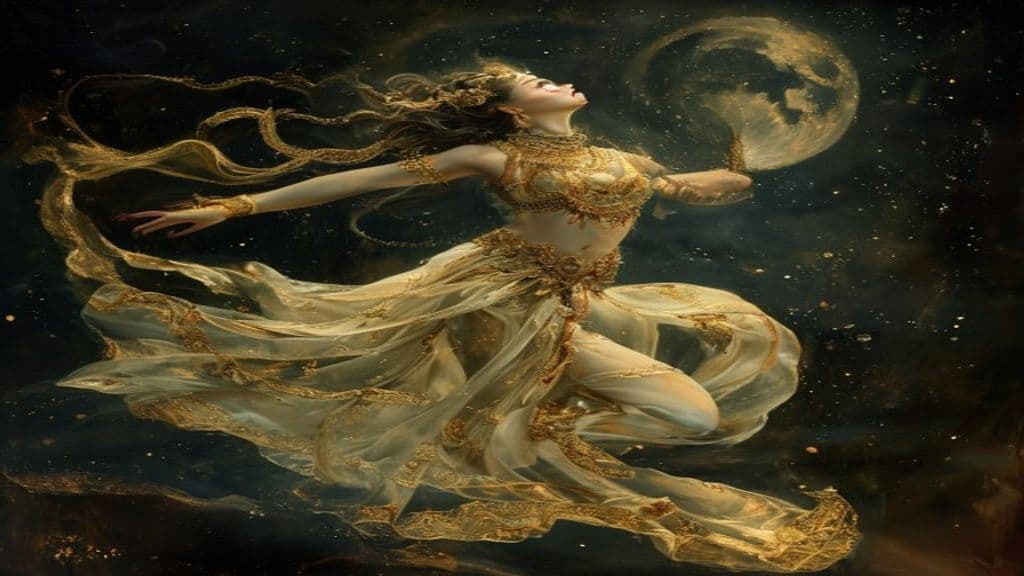
Apsara
Celestial dancers and water nymphs of Hindu cosmology — beautiful semi-divine beings who dance at the court of Indra and, by his command, descend to earth to distract sages from excessive asceticism.
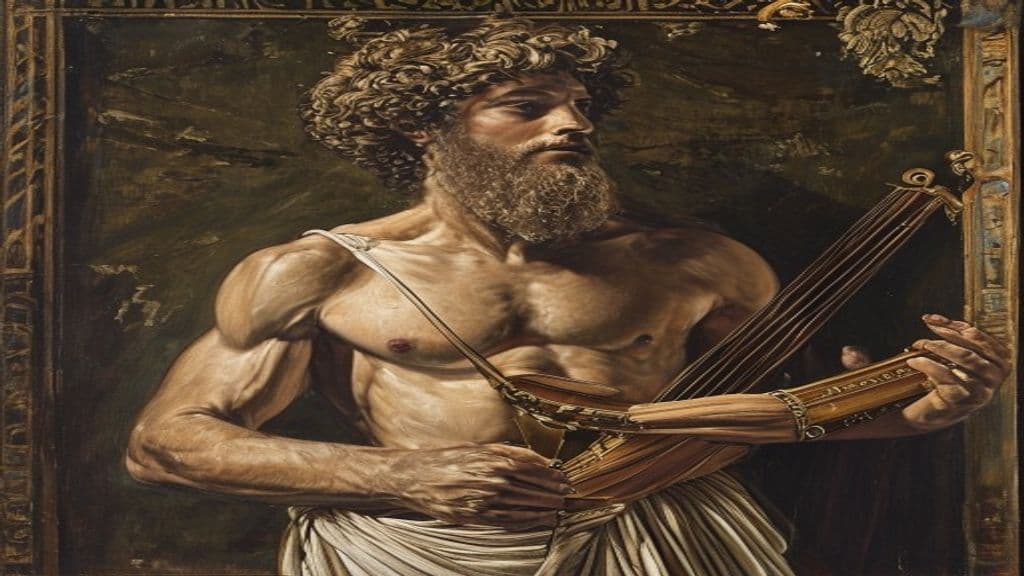
Apollo
Olympian deity of ancient Greek religion associated with prophecy, healing, music, archery, purification, and civic order. Principal patron of the Delphic oracle, protector of youth and flocks, and ambivalently both healer and bringer of plague.
Abcán (Abhcán)
Abcán (modern spelling Abhcán) is a named dwarf poet and musician of the Tuatha Dé Danann in Irish myth. He appears in a small number of narratives as a musician whose art has soporific power and as the ferryman who brings the goddess Ruad from the Otherworld to the human world.
Abdel Messih El-Makari
Abdel Messih El-Makari (1892–1963) was a Coptic Orthodox monk and priest venerated as a 20th‑century Coptic saint. Associated with the Monastery of Saint Samuel the Confessor and the Monastery of Saint Macarius (Scetes/Wadi El‑Natrun), he is remembered for humility, asceticism, charity, and reported spiritual gifts such as prescience, discerning of spirits, and healing.
Abderus
Abderus (Ancient Greek: Ἄβδηρος, romanized Ábdēros) is a mortal heroic figure in Greek myth closely associated with Heracles, remembered as the youth left in charge of the Mares of Diomedes who was killed by them. He functions as an eponymous local/divine-hero ancestor for the city of Abdera and received funerary commemoration and athletic agones at his tomb.
Abdiel
Abdiel (Hebrew עֲבְדִּיאֵל) is primarily a theophoric Hebrew personal name meaning "servant of El/servant of God," attested once in the Hebrew Bible (1 Chronicles 5:15). In later literature—most notably John Milton's Paradise Lost—Abdiel is reimagined as a faithful seraph who opposes Satan's revolt. The provided sources do not treat Abdiel as an autonomous folkloric spirit type or record rituals or wards associated with the name.
Abdul Qadir Gilani
A historical 11th–12th century Hanbali jurist, preacher, and Sufi shaykh who became the eponym and principal early figure of the Qadiriyya tariqa; venerated in Sunni Sufi traditions as an Awliya (saint) and often given exalted hagiographical ranks such as Muḥi al‑Dīn and Ghawth.
Abel
Abel is the second son of Adam and Eve in the Genesis narrative, a shepherd whose accepted offering and subsequent murder by his brother Cain form the biblical account of the first death. Later interpretive traditions expand his role, treating him as an archetypal righteous victim, a postmortem avenging or adjudicating figure, and in some systems (notably Mandaean) identifying him with an angelic lightbeing.
Abena Mansa
A name attested in a single contemporary Ghanaian blog anecdote as a 'mysterious being'; available sources do not establish Abena Mansa as a coherent, traditional supernatural figure or provide corroborating ethnographic detail.
Abgal
Abgal (Arabic: أبغال) is a pre‑Islamic local tutelary figure attested in the Palmyrene cultural sphere (c. 154–270 AD), primarily venerated by nomadic Arab groups in the Syrian desert. He appears in inscriptions and reliefs as one of a constellation of armed, mounted protective deities associated with caravan and nomadic protection, though no ritual texts survive in the cited sources.
Abhean
Abhean is a named poet of the Tuatha Dé Danann in medieval Irish literature, described as a poet in particular of Lugh and recorded as having been killed by Óengus before Midir in a poem by Fland Mainistreach preserved in the Lebor Gabála Érenn.
Abhimanyu
Abhimanyu is a youthful Kuru/Pandava warrior-hero in the Sanskrit epic Mahābhārata. Son of Arjuna and Subhadra, he is famed for entering the Chakravyuha battle formation on the thirteenth day of the Kurukshetra War and dying at age sixteen; his posthumous son Parikshit continues the Kuru line.
Abhinandananātha
Abhinandananātha is the fourth Tīrthaṅkara (ford-maker) of the current Jain cosmic age (avasarpini). Traditional accounts place his birth in Ayodhyā to the Ikshvāku (Solar) dynasty, describe his renunciation and attainment of omniscience beneath a priyangu tree, and record his liberation on Mount Śikharjī.
Abiathar
Abiathar (Hebrew: אֶבְיָתָר, ʾEḇyāṯār) is a named human priestly figure in the Hebrew Bible. He is presented as a survivor of the Nob massacre who fled to David with priestly regalia, served as a priest and counselor in David's court, and was later deposed and sent to Anathoth by Solomon for supporting Adonijah.
Community Record
- [1]Abellio - Wikipedia. Wikipedia, 'Abellio' (entry summarizing inscriptional attestations and scholarly hypotheses).wiki
- [2]Abellio - Wikidata. Wikidata entry for Abellio (theonym attestation and name variants).other
- [3]Greater Anglia Complaints Leaflet 2016. Archive item present in user-supplied materials (not relevant to deity beyond being among provided documents).other
- [4]Het winnen van de aanbesteding in Limburg door Abellio. Archive item present in user-supplied materials (not relevant to deity beyond being among provided documents).other
- [5]NOS-NTR Nieuwsuur 2023-02-28. Archive item present in user-supplied materials (not relevant to deity beyond being among provided documents).other