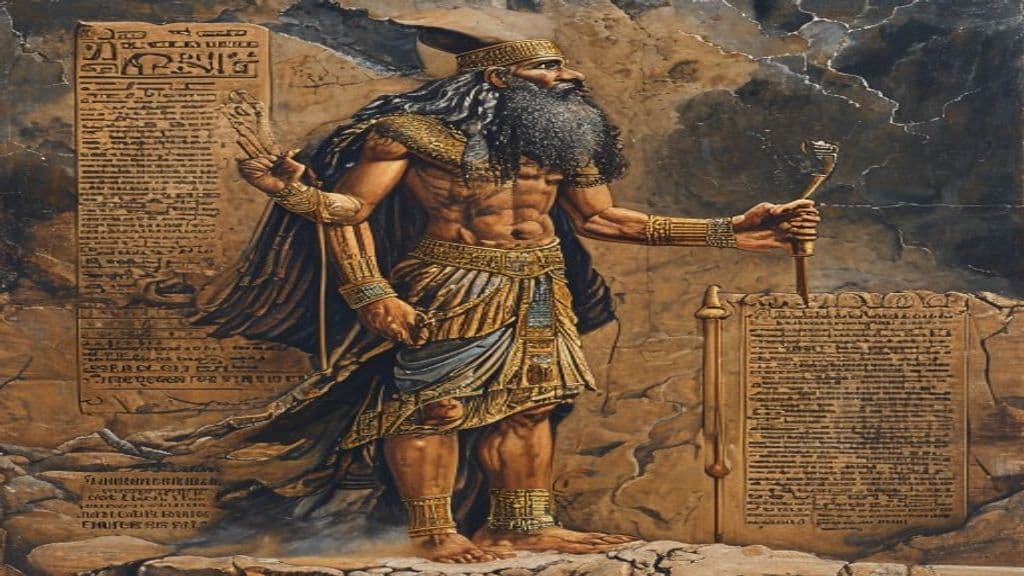
The provided sources do not give a cosmogonic or narrative origin for Adad. They present him as an established member of Mesopotamian and Canaanite pantheons and note historical attestation (for example, as 'Hadda' at Ebla circa 2500 BCE) but supply no mythic account of his birth or origin within these excerpts (Source: Wikipedia: Adad; GatewaystoBabylon).
The supplied excerpts contain no iconographic or physical description of Adad. The sources identify his functional role (storm- and rain-god) and record his names across languages but do not describe attributes, clothing, animal associations, or visual motifs in the provided material (Source: Wikipedia: Adad; GatewaystoBabylon).
In the provided material Adad's powers are described functionally: he is the storm- and rain-god of the Canaanite and ancient Mesopotamian religions, indicating authority over atmospheric phenomena such as rain and storms. One secondary summary characterizes him as a Mesopotamian storm god with epithets emphasizing mastery of natural elements and 'Earth Shaker' (GatewaystoBabylon), which in these excerpts is presented as a traditional descriptor rather than quoted primary titulary. No detailed mythic actions or personality traits are given in the supplied notes.

Naga
Divine serpent beings of Hindu, Buddhist, and Jain cosmology — powerful guardians of water, earth, and underground treasures. Revered as deities in South and Southeast Asia.

Baal
Baal (bāʿal) is a Northwest Semitic title meaning 'owner' or 'lord' that served as a theonym in the ancient Levant; in Ugaritic and Canaanite texts it appears as the name/title of a prominent storm and fertility god (often rendered Baʿal Haddu) who features centrally in the Baal Cycle and in regional cults tied to rain, fertility, and kingship. In later monotheistic literatures the term becomes a polemical label for rival or foreign deities and is reinterpreted in various receptions.
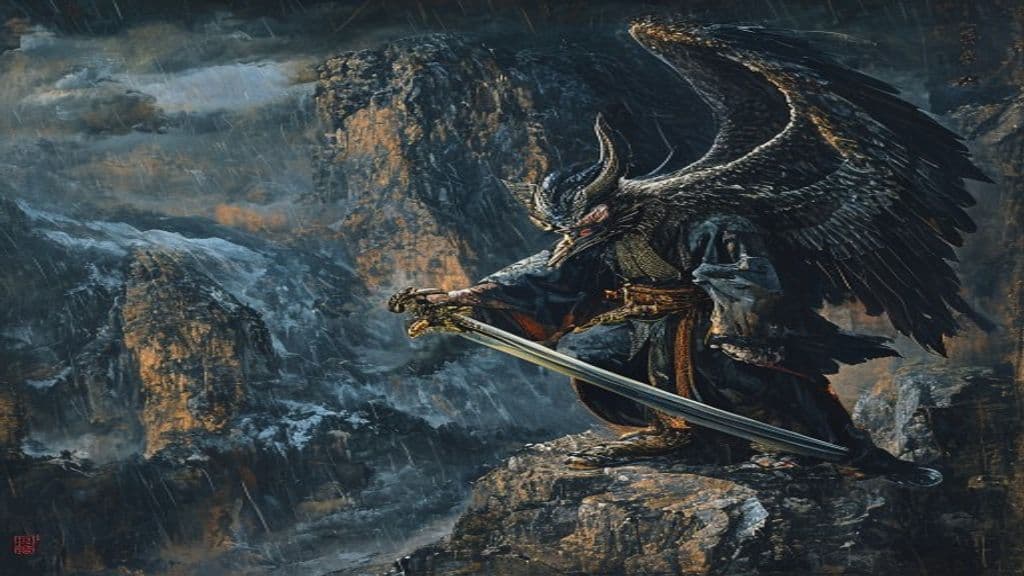
Tengu
Proud, warrior-like mountain spirits of Japan, associated with martial arts, pride, and the wild mountains. Neither fully good nor evil — they test and train warriors and monks, but punish the arrogant.
Community Record
- [1]Hadad (Wikipedia: Adad). "Hadad, Haddad, Adad, or Iškur (Sumerian) was the storm- and rain-god in the Canaanite and ancient Mesopotamian religions."; "He was attested in Ebla as 'Hadda' in c. 2500 BCE."wiki
- [2]Adad - GatewaysToBabylon. GatewaystoBabylon summary: "Adad (the Canaanite Hadad, the Hurrian Teshub, the Egyptian Resheph, Rimmon, the Phoenician Baal/Bel, the Sumerian Ishkur) is the Mesopotamian storm god, the Lord of the Natural World of Elements, Prince/ Master of the Earth and the Earth Shaker..." (excerpted).other
- [3]Wikidata: Adad. Wikidata entry for Adad (identifier Q346547) — used as supplementary attestation of the deity's identification across sources.wiki