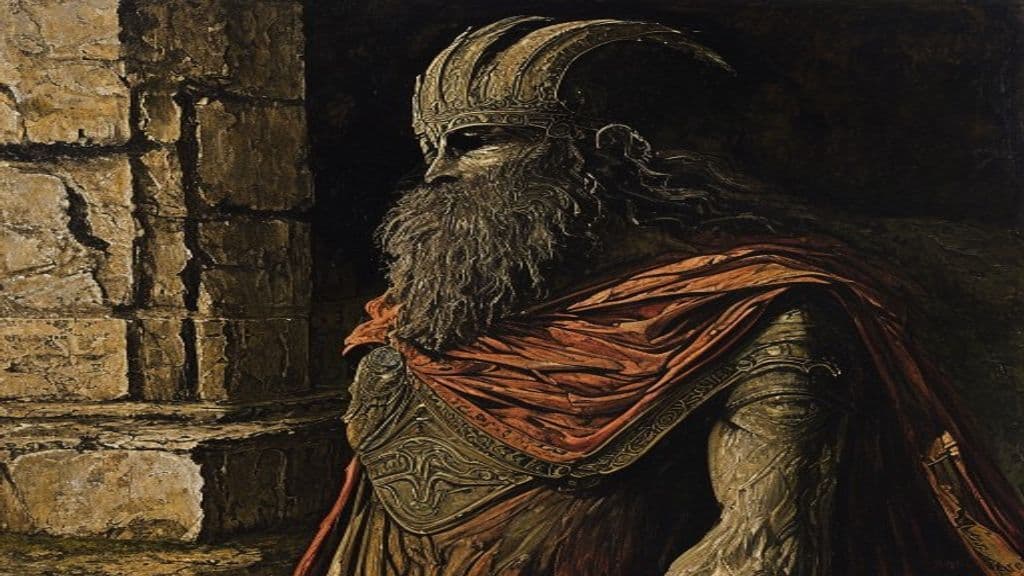
No mythic narratives or origin myths for Aernus survive in the available material. The figure is known only from epigraphic dedications; modern scholarly reconstructions therefore limit themselves to situating Aernus as a named local god within the religious vocabulary of Lusitanian and Gallaecian-speaking communities. Interpretations that ascribe a protector role derive from dedicatory context (for example, an inscription by the ordo Zoelarum) rather than from any preserved mythic account.
There are no descriptions or iconographic representations of Aernus in the cited sources. The deity is known solely through Latin-script inscriptions; no attributes, anthropomorphic or zoomorphic depictions, or cult images are documented in the available material.
Direct evidence for specific powers or deeds is absent. Scholarly inference from epigraphic context—most notably an inscription dedicated by the ordo Zoelarum—leads some researchers (Tranoy and Roux, as summarized in the sources) to conclude that Aernus likely functioned as a protector of the Zoelae, i.e. a territorial or tribal patron deity. Beyond this probable protective association, no rituals, miracle stories, or functional descriptions are preserved.
Weaknesses
- otherno attested weaknesses
Wards
- otherno attested wards
Aeon (Gnosticism)
In Gnostic religious systems an Aeon is a divine emanation or hypostasis that issues from the supreme divine source and together with other Aeons composes the Pleroma, the realm or fullness of divine reality. Aeons function as personified principles or powers (e.g., Nous, Sophia) that mediate between the ultimate One and lower levels of existence; their names, numbers, and relationships vary across Gnostic schools (Valentinian, Basilidian, Sethian, etc.).
Aeopolus
Aeopolus (Ancient Greek: Αἰπόλος, gen.: Αἰοπόλου, romanized Aipolus or Aiopólos, lit. 'goatherd') is a mortal figure in Greek mythic genealogical tradition recorded only in brief scholia and summaries. He is named as the father of Cleobule, who in one variant is cited as a possible mother of Myrtilus by Hermes; some sources note he was also called Aeolus. Attestations are limited and no cult, deeds, or narratives are preserved for him.
Aepytus
Aepytus (Ancient Greek: Αἴπυτος, Aíputos/Aípytos, lit. 'steep, high, lofty') is a personal name in Greek myth borne by several legendary kings tied to Arcadian and Heraclid genealogies. The figures named Aepytus function as ancestral/dynastic nodes in literary genealogies and later literary receptions rather than as supernatural beings.
Aequitas
Aequitas is a Roman moral-legal concept denoting justice, equity, fair measure, and conformity that was sometimes personified as a female virtue in Roman iconography (notably on imperial coinage as Aequitas Augusti). Cicero frames aequitas as a tripartite standard linking obligations to the gods, the Manes, and other human beings.
Aerdrie Faenya
Aerdrie Faenya is attested in the supplied sources as a named fictional deity from the Dungeons & Dragons game setting. The provided materials record the name and classification but give no canonical details about appearance, domains, rites, or myths.
Aergia
Aergia (Ancient Greek: Ἀεργία) is the personification/goddess of sloth, idleness, indolence and laziness in Greco-Roman mythic thought. She appears in literary sources as a named personified quality and as an attendant or guardian in the household of Sleep (Hypnos/Somnus); Roman equivalents include Socordia and Ignavia.
Aerope
Aerope (Ancient Greek: Ἀερόπη) is a mythological mortal woman of Greek tradition, a Cretan princess connected to the royal house of Mycenae (the Atreidai). In surviving accounts she functions as a human agent whose sexual relationships and/or the transfer of a symbolic object (the "golden lamb") are narrated as catalysts in the dynastic feuds of Atreus and Thyestes; sources preserve variant and sometimes conflicting traditions about her fate and parentage.
Aeropus
Aeropus is a name used for several distinct figures in Greek tradition: a mythic child variously described as son of Ares and Aerope; a son of Cepheus associated with Arcadian/Tegean genealogies and as ancestor/father of Echemus; a name applied to historical Macedonian kings; and a separate usage naming a bird into which Botres was transformed. The sources treat Aeropus primarily as a mortal or legendary ancestor rather than as an autonomous supernatural class.
Aesacus
Aesacus (Ancient Greek: Αἴσακος) is a mythic son of King Priam of Troy who, grieving the death of a river-nymph beloved, throws himself from a cliff and is transformed mid-plunge by the sea-goddess Tethys into a diving seabird (mergus). In some traditions (Apollodorus and Tzetzes) he is also described as a seer who learned dream-interpretation from his grandfather Merops and interprets Hecabe’s dream about Paris.
Aesar
Aesar is a term attested in comparative and antiquarian literature as a name or class-label applied to divine or semi‑divine beings in discussions of Etruscan religion. In the provided sources it appears chiefly in speculative comparisons with other pantheons (e.g., Norse Æsir, Irish 'Living Ones', Egyptian Asar/Osiris) and as a proposed Etruscan word meaning 'a god' in secondary commentary.
Aesculapius (Asclepius)
Aesculapius (Greek Asclepius) is the classical divine-hero of medicine and healing in ancient Greek religion and later Roman cult. He functioned as the patron and legitimating divine figure for temples, attendants (therapeutae), and organized healing practices; his emblem, the rod of Asclepius (a snake-entwined staff), endures as a symbol of medicine.
Aesepus
Aesepus is the personified river-god (potamos) of the Aesepus River in the Troad / northern Mysia of Anatolia. Attested in Hesiod's catalogue of river-children and in Homeric and geographic passages, Aesepus functions primarily as a topographical divine ancestor and eponym for a town and local genealogies.
Community Record
- [1]Aernus (Wikipedia). Wikipedia: 'Aernus' entry (summary of epigraphic attestations and scholarly interpretations).wiki
- [2]Wikidata: Aernus (Pauly-Wissowa reference). Wikidata entry pointing to Pauly-Wissowa / Realencyclopädie article on Aernus.other
- [3]CIA Reading Room (archived unrelated document). Archived CIA document listed among sources but noted as containing no relevant information on Aernus.other