In the genealogical framework preserved by Hesiod and followed in the Homeric and later geographical tradition, Aesepus is one of the river-god sons of the Titans Oceanus and Tethys, the class of primordial potamoi who personify rivers. As such he is simultaneously the physical river (headwaters near Mount Ida, flowing to the sea) and its divine person; later local genealogies present him as ancestor to naiads and heroic figures mentioned in epic contexts (e.g., through his daughter Abarbarea and eponymous descendants referenced in the Iliad). Sources: Hesiod's Theogony (catalogue of river-children), Homeric place-references in the Iliad, and Strabo's geographical descriptions.
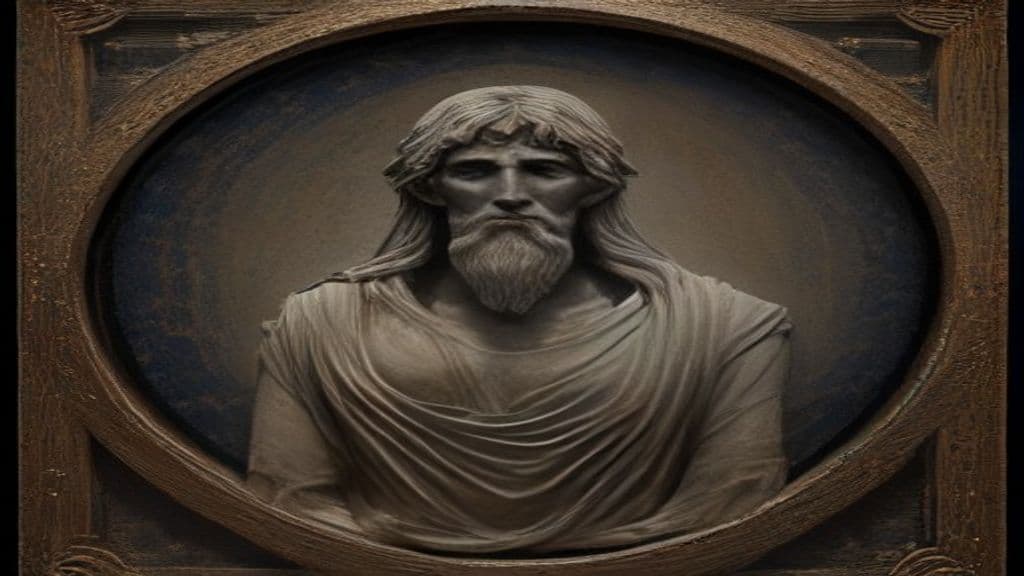
No unique anthropomorphic iconography or detailed descriptive attributes for Aesepus are attested in the supplied materials. He is named and treated as a potamos (river-god), which in Greek scholarly conventions implies a male river-personage, but the provided literary and geographic sources do not record specific physical depictions or cult images for Aesepus.
The supplied sources do not ascribe particular miraculous acts, oracular functions, or ritual powers to Aesepus. His primary function in the literary record is topographical and genealogical: he embodies the river itself, serves as a local divine ancestor in epic genealogies (Homer), and appears in universal river-god parentage (Hesiod); later geographers like Strabo use the river as a boundary-marker for the Troad. No narratives in the cited materials record personal interventions, floods, healings, or other distinct behaviors.
Weaknesses
- otherNo recorded weaknesses
Wards
- otherNo attested wards or protective rites
Acis and Galatea
A pair of lovers from ancient Greek myth: Galatea is a Nereid (sea-nymph) traditionally counted among the daughters of Nereus and Doris; Acis is a mortal youth in classical accounts who, in Ovid's poetic version, is killed by the Cyclops Polyphemus and transformed by Galatea into a river-spirit, explaining a Sicilian stream.
Actaeon
A mortal hunter of Greek myth who, in multiple traditions, is transformed into a stag and torn apart by his own hounds after transgressing the goddess Artemis. He functions as a mythic exemplar about proper deference to divine boundaries and, in some locales, became the focus of cultic rites and memorials.
Aethra
Aethra (Ancient Greek: Αἴθρα, romanized Aithra, lit. 'bright sky') is a name borne by multiple women in Greek myth, most prominently a princess of Troezen who is mother of the hero Theseus. In some traditions an Aethra is also listed among Oceanids, indicating a separate, water‑nymph identity in certain genealogies.
Aganippe (naiad)
Aganippe is the local Naiad of the spring called Aganippe at the base of Mount Helicon in Boeotia. The spring and its nymph are traditionally associated with the Muses and with poetic inspiration; the name Aganippe is also used as an epithet in other, sometimes divergent, local mythic or cultic contexts.
Alegenor
Alegenor (Ancient Greek: Ἀλεγήνωρ) is a minor mortal figure in Greek mythic genealogies, attested as a son of Itonus and the father of Clonius and Promachus. He functions in the sources as a genealogical ancestor situating his more active descendants among the Boeotian leaders of the Trojan War rather than as an independently acting supernatural being.
Alexander (name / epithet)
Alexander is primarily an Ancient Greek personal name (Ἀλέξανδρος, Aléxandros) meaning 'defender/protector of men.' In the assembled sources it functions as an anthroponym and occasional divine epithet (e.g., Hera Alexandros) rather than a single, discrete supernatural entity with a consistent mythic ontology.
Alexida
Alexida (Ancient Greek: Ἀλεξίδη) is an attested mythological figure in Greek literary tradition, presented as a daughter of Amphiaraus and the eponymous ancestress from whom the Elasioi (Elasii), averters of epileptic fits, were believed in Argos to descend. She is preserved in surviving references as a genealogical origin rather than an active cultic agent.
Alpheus
Alpheus (Ancient Greek: Ἀλφειός) is the personified river and river-god of the Alpheios in the Peloponnese. He is classed among the river-deities descended from Oceanus and Tethys and appears in myths linking the Arcadian/Elian river to the Sicilian well Arethusa, to Artemis, and to the labors of Heracles.
Amalthea
Amalthea (Ancient Greek Ἀμάλθεια) is a figure of Greek myth most commonly identified as the nurse of the infant Zeus. Traditions variously portray her as a nymph who tended a goat that fed Zeus or, in later Hellenistic treatments, as the goat itself; she is also associated with the "horn of Amalthea" (cornucopia), a horn reputed to yield inexhaustible food and drink.
Amnisiades
The Amnisiades (Ancient Greek: Αμνισιαδες / Αμνισιδες) are a group of naiads — freshwater nymphs — associated with the Amnisos river in Crete. They are attested in Hellenistic poetry as members of Artemis's retinue and are linked by scholarship to cult activity at a cave of Eileithyia on the Amnisos.
Amphictyon
Amphictyon (Greek: Ἀμφικτύων) is a mytho-historical ancestral king in Greek tradition associated with the generation after the great flood and with the foundation/organization of communities that dwelt around sanctuaries (the Amphictyons). He appears in variant genealogies as son of Deucalion and Pyrrha or as son of Hellen, is called king of Thermopylae and in some accounts king of Athens, and is etiologically linked to the Amphictyonic League and early cultic practice.
Amyrus (Ἄμυρος)
Amyrus is a mythic eponym in Greek tradition: a legendary figure after whom a river and town in western Magnesia, Thessaly, were believed to be named. Surviving sources present variant traditions that cast him as a son of Poseidon or as an Argonaut; otherwise he functions chiefly as a place-founding or name-giving ancestor in literary and geographic accounts.
Community Record
- [1]Theogony (Hesiod) — catalogue of the river-children of Oceanus and Tethys. Hesiod, Theogony (references to potamoi as children of Oceanus and Tethys)literary
- [2]Iliad (Homer) — local references to the Aesepus and descendants. Homer, Iliad (place-references and mentions of warriors associated with Aesepus' lineage)literary
- [3]Strabo, Geography — regional descriptions citing the Aesepus. Strabo, Geography, Books XII–XIII (uses Aesepus as a geographical boundary-marker and discusses its course)literary
- [4]Aesepus entry, Theoi Project (summary of ancient references). Theoi Project, 'AESEPUS (Aisepos) - Trojan River-God of Greek Mythology'other
- [5]Aesepus — modern reference summary (Pantheon / Wikipedia / local site summaries). Wikipedia: Aesepus (summarizes ancient attestations and modern toponymy)wiki
- [6]Attalus: Aesepus — compilation of ancient onomastic references. Attalus.org, 'Aesepus - in ancient sources' (collects ancient textual references and variants)other
- [7]Aesepus Bridge / regional archaeological summaries. Modern site descriptions connecting the ancient name to the river and bridge (Aesepus Bridge / Guvencin Köprüsü)other