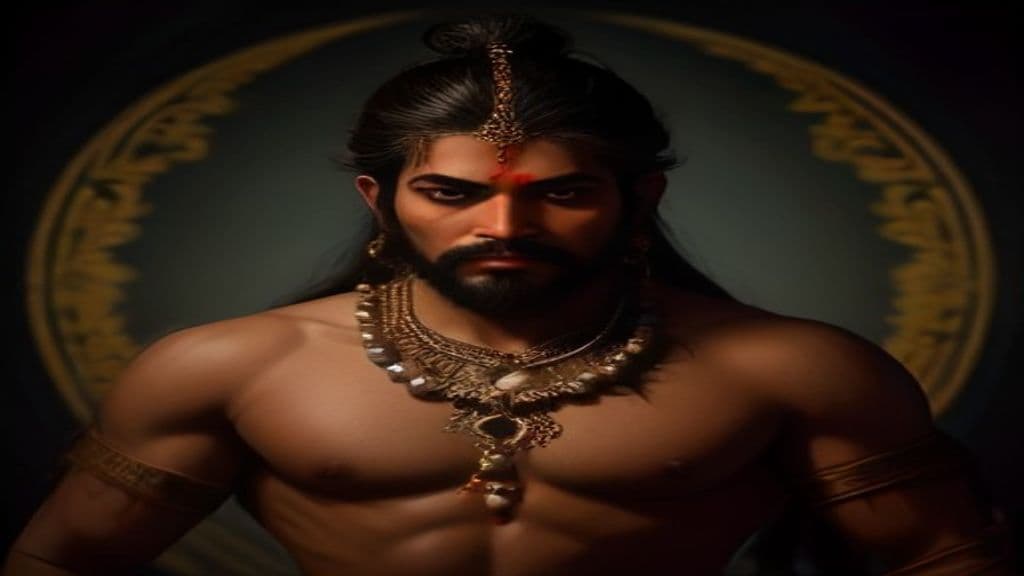
In Ramayana-derived episodic tradition (notably eastern recensions such as the Krittivasi Ramayana), Ahiravan/Mahiravan is presented as a king of Patala — the nether-world — who is called upon by Ravana after the death of Indrajita/Meghnath. Using magic and deception he abducts Rama and Lakshmana from the protagonists' camp with the intention of sacrificing them to the goddess Mahamaya/Devi. Different tellings present him as Ravana's brother or trusted ally; the story cluster associating him with a Patala-kingly court and a sacrificial plot appears in regional poems, later popular narratives and film adaptations.
Narrative sources emphasize Ahiravan/Mahiravan's status and actions rather than a sustained physical portrait. He is described as the king of Patala and a rakshasa lord who commands a palace and army in the nether-world. The tales record corporeal vulnerability: at the climax Hanuman beheads Mahiravan, and one account notes that "Mahiravan’s headless body had not stopped twitching," indicating a bodily form subject to lethal injury. Beyond these action-focused details, the supplied sources do not preserve a systematic description of height, color, or other sustained visual traits.
Accounts attribute to Ahiravan/Mahiravan several specific capacities: mastery of maya (magical illusion and shapeshifting) — e.g., taking Vibhishana's form to infiltrate Rama's camp; use of a nidra-mantra (sleeping spell) to incapacitate the vanara army and facilitate abduction; the power to transport and detain Rama and Lakshmana in Patala for an intended ritual sacrifice; and kingship over Patala including command of armies and a palace. His magic is potent enough to carry the princes off to the nether-world, but narratives make clear that he may be countered by knowledge, devotion, and direct divine aid — notably Hanuman's panchamukha (five-faced) manifestation and the assistance of the goddess Mahamaya/Kali, by means of which he is ultimately beheaded and killed.
Weaknesses
- conditionvulnerable to divine-empowered combat (beheading by Hanuman in panchamukha form)
- otherrequires access to Patala and is susceptible if route-knowledge is known (Hanuman learned the way to Patala from Vibhishana)
- othercan be countered by divine favor or intervention (assistance of goddess Mahamaya/Kali)
Wards
- otherroute-knowledge from ally
- ritualpetition to goddess Mahamaya/Kali
- ritualassumption of panchamukha form
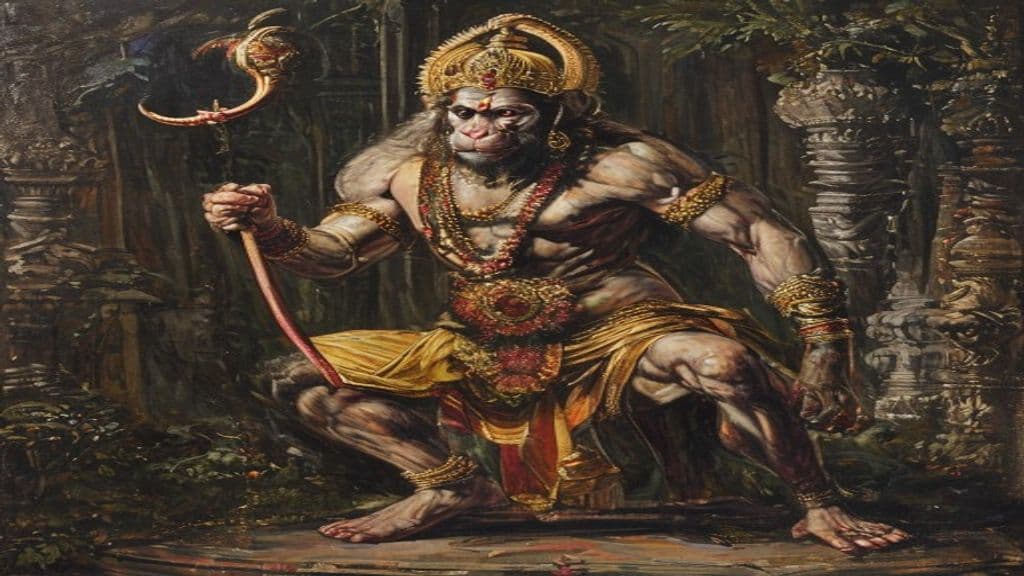
Hanuman
Hanuman is a divine vanara (monkey‑like being) in Hindu literature, foremost companion and devoted servant (Rama-dūta) of Lord Rama in the Ramayana. Revered in later Bhakti traditions, he is worshipped as a protector and exemplar of devotion, strength, and service.
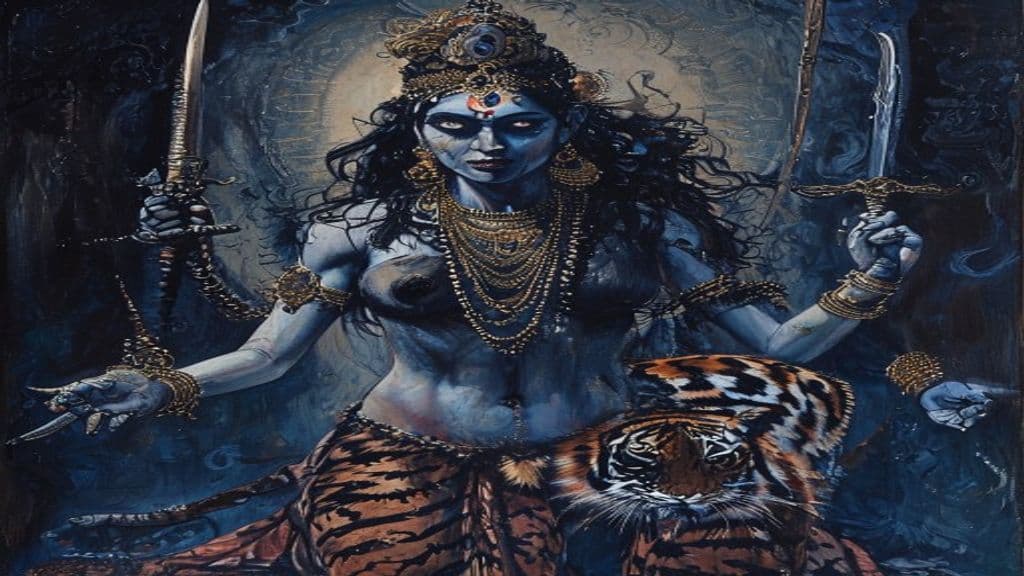
Kali
Kali is a major Hindu goddess associated with time (kāla), death, destruction, and also with liberating knowledge; she appears in Puranic and Tantric texts as a fierce battlefield power and as a protective Divine Mother (Kali Mātā).
Ahasuerus
Ahasuerus is a royal personal name in the Hebrew Bible applied to one or more kings of Persia, most prominently the monarch who rules from Susa in the Book of Esther. The name is etymologically derived from Old Persian Xšayāršā (Xerxes) but functions in the texts as a name-title whose precise historical referent is disputed across traditions.
Ahhazu
Ahhazu (Aḫḫāzu / Akhkhazu) is a Mesopotamian illness-causing spirit associated especially with jaundice and related febrile disorders. It appears in Sumerian–Akkadian lexical lists and in Babylonian magical and anti-witchcraft corpora (notably Maqlû and Utukkū Lemnūtu) as a named agent to be ritually confronted by exorcists and physician-magicians.
Ahijah the Shilonite
Ahijah the Shilonite is a Levite prophet attested in the Hebrew Bible (1 Kings) who foretold Jeroboam's rise and is credited in Chronicles with a now‑lost work. Rabbinic literature expands him into a legendary long‑lived transmitter of sacred lore while also debating his moral fallibility in the Jeroboam episode.
Ahimaaz
Ahimaaz (Hebrew: אֲחִימַעַץ, ʾĂḥīmaʿaṣ, "My Brother Is Counselor") is a human figure in the Hebrew Bible presented as a son of the high priest Zadok, a priestly court official and messenger attached to King David's court, and later listed as Zadok's successor in the priestly genealogy. He appears in narratives of David's reign—notably during Absalom's revolt—and is associated with the royal and sanctuary leadership of Jerusalem.
Ahimelech
Ahimelech is a historical/biblical Israelite priest of Nob mentioned in the Hebrew Bible (primarily 1 Samuel). A descendant of Aaron through the line associated with Eli and Ithamar, he provides David with the showbread and is later accused of aiding David; Saul orders his death and that of the attending priests, an event carried out by Doeg the Edomite.
Ahinoam
Ahinoam (Hebrew: אֲחִינֹעַם, ăḥīnōʿam) is a personal name borne by one or possibly two women in the Hebrew Bible associated with the royal households of Saul and David. In the biblical narratives she appears as a wife and mother within the social world of ancient Israelite monarchy and is involved in episodes such as the Amalekite raid on Ziklag; scholars debate whether the references designate the same woman or distinct individuals from different narrative strands.
Ahithophel
Ahithophel (also Achitofel) is a human counselor in the Hebrew Bible famed for his wisdom. He served King David, later defected to Absalom during Absalom's rebellion, and after his advice was ignored he returned to Giloh and hanged himself.
Ahitophel
Ahitophel is a biblical-era human counselor to King David famed for exceptional wisdom in the Hebrew Bible and later rabbinic literature. In the biblical narrative he defects to Absalom during the prince's revolt and his counsel nearly topples David; rabbinic traditions further portray him as a gifted but morally compromised sage who misuses divinely granted knowledge.
Ahitub
Ahitub (Hebrew: אֲחִיטוּב ’Aḥiṭub/’Aḥiṭuv, 'my brother is goodness') is a name borne by one or more Israelite priests attested in biblical genealogies and later reference works. In the source tradition he functions as a member and ancestral node within the hereditary Aaronic/priests lists (connections variously include son of Phinehas, grandson of Eli, and ancestor of Zadok and of Ezra), and is treated as a human priestly figure rather than a supernatural being.
Ahkiyyini
Ahkiyyini is described in available sources as a skeleton spirit in Inuit folklore, called "the ghost of Alaska" in one account. Accounts report that his movements and the music made with his bones cause tidal waves, earthquakes, and could overturn boats.
Ahmed al-Badawī
Ahmed al-Badawī (Aḥmad al-Badawī, al-Sayyid al-Badawī) was a 13th-century Arab Sufi mystic and founder of the Badawiyyah order. Born in Fes to a Bedouin tribe and later settled in Tanta, Egypt, his tomb remains a major site of visitation and he is regarded as one of the most popular Sufi saints in Egypt (sources emphasize his historical sainthood and pilgrimage cult rather than detailed folkloric attributes).
Ahmose‑Nefertari
Ahmose‑Nefertari was an 18th‑Dynasty Egyptian queen who, after her death, received institutionalized cult worship and was venerated in the Theban necropolis and Deir el‑Medina. Sources present her both as a historically attested royal (great royal wife and king's mother) and as a deified figure given epithets such as 'Goddess of Resurrection', 'Mistress of the Sky', and 'Lady of the West'.
Community Record
- [1]Ahiravan (Wikipedia). Wikipedia article 'Ahiravan' (summary of Mahiravan episode in Ramayana-derived traditions)wiki
- [2]Wikidata: Ahirāvaṇa. Wikidata item for Ahirāvaṇa (name attestations and classification)other
- [3]Hanuman Patal Vijay (film) (Wikipedia). Wikipedia entry on a film adaptation referencing the Mahiravan episodewiki
- [4]Subterranean Worlds (Archive.org excerpt referencing Patala usages). Modern popular work that reuses Patala motif (cited in research notes as an example of later speculative reuse)other
- [5]Hinduism StackExchange: Who killed Ahiravan or Mahiravan?. Community Q&A discussing the narrative resolution (Hanuman's role) and variationsother
- [6]Hinduism StackExchange: Mystery behind death of Ahiravan and Meghnath. Community Q&A commenting on textual variants and traditionsother
- [7]Mindreach forum: The story of Ahiravan and Hanuman - Hollow Earth. Forum post noting reuse of the Patala motif in hollow-earth discussions (modern popular reception)folk
- [8]Research notes on regional transmission (Krittivasi/Krittibasi references). Research notes citing the presence of the Ahiravan/Mahiravan episode in eastern recensions such as the Krittivasi Ramayana and later regional works and filmsliterary