
Two divergent literary traditions account for Alcyone's metamorphosis into the kingfisher. In an Attic version reported by Pseudo-Probus (attributing the tale to Theodorus), Alcyone is the daughter of Sciron (son of Polypemon); commanded to find a husband, she slept with many men, and when Sciron discovered this he cast her into the sea, where she was transformed into the bird ἀλκυών. In the better-known couple-variant preserved in Ovid (drawing on Nicander) and attested also by Virgil, Apollodorus, and Hyginus, Alcyone is the bereaved wife of Ceyx who, after his death at sea and her suicide, is pitied by the gods (notably Juno/Hera) and transformed along with Ceyx into kingfishers; these accounts link the metamorphosis to the origin of the "halcyon days," a calm spell in winter said to allow the birds to lay eggs.
Ancient sources preserve no consistent, detailed human portrait of Alcyone prior to transformation beyond her identification as an Attic woman, daughter of Sciron and granddaughter of Polypemon (Attic variant) or as Ceyx's wife (couple-variant). After metamorphosis she is identified with the kingfisher (Greek ἀλκυών), described in glosses as a sea-bird with a mournful song and an association with the sea (the name ἀλκυών itself refers both to the bird and to the woman in the myths). No specific features such as clothing or facial description are preserved in the supplied sources for her human form.
The supplied traditions do not ascribe inherent supernatural powers to Alcyone as a human. The transformation into kingfisher is described as an act of the gods (divine punishment or divine pity depending on the version) rather than an ability she exercises; after metamorphosis she is etiologically linked to a natural species and to the phenomenon of halcyon days (a calendrical/calming weather motif). Sources also record behavioral motifs tied to narrative context: in the Attic tale her sexual conduct provokes paternal violence; in the couple-variant, conjugal devotion and bereavement motivate the dramatic metamorphosis.
Weaknesses
- otherNo attested weaknesses — the tradition contains no recorded substances, symbols, rituals, or conditions used to harm or repel Alcyone or the kingfisher; she functions primarily as an etiological mythic figure.
Wards
- otherNo attested wards — the supplied sources give no protective rites, taboos, or wards specifically directed at Alcyone or the kingfisher.
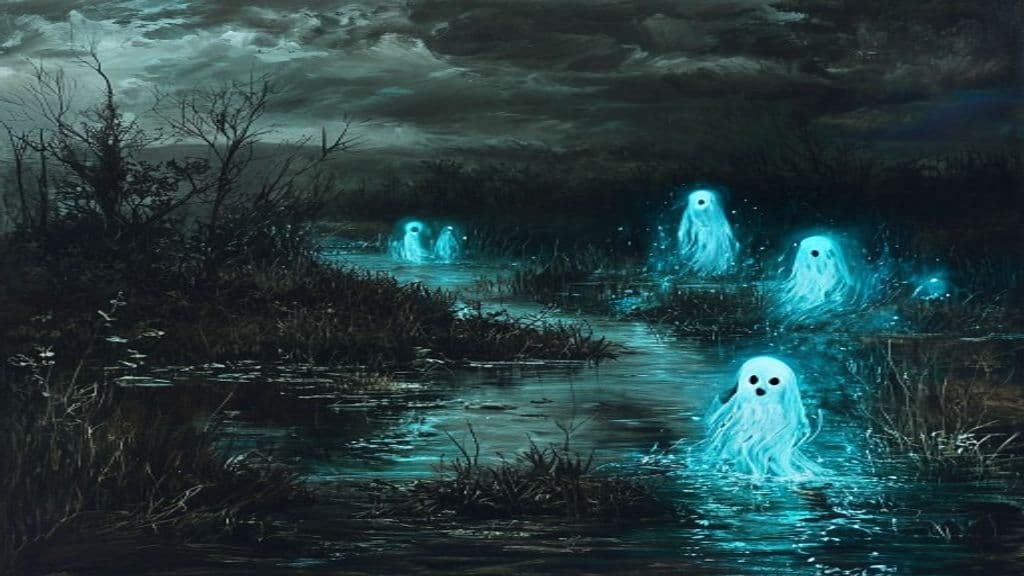
Will-o'-the-Wisp
A wandering light seen over marshy ground at night, leading travellers astray into bogs and fens. Possibly a spirit, possibly the soul of the unbaptised dead, possibly the devil himself.
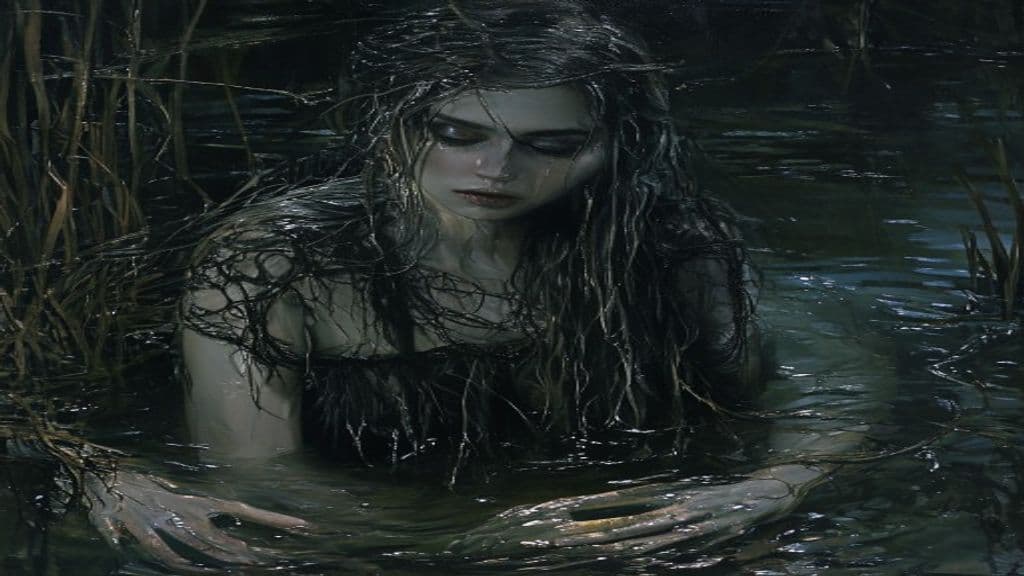
Rusalka
Water spirits in Slavic folklore — the spirits of young women who died by drowning or suicide, bound to rivers and lakes. Beautiful and dangerous, they can bewitch men to their deaths.
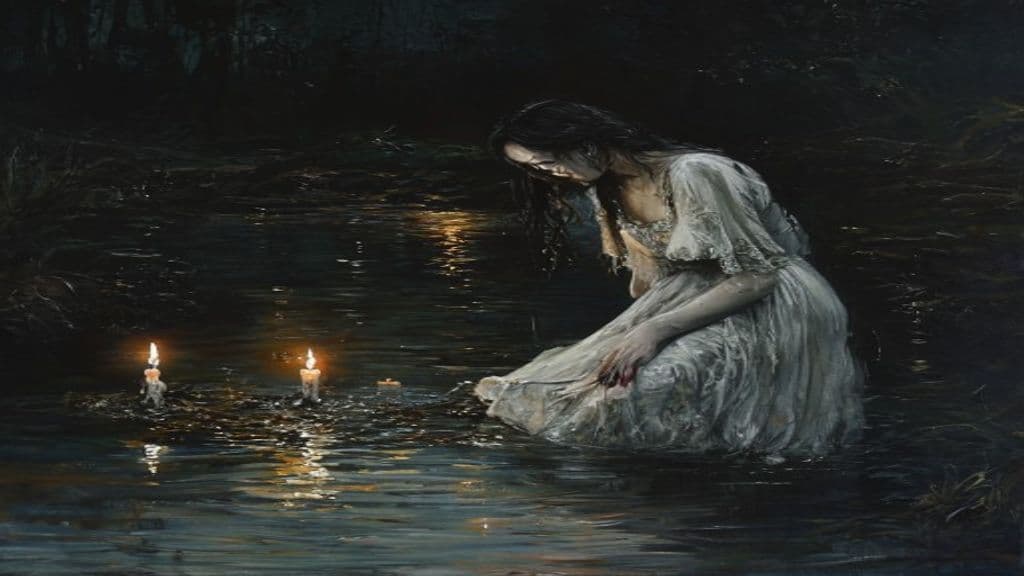
La Llorona
The Weeping Woman of Mexican folklore — the ghost of a mother who drowned her children and now wanders rivers and lakes, weeping for them and taking other children she finds at night.
Äio
No folkloric or mythological entity named "Äio" is attested in the provided source set. The available materials contain unrelated uses of similar letter sequences (e.g., the plant genus Aiouea, the astronomical body Io, software terms "io"), but none describe a being, tradition, or rituals called Äio.
Acacallis
Acacallis (Ancient Greek: Ἀκακαλλίς; also Acalle) is a mythological princess of Crete in Greek tradition, daughter of King Minos and Pasiphae. She functions primarily as a dynastic and etiological figure: in varying accounts she is mother, by gods such as Hermes (Mercury) or Apollo, of eponymous or founder-figures like Cydon (founder of Cydonia), Miletus, or Lydon/ Lydus.
Acanthis
Acanthis is a young woman in Greek myth, daughter of Autonous and Hippodamia, who is transformed into a thistle finch by the gods as an etiological explanation for the bird's name. The story is preserved chiefly in Antoninus Liberalis' Metamorphoses and summarized in modern reference works.
Acaste
Acaste (Ancient Greek: Ἀκάστη) is a named Oceanid — one of the daughters of the Titans Oceanus and Tethys — recorded among the companions of Persephone at the moment of her abduction; the name also appears separately as a nurse of the daughters of King Adrastus of Argos in later genealogical lists.
Achaeus
Achaeus (Ancient Greek: Ἀχαιός, Akhaiós) is an eponymous personal name borne by three mythological human figures in Greek tradition; best attested is Achaeus, son of Xuthus and Creusa, brother of Ion and grandson of Hellen, who is named as father of Archander and Architeles in Pausanias. The name is glossed as meaning "griever," from ἄχος (achos, "grief, pain, woe").
Aegle
Aegle (Ancient Greek: Αἴγλη, 'brightness' or 'dazzling light') is a name applied to several distinct female figures in Greek myth: a daughter of Asclepius associated with health, a Naiad mother of the Charites by Helios and Neaera, one of the Heliades transformed into a poplar after Phaeton's death, a named Hesperid, an alternate name for Coronis in some traditions, a daughter of Panopeus beloved by Theseus, and a nurse of Dionysus. The recurrence of the name links these figures by the themes of brightness, beauty, and filial or nymph-like status rather than by a single unified identity.
Aello
Aello (Ancient Greek: Ἀελλώ) is a named figure in Greek myth primarily attested as one of the Harpies—winged female personifications of storm-wind who harry, snatch, and torment. The name also appears in variant lists as applied to an Actaeonian hunting dog, showing onomastic fluidity in the tradition.
Agaptolemus
Agaptolemus (Ancient Greek: Ἀγαπτόλεμος) is a mythic Greek prince, one of the fifty sons of King Aegyptus, best known as the husband of the Danaid Pirene who, like most of the Danaids, slew her husband on their wedding night at the command of her father Danaus.
Agave
Agave (Ancient Greek: Agaue/Agaúē) is a personal name borne by at least two distinct figures in Greek myth: a Nereid (one of the fifty sea-nymph daughters of Nereus) and a Theban princess, daughter of Cadmus, who appears in myths connected with Dionysus. The name is glossed in Greek sources as 'illustrious', 'noble', or 'high-born'.
Agrius
Agrius (Ancient Greek: Ἄγριος, 'wild') is an onomastic figure in Greek myth whose name is applied to multiple distinct personae—including a Giant, a centaur, a bear‑born twin, a princely son, a suitor of Penelope, and one of Actaeon's dogs—rather than a single unified supernatural being. Each attestation places an Agrius in different narrative registers (Gigantomachy, Heracles' labors, heroic genealogies, the Odyssean cycle, and the Actaeon hunt).
Agron
Agron (Ancient Greek: Ἄγρων, 'wild' or 'rustic') is a human/mortal figure attested in the summary of Antoninus Liberalis' Metamorphoses (as presented on Wikipedia) who, because of impiety toward certain gods, is transformed by Hermes into a plover. The tale functions as an etiological metamorphosis and moral exemplum about observing cult obligations.
Aitolos
Aitolos is a name that appears in Greek-language traditions referring to two distinct figures: Aetolus, a mythic genealogical ancestor in classical Greek myth (son of Endymion, descendant of Deucalion), and Kosmas Aitolos (St. Cosmas of Aetolia), a historical/hagiographic Orthodox teacher whose collected writings emphasize pastoral and ascetical themes. The sources do not present Aitolos as a single folkloric supernatural being.
Alcestis
Alcestis (Ancient Greek: Ἄλκηστις, Álkēstis) is a mortal princess of Greek myth famed for voluntarily dying in place of her husband Admetus and being temporarily returned from the underworld through Heracles’ intervention. Her story highlights conjugal devotion, substitutive death, and the need for purification after contact with chthonic powers.
Community Record
- [1]Alcyone (daughter of Sciron) — Wikipedia. Wikipedia contributors. "Alcyone (daughter of Sciron)." Wikipedia, The Free Encyclopedia.wiki
- [2]Ovid, Metamorphoses (Alcyone and Ceyx). Ovid, Metamorphoses; tradition traced to Nicander as source for Ovid's account (attested in summaries and commentaries).literary
- [3]Pseudo-Probus on Virgil (commentary referencing Theodorus). Pseudo-Probus. Commentary on Virgil, reporting an Attic version attributed to Theodorus (source for the Sciron-daughter account).literary
- [4]Hyginus / Apollodorus / Virgil (traditions linking metamorphosis to halcyon days). Hyginus, Apollodorus, and Virgil preserve variants of the Alcyone/Ceyx metamorphosis and the etiological link to halcyon days.literary