
Classical summaries (as reported in modern secondary sources) state that Amanozako originated when Susanoo's ferocious spirit (his ara-mitama) built up within him until he vomited her out. She is therefore presented as born from a divine ferocity rather than through conventional procreation, and occupies the heavenly sphere alongside the 'eight million gods' (yaoyorozu no kami) in those accounts.
Summaries of classical descriptions depict Amanozako as having a beastly head with a very long nose, long ears, and great fangs reportedly strong enough to chew metal blades ragged; she is described in the Wakan Sansai Zue account as capable of flying for a thousand li. Later modern portrayals and illustrations (e.g., Toriyama Sekien's Konjaku Gazu Zoku Hyakki) render her with feminine/humanoid aspects combined with traits associated with tengu and oni in popular imagery.
Sources characterize Amanozako chiefly by a furious, short-fused temperament and by oppositional behavior — described in glosses as 'she who opposes everything in Heaven' — and attribute to her a tendency to possess or influence human hearts, manipulating emotions or personalities. Classical summaries emphasize her ferocity and physical attributes (strong fangs, prodigious flight range as given in Wakan Sansai Zue). Later summaries present her genealogical role as ancestor to various ill-tempered yōkai (including tengu and amanojaku in some accounts).
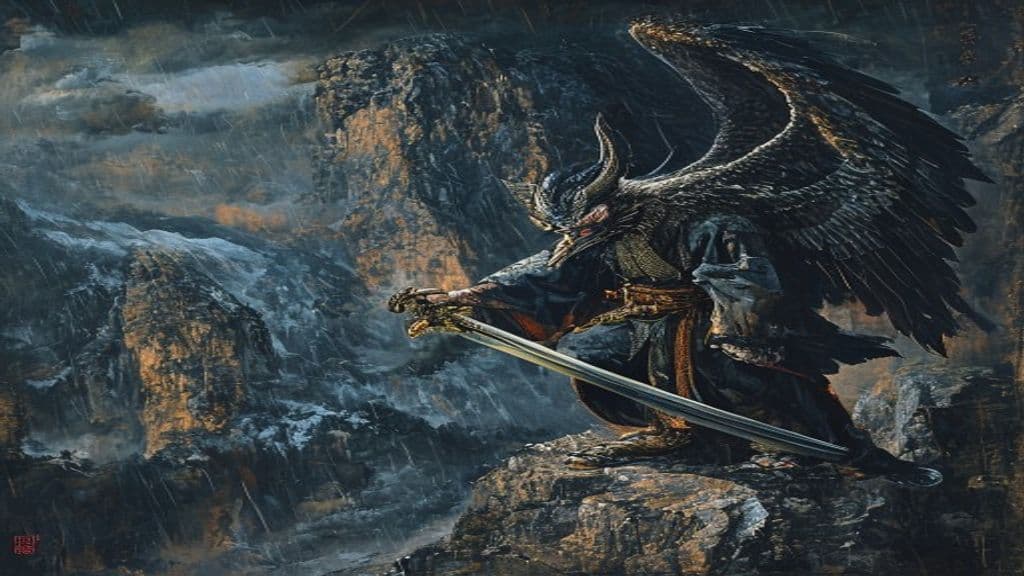
Tengu
Proud, warrior-like mountain spirits of Japan, associated with martial arts, pride, and the wild mountains. Neither fully good nor evil — they test and train warriors and monks, but punish the arrogant.
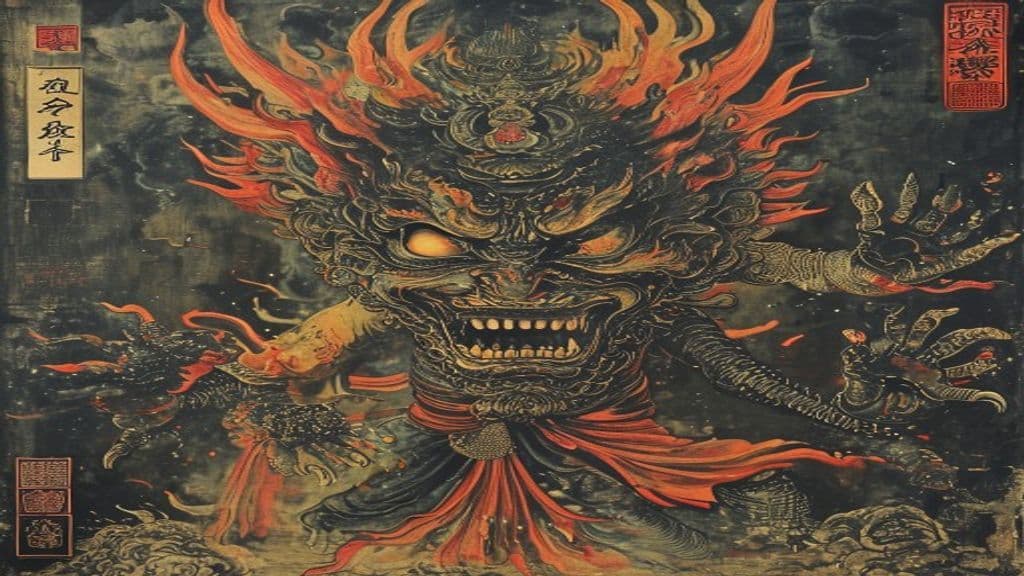
Amanojaku
Amanojaku (天邪鬼 / あまのじゃく) is a Japanese yōkai-type being portrayed as a contrarian, heart-reading trickster. Treated in different contexts as a small ogre (ko-oni), a wicked demon (jaki) in Buddhist iconography, and a folkloric spirit that provokes human vice, it appears across regional tales with variable roles from malicious kidnapper to household oddity.
Abura-sumashi
A yōkai spirit from the Amakusa region of Kumamoto Prefecture, Japan, said to inhabit mountain passes. Traditionally explained as the ghost of a person who stole oil, it appears to surprise travelers and is represented in modern media with a straw-coat body and a potato- or stone-like head.
Amazake-babaa
Amazake-babaa (甘酒婆, 'amazake old woman') is a Japanese yōkai figure from northern Honshū traditions associated with contagious illness. She is said to call at house doors at night asking for amazake and, if answered, brings smallpox or the common cold; local variants include a door-to-door seller (amazake-banbā/banbaa) and a Kohinata, Bunkyō account that treats her as a deified former amazake seller.
Aobōzu
Aobōzu (青坊主, "blue priest") is a Japanese yōkai whose depiction and behavior vary by locality. Appearing as a priestly humanoid with blue coloration or as a priest-faced apparition, it functions in regional legends as a frightening presence that can kidnap, threaten, or haunt people—especially children and schoolchildren—and is sometimes identified as a disguised animal or a mountain deity.
Bake-danuki
Bake-danuki (化け狸) are a class of yōkai in Japanese folklore: tanuki (Japanese raccoon dogs) that acquire supernatural powers, most notably shapeshifting and trickery. They appear throughout Japan with strong regional concentrations and some locally named, ritualized exemplars.
Biwa-bokuboku
A tsukumogami yōkai originating in Japanese folklore: an anthropomorphic instrument‑spirit modeled on the biwa that becomes animate after long use or long neglect. It is nocturnal, often described as singing and plucking while lamenting neglect, and may meet other tsukumogami for noisy gatherings.
Chōchinbi
Chōchinbi (提灯火, "paper-lantern fire") are regionally reported Japanese atmospheric spirit-lights treated as a variety of onibi. Tales describe them as lantern-like floating flames seen near footpaths, rice fields, riverbanks, and graveyards, sometimes vanishing when approached and sometimes associated with animal yōkai or resentful human spirits.
Dōsojin
Dōsojin (道祖神) are local Shinto kami venerated as tutelary guardians of liminal places such as village boundaries, crossroads, mountain passes, bridges, and roads. Represented by stones, carved couples, phallic markers, poles, or syncretic Buddhist images, they are locally maintained to ward off wandering spirits, epidemics, and to promote fertility and safe passage.
Fukurokuju
Fukurokuju is a beneficent, long-lived deity in Japanese popular religion, counted among the Seven Lucky Gods (Shichifukujin) and associated primarily with wisdom, longevity, and good fortune. His figure reflects syncretic assimilation of Chinese Taoist star-deity material (notably the Southern Polestar and the Three Star Gods tradition) into a distinct Japanese auspicious deity.
Hitotsume-kozō
A class of Japanese yōkai depicted as a bald child or young monk with a single central eye; typically a mischievous, comparatively harmless apparition that startles people and appears in Edo-period picture-books, local tales, and calendar-based folk practices.
Hyakki Yagyō
An idiom and folkloric motif in Japanese tradition describing a mass nocturnal procession of supernatural creatures (yōkai and related beings) that march through human streets at night. Depictions and stories vary: sometimes an orderly parade, sometimes a chaotic riot, and encounters are commonly described as dangerous to humans.
Ishinagenjo
Ishinagenjo is a Japanese coastal folkloric phenomenon in which fishermen hear the sound and feel the effects of a huge stone crashing into the sea though no stone is ever found. Sources treat it variously as an episode of yōkai activity (sometimes linked to sea-witch figures such as the Iso Woman) or as an illusion/perceptual error recorded in fisherfolk accounts from several coastal localities.
Konaki-jiji
Konaki-jiji (子泣き爺) is a yōkai from Japanese folklore, originating in the mountain regions of Tokushima Prefecture on Shikoku and later recorded in national yōkai collections. It is known for luring compassionate travelers by imitating the cry of an infant and then suddenly becoming a crushing heavy weight that kills the carrier.
Community Record
- [1]Amanozako - Wikipedia. Wikipedia, 'Amanozako' (summary of classical sources including Kujiki and Wakan Sansai Zue)wiki
- [2]Konjaku Gazu Zoku Hyakki (Toriyama Sekien). Reference to Toriyama Sekien's illustrated yōkai collection Konjaku Gazu Zoku Hyakki (Sekien illustration of Amanozako referenced in modern summaries)literary
- [3]Amanozako | Villains Wiki. Villains Wiki summary of Amanozako (modern secondary source summarizing temperament, name gloss, and reception)other
- [4]Amanozako | Megami Tensei Wiki. Megami Tensei Wiki (modern media adaptation and summary noting origin, temperament, and genealogical associations)other