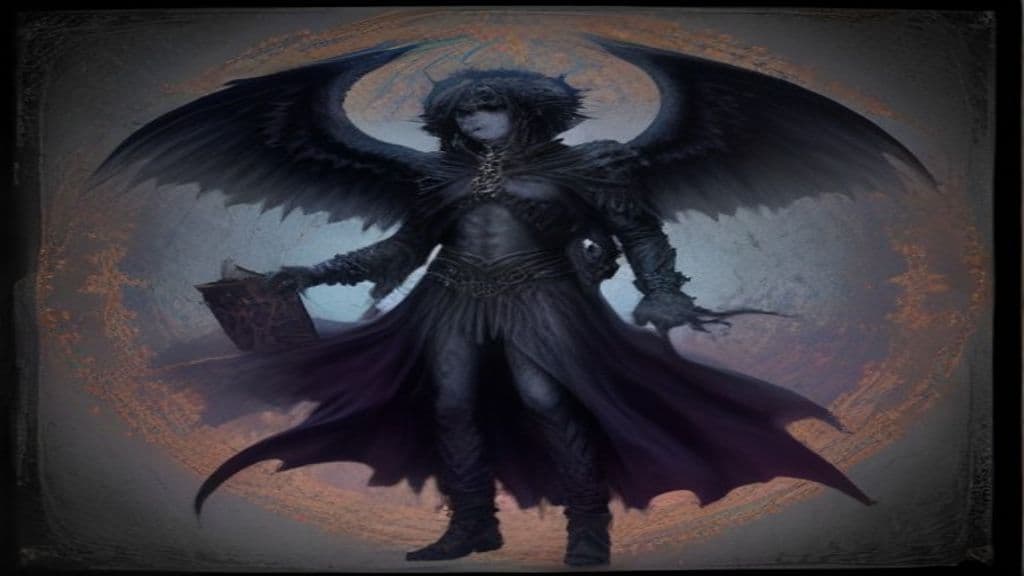
Within the provided materials, Amduscias/Amdusias appears as a named entry in the corpus of goetic demon lists derived from the Ars Goetia and related demonological compilations. The available sources indicate the name's placement in those catalogues but do not include an original mythic narrative, provenance, or a primary-text origin account; modern references therefore treat the name as part of the goetic onomasticon rather than as a figure with an attested indigenous origin story in the supplied excerpts.
The supplied sources do not contain a canonical or primary description of Amduscias's traditional physical appearance from Ars Goetia or Dictionnaire Infernal. Modern adaptations vary: for example, video-game material (Final Fantasy) renders game-specific visual designs and epithets such as "Tap Dancer" (with Japanese renderings), but these are creative reworkings and are not documented here as the historical grimoire appearance.
The provided materials do not reproduce a traditional list of powers or behaviors attributed to Amduscias in the goetic corpus. Contemporary sources that borrow the name apply a range of fictional abilities according to their medium (e.g., specific enemy behaviors in a video game), but such attributions are adaptations and are not corroborated by the grimoire excerpts included among the supplied sources.
Ambisagrus
Ambisagrus is a local Gaulish deity attested in Gallo‑Roman religion, worshipped at Aquileia in Cisalpine Gaul and identified there with Jupiter Optimus Maximus under Roman interpretatio. The name is tentatively analyzed from Proto‑Celtic elements *ambi‑ + *sagro‑.
Ambondro mahabo
Ambondro mahabo is an extinct Middle Jurassic mammal known from a fragmentary right lower jaw (UA 10602) with three teeth from the Isalo III Formation of northwestern Madagascar. Described in 1999, it has been central to debates about the early evolution and homology of tribosphenic-like molar architecture.
Ambrose of Alexandria
Ambrose of Alexandria (before 212 – c. 250) was a wealthy, educated layman of Alexandria who became a close disciple, patron, and ordained deacon in the circle of the theologian Origen. He is remembered in Christian sources as a convert from earlier heterodox affiliations, a supporter who provided books and scribes, a stimulus to Origen's writings, and a confessor who suffered persecution under Maximinus Thrax.
Ambrosia (Hyades)
Ambrosia is named in classical sources as one of the Hyades, a small group of nurse-nymphs who tended the infant Dionysus/Liber and who are variously said to have been transformed into a vine (in one revenge motif) or placed among the Hyades stars. Her story is preserved in mythographic accounts (notably Hyginus citing Pherecydes) and later summaries.
Ambrosius Aurelianus
Ambrosius Aurelianus is presented in British late‑antique and medieval literary sources as a Romano‑British leader who rallied survivors against Anglo‑Saxon incursions in the 5th century. He is attested earliest in Gildas's De Excidio (6th century) as a Christian aristocratic war leader and is later expanded into prophetic and dynastic roles in the Historia Brittonum (9th century) and Geoffrey of Monmouth (12th century).
Ambush Bug
Ambush Bug is a fictional comic-book character published by DC Comics, created as a deliberately silly, self-referential figure who parodies superhero conventions and continuity. First appearing in DC Comics Presents #52 (Dec. 1982), he has been portrayed variably as an incompetent villain, a nuisance anti-hero, and a metafictional comic foil who frequently breaks the fourth wall.
Amdusias
Amdusias is a named spirit listed in the goetic corpus (the Ars Goetia / Lesser Key of Solomon) described as the sixty-seventh spirit who commands twenty-nine legions; sources note his true form as a unicorn and that his arrival is accompanied by trumpets and musical sounds, and that he may assume human shape when evoked.
Ame-no-Koyane-no-mikoto
Ame-no-Koyane-no-mikoto is a male Amatsukami (heavenly kami) in classical Shinto myth, presented as the ritual-official ancestor of the Nakatomi clan and linked genealogically to the Fujiwara. He functions as a divine ritual specialist—performing divination and liturgical speech in foundational myths (notably the Ama-no-Iwato episode) and as guardian of the sacred mirror—and is venerated at major shrines such as Kasuga Taisha and Hiraoka Shrine.
Ame-no-Minakanushi
Ame-no-Minakanushi (天之御中主) is a primordial kami named in Japan's classical creation texts as one of the very first deities to come into being in Takamanohara (High Heaven). Presented in the Kojiki and Nihon Shoki as a solitary, hidden first god, he functions primarily as a mythic point of cosmic origin rather than an actively intervening deity in surviving narratives.
Ame-no-Tajikarao
Ame-no-Tajikarao is a kami in Japanese Shinto myth notable for exceptional physical strength. He appears in the Ama-no-Iwato narrative as the deity who pulls Amaterasu from the heavenly rock cave, and he is venerated at numerous shrines across Japan with associations to physical power and local lineage claims.
Ame-no-Tokotachi
Ame-no-Tokotachi is a primordial kami in classical Shinto cosmology attested in summaries of the Kojiki and Nihon Shoki tradition. Sources identify a very early solitary or among-the-first deity who manifests at the creation of heaven and earth; supplied materials also reference a closely related name, Ame-no-Minakanushi, in English summaries of those chronicles.
Ame-no-Uzume-no-Mikoto
Ame-no-Uzume-no-Mikoto is a Shinto kami of dawn, mirth, revelry and the performing arts whose comic and erotic dance at the entrance of Amano‑Iwato lures the sun goddess Amaterasu from hiding, restoring light; her action is cited as the mythic origin of kagura and of certain ritual/performance lineages.
Community Record
- [1]List of demons in the Ars Goetia (Wikipedia). "In this article, the demons' names are taken from the goetic grimoire Ars Goetia"wiki
- [2]Amdusias (Wikidata). Wikidata entry for Amdusiaswiki
- [3]Amduscias (Demon in Goetia, Dictionnaire Infernal & Other Grimoires). Delirium's Realm page collecting references to Amdusias in Goetia, Dictionnaire Infernal & other grimoires (as cited in the provided notes)other
- [4]Amduscias | Final Fantasy Wiki. Final Fantasy Wiki entry noting modern fictional depictions and Japanese renderings (e.g., アムドゥスキアス, アムドゥシアス) and epithets such as "Tap Dancer"wiki
- [5]Amduscias – My Music. Archive of music-related use of the name 'Amduscias' (artist/band reference)other
- [6]Amduscias CD Reviews (Rough Edge). Review listing modern band named Amduscias (evidence of cultural reuse)other
- [7]Amduscias Records Favorites (Archive). Archive collection indicating use of 'Amduscias' as a record/label identifierother
- [8]Gabber.od.ua — Amduscias Records. Listing for Amduscias Records (modern music/cultural usage)other
- [9]Kult ov Azazel (Wikipedia). Example of modern music culture that commonly reuses occult names (contextual reference among sources)wiki