Amphithea does not have a single origin story but appears as the name of multiple distinct mortal women in ancient Greek genealogical accounts. In one tradition, Amphithea is named as the wife of Lycurgus of Nemea and mother of Opheltes (later called Archemorus), an attribution that appears alongside an alternate reading naming Eurydice (as in Apollodorus' account of Nemean material). In Argive lists she is given as a daughter of Pronax (son of King Talaus of Argos) and in some traditions the wife of Adrastus, situating her in the background to the Seven against Thebes cycle. Another tradition makes Amphithea the wife of Autolycus and mother of Anticlea (mother of Odysseus), Polymede (a possible mother of Jason), and other children, thereby connecting her to Odyssean and Argonautic genealogies. A different lineage identifies an Amphithea as wife of an Aeolus (in an Etrurian/Aeolian context) and mother to a dozen children including Macareus and Canace, figures associated with Aeolian narratives. Some sparse accounts treat Amphithea as an alternate name for Hemithea, sister of Tenes, though this identification is uncertain and not widely attested in the provided sources. Across these appearances, Amphithea's "origin" is the conventional function of a named mortal woman within variegated local traditions rather than a single biographical myth.
The sources provide no physical description or iconography for Amphithea. References to Amphithea occur in genealogical prose and lists; they do not attribute distinguishing features, attire, or symbolic markers to her. As a result, Amphithea is represented only through relational descriptors (wife of X, mother of Y) in the surviving textual record rather than by any consistent visual or bodily detail.
No supernatural abilities, magical powers, or extraordinary behaviors are attributed to any woman named Amphithea in the cited materials. Their narrative significance lies in social roles—marriage alliances and maternity—that establish and legitimate the descent of heroes and ruling houses. Through bearing and rearing children and by marriage ties, the various Amphitheas function as conduits for genealogical continuity and as nodes that connect local mythic traditions into broader heroic cycles; beyond these genealogical functions the sources do not ascribe acts or capacities that would suggest agency beyond ordinary mortal life.
Adrastus
Adrastus (Ancient Greek: Ἄδραστος or Ἄδρηστος) is a legendary king of Argos in the Greek mythic-historical tradition, best known as the leader of the expedition of the Seven against Thebes and as a figure tied to oracular counsel, dynastic marriages, and local hero cults.
Autolycus
Autolycus is a mythic Greek trickster-thief, son most commonly of Hermes, famed for cunning, theft, and the ability to alter the appearance of stolen goods; he is a legendary ancestor and occasional tutor within the heroic age rather than an impersonal spirit or cult deity.
Anticlea
Anticlea (Ancient Greek: Ἀντίκλεια) is a figure of Greek myth best known as the mother of Odysseus and former queen of Ithaca who appears as a speaking shade in Odysseus’ katabasis to the underworld (Odyssey, Book XI). In Homeric tradition she exemplifies the category of deceased human spirits who can converse with the living under ritualized conditions but are incorporeal and cannot be physically embraced.
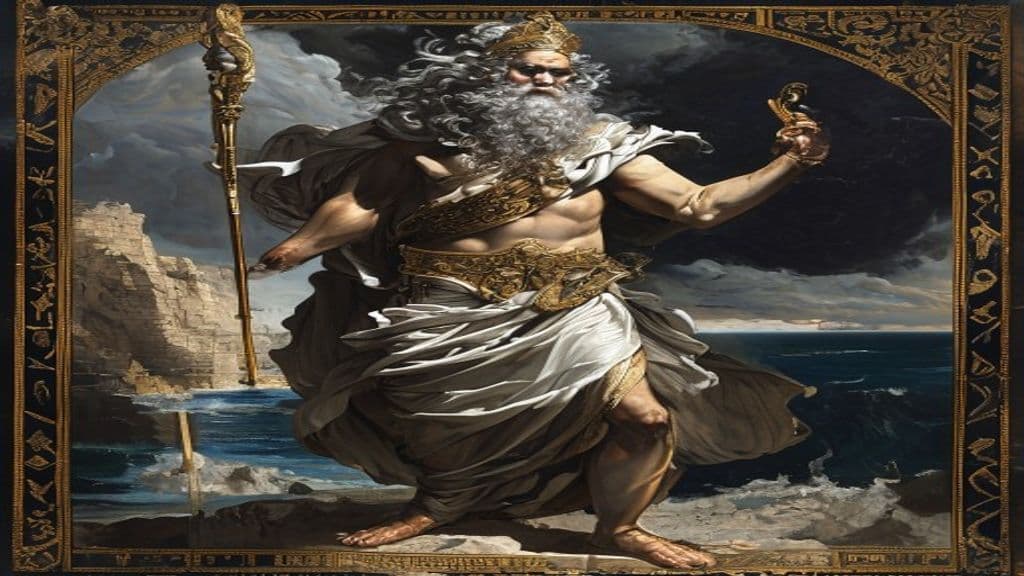
Aeolus
Aeolus is a name applied to multiple related figures in Greek myth: an eponymous son of Hellen (founder of the Aeolian people), a son of Poseidon who led colonial ventures to Tyrrhenian islands, and a son of Hippotes depicted in epic as a ruler or keeper of the winds. Ancient mythographers note confusion and overlap among these persons.
Community Record
- [1]Amphithea — Wikipedia. Wikipedia contributors, 'Amphithea', Wikipedia, The Free Encyclopediawiki
- [2]Amphithea — Wikidata. Wikidata entry Q17416441wiki
- [3]Introduction to the Argonauts, from The Library of Apollodorus (archive text). Apollodorus, The Library (as rendered in archive text), 'Introduction to the Argonauts' (genealogical material cited)literary
- [4]Introduction to the Argonauts (alternate archive rendering). Apollodorus-related genealogical material (archive rendering)literary
- [5]Person: Amphithea (Mythology Index / UVic). Mythological index entry summarizing attestations of Amphitheaother
- [6]Pronax — Wikipedia. Wikipedia contributors, 'Pronax', Wikipedia, The Free Encyclopedia (used for genealogical cross-reference)wiki