
No mythic origin story for Anextiomarus survives in the supplied sources. The name is attested epigraphically in Roman-period inscriptions where it functions as a theonym or epithet applied to a solar god syncretized with Apollo. Attestations include an inscription from Arbeia (South Shields, Roman Britain), a Gallo-Roman dedication from Aventicum recording a feminine form (Anextlomara), and a probable but fragmentary inscription near Le Mans. Beyond these onomastic occurrences, the sources provide no narrative account of the deity's birth, genealogy, or mythic deeds.
The supplied epigraphic sources provide no iconographic or descriptive detail for Anextiomarus. The name appears only in inscriptions and dedications; no surviving description, statue type, or consistent anthropomorphic attributes are recorded in the provided material.
Directly attested powers are not recorded; interpretation of the name and its use in votive inscriptions implies a protective, beneficent function. One source glosses the Gaulish Anextlomāros as "Great Protection," and the epithet's attachment to Apollo in Romano-Celtic contexts indicates association with solar aspects and protective beneficence invoked by dedicants. No specific mythic deeds, magical powers, or behavioral repertoire are given in the supplied material.
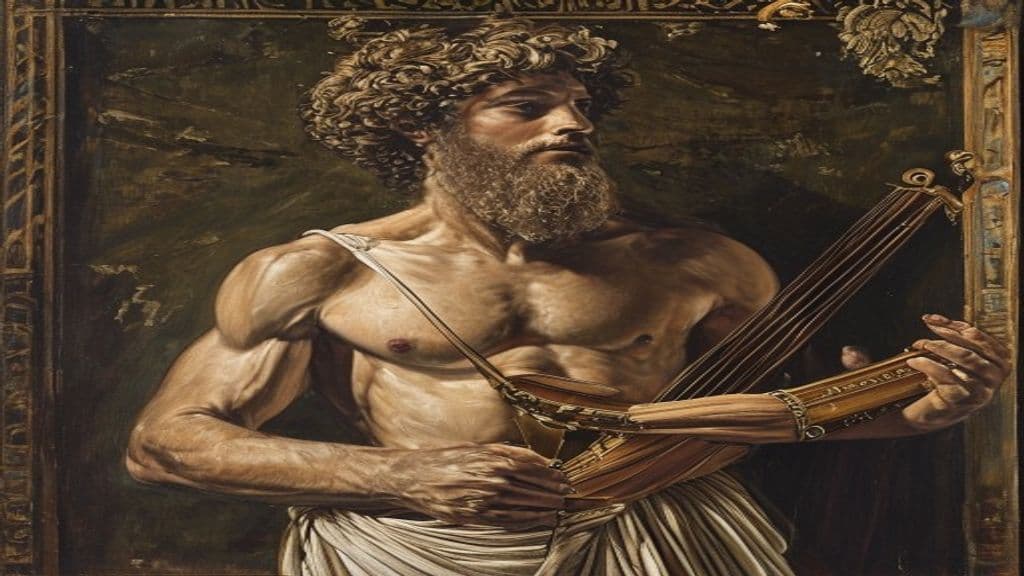
Apollo
Olympian deity of ancient Greek religion associated with prophecy, healing, music, archery, purification, and civic order. Principal patron of the Delphic oracle, protector of youth and flocks, and ambivalently both healer and bringer of plague.
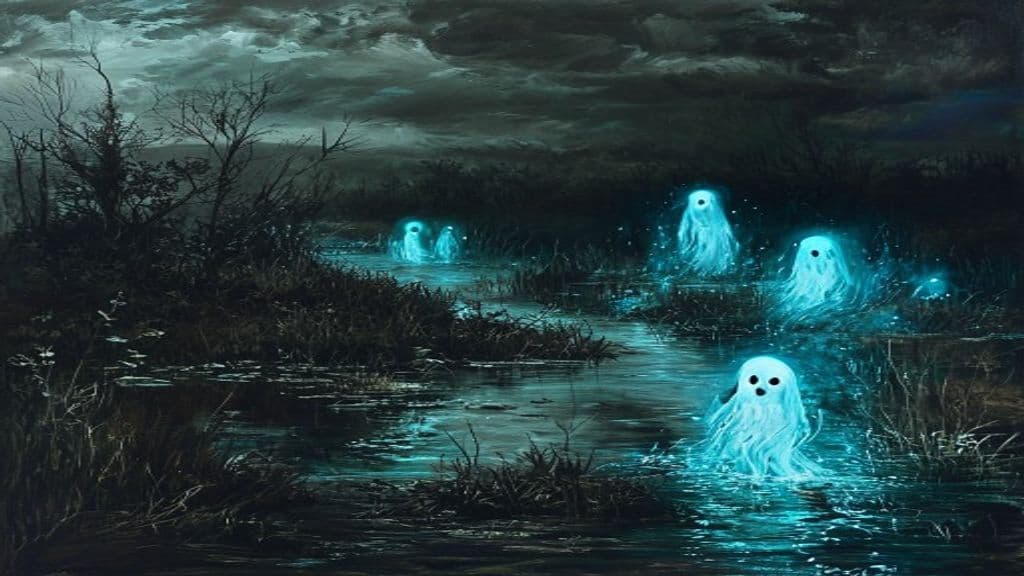
Will-o'-the-Wisp
A wandering light seen over marshy ground at night, leading travellers astray into bogs and fens. Possibly a spirit, possibly the soul of the unbaptised dead, possibly the devil himself.
Abandinus
Abandinus is a locally attested Romano‑Celtic theonym known from a single inscribed bronze feather (votive object) dedicated at Godmanchester (the Roman fort Durovigutum) in Cambridgeshire. Scholars interpret him as a local god or male spirit tied to a specific place and possibly associated with a nearby spring or stream; this association is tentative and based on etymological readings of the name.
Ancasta
Ancasta is a locally attested Celtic goddess known from a single Roman-period votive inscription from Clausentum (modern Bitterne, near Southampton). She appears as a named deity venerated in the context of a fulfilled vow; little else about her cult, appearance, or powers is recorded in the surviving sources.
Anextlomarus
Anextlomarus (also Anextiomarus; feminine Anextlomara) is a Romano-Celtic theonym attested in inscriptions from Roman Britain and Gaul. The name, interpreted as 'Great Protector', appears in dedicatory contexts and in one instance is equated with the Roman god Apollo, indicating a locally venerated protective deity integrated into Roman civic-religious practice.
Arvernus
Arvernus is a Gallo-Roman theonym attested as a tribal epithet of the Arverni and identified with the Gaulish form of the Roman god Mercury in inscriptional and onomastic sources. The name functions as a localized manifestation of Mercury tying the Roman deity to the Arverni people and their territory (notably the Puy-de-Dôme / Auvergne lexical field).
Belatucadros
Belatucadros is a native Brittonic/Celtic deity attested in northern Britain (modern Cumbria) whose cult continued into the Roman period; in Romano-British inscriptions he is commonly equated with the Roman god Mars (Mars Belatucadrus). Archaeological evidence shows roughly 28 inscriptions in the Hadrian's Wall region and small, simple altars, suggesting a local tribal protector and martial focus worshipped by Britons and lower-ranked Roman soldiers.
Belisama
Belisama is a Gaulish goddess attested in Roman-period inscriptions and place-names. Epigraphic evidence records formal dedications (including a nemeton and a votive sacrum) and at least one inscription equates her with the Roman Minerva; scholars debate whether her name denotes brightness, strength, or a plant-name, and toponymic evidence also suggests riverine associations.
Andvari
Andvari is a dwarf from Old Norse sources (attested in the 12th century) who lives beneath a waterfall, hoards gold, owns a magical ring called Andvaranaut, can change into a pike, and curses the gold when it is stolen—events that set in motion tragic outcomes in Norse heroic narrative.
Anemoi
In ancient Greek religion and myth the Anemoi (Ἄνεμοι, 'Winds') are the personified winds: a group of minor wind-gods each associated with a compass direction and with characteristic weather or seasonal phenomena that come from that direction.
Anethus
Anethus (Ancient Greek Ἄνηθος, Ánēthos) is a fragmentarily attested mythic figure from Greek tradition who is named as a beautiful youth transformed into the dill plant (Anethum graveolens). He functions as an aetiological or name-origin figure preserved only in late-antique grammatical/mythographic commentary.
Angada
Angada (Sanskrit: Aṅgada) is a legendary vanara prince in the Rāmāyaṇa tradition who serves as a warrior, envoy, and later king of Kiśkindhā. He is presented as the son of Vāli and Tārā, nephew and lieutenant of Sugrīva, a commander in the expedition to Laṅkā, and a dramatic figure in later literary and performative adaptations.
Angak (Angak'china)
Angak, or Angak'china, is a male Hopi kachina spirit represented both by spirit dancers in village ceremonies and by carved kachina dolls. He is a rain‑bringing, fertility, healing, and protective figure whose songs and slow dances are intended to bring rain and flowers to Hopi villages.
Angalo
Angalo is a primordial culture-hero and giant in Ilocano mythology credited with shaping the landscape of Luzon and explaining natural phenomena; narratives present him as the first man and an ancestral figure whose bodily acts produced mountains, valleys, seas, and celestial features.
Community Record
- [1]Anextlomarus (Wikipedia). Wikipedia, article 'Anextlomarus' (Anextiomarus)wiki
- [2]Anextiomarus (Wikipedia). Wikipedia, article 'Anextiomarus'wiki
- [3]Wikidata entry for Anextiomarus. Wikidata Q529652other
- [4]Celtic deities (modern compilation). Modern list of Celtic deities including Anextiomarusother