
Argyra is attested in Greek mythographic and geographic sources as the eponymous nymph of a spring and as a sea‑nymph of the Corinthian Gulf. The town of Argyra (Ancient Greek: Ἀργυρᾶ) in Achaea lay near the river Selemnus, the spring called Argyra, and the town Bolina; the literary and topographical record treats the nymph and the place as intimately linked, exemplifying the Greek pattern in which named natural features are inhabited by personal nymphs. The surviving references in summary sources place her role as locative and toponymic rather than narratively elaborated in the provided materials.
No direct contemporary or surviving literary description of Argyra's appearance is recorded in the supplied sources. She is classified as a nymph (sea‑nymph/naiad), which in Greek tradition commonly implies a youthful female form, but the sources provided do not supply specific iconography, clothing, animal attendants, or distinguishing attributes for Argyra herself.
The sources attribute to Argyra the ontological role of a water‑nymph: inhabiting and personifying a particular spring and coastal waters of the Corinthian Gulf near Argyra in Achaea. Beyond this locative/personifying function, the provided materials do not record myths of specific interventions, favors, harms, prophetic speech, or other active powers for Argyra.
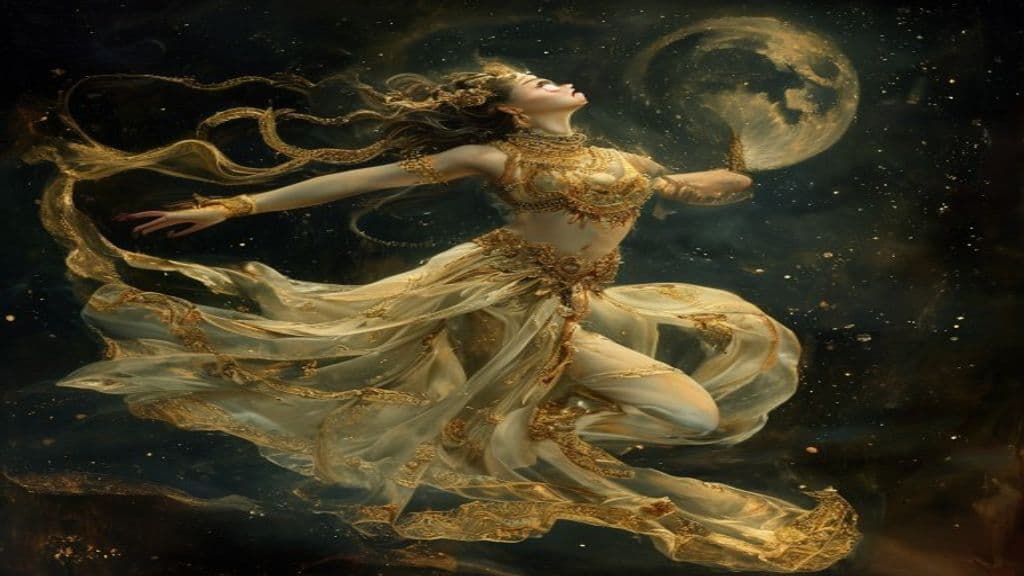
Apsara
Celestial dancers and water nymphs of Hindu cosmology — beautiful semi-divine beings who dance at the court of Indra and, by his command, descend to earth to distract sages from excessive asceticism.
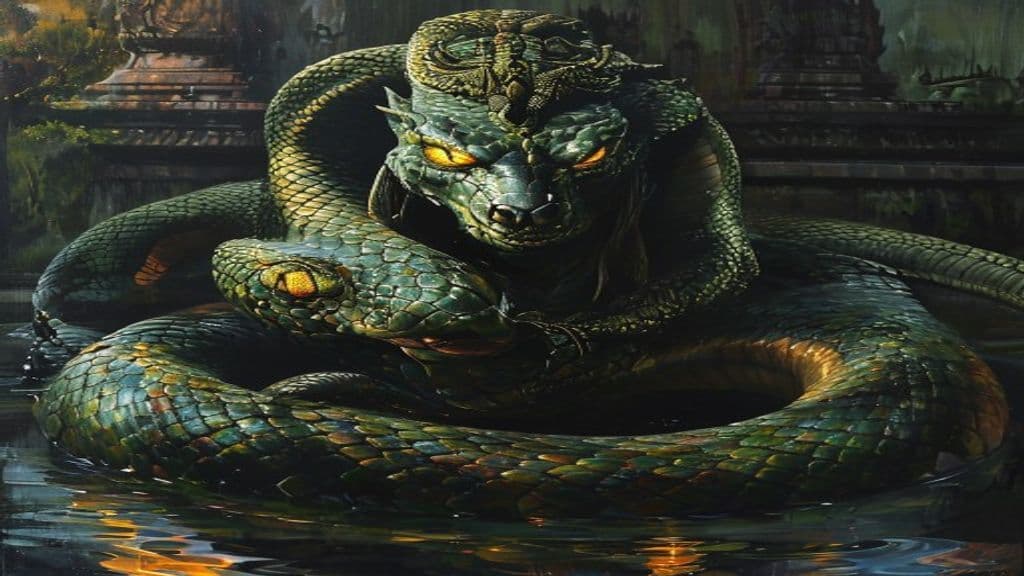
Naga
Divine serpent beings of Hindu, Buddhist, and Jain cosmology — powerful guardians of water, earth, and underground treasures. Revered as deities in South and Southeast Asia.
Argonauts
A band of human heroes in Greek myth who sailed aboard the ship Argo under Jason to Colchis to retrieve the Golden Fleece. Their identity is defined by membership in the celebrated voyage and by shared heroic lineages; membership lists and details vary by source.
Argos
Argos is the loyal hunting dog of Odysseus in Homer's Odyssey, remembered for recognizing his master upon Odysseus's covert return to Ithaca after a twenty-year absence. Presented as a domesticated, neglected animal, Argos functions as a moral and emotional emblem of fidelity and the effects of prolonged absence in the epic.
Arguimus
Arguimus is recorded in the provided sources as a fossil genus name applied to an extinct mammal; it appears in taxonomic/paleontological contexts rather than as a figure of folklore or mythology. The sources do not supply etymology, morphology, or specific stratigraphic and geographic details for the genus.
Argus (Argonaut)
Argus (Ἄργος) is a mortal craftsman-hero in the Jason and the Argonauts cycle, credited as the builder and eponym of the ship Argo. He is named among the roster of Argonauts and is said in sources to have constructed the Argo with divine aid under Athena's guidance.
Argus Panoptes
Argus Panoptes is a many‑eyed giant of Greek myth famed for perpetual vigilance in the service of the goddess Hera. Described as an unwearied guardian of sacred charge (notably Io), he is famed for his all‑seeing eyes and eventual death at Hermes' hands.
Argyphia
Argyphia is a named mortal woman in Greek mythic genealogical lists, presented as a consort of Aegyptus and the mother of several of his sons who appear in the Aegyptus–Danaus cycle. She is attested only as a genealogical matron; no independent cult, supernatural powers, or ritual traditions are recorded in the provided sources.
Arhat
An arhat (Sanskrit: arhat; Pāli: arahant) is in Buddhist traditions a human practitioner who has gained insight into the true nature of existence, attained nirvāṇa, and been liberated from the cycle of rebirth. The status and valuation of arhatship vary by school: some traditions equate it with full liberation, while others treat it as distinct from or inferior to the bodhisattva/buddha ideal.
Ariadne
Ariadne is a figure from Greek myth—described as a Cretan princess, helper of the hero Theseus, and in many accounts the consort of Dionysus—whose narratives range from abandoned mortal lover to deified cult figure associated with the labyrinth, weaving, and a wedding diadem set among the stars (Corona Borealis).
Arianrhod
Arianrhod is a mythic figure in medieval Welsh tradition, best known from the Fourth Branch of the Mabinogi. Daughter of Dôn in the Mabinogi (with an alternate genealogy in a Welsh Triad), she appears at the court of Math ap Mathonwy as the occupant of Caer Arianrhod and exercises binding pronouncements (tynged) that shape the destinies of her offspring, notably Dylan ail Don and the shapeless birth who becomes Lleu Llaw Gyffes.
Aribeth de Tylmarande
Aribeth de Tylmarande (commonly Aribeth or Lady Aribeth) is a fictional human paladin of Tyr in the Forgotten Realms setting, portrayed as a high-ranking civic and religious officer in the city-state of Neverwinter whose grief and crisis of faith lead her from defender and ally to an antagonist in the Neverwinter Nights narrative.
Ariel
Ariel is named in the provided materials as an angel appearing primarily in Jewish and Christian mysticism and apocrypha. The supplied sources give the Hebrew form אֲרִיאֵל (romanized ʾÁrīʾēl) and identify Ariel as an angelic figure but do not provide further doctrinal, narrative, or ritual detail.
Arihant
In Jain doctrine an arihant is a soul (jiva) that has conquered inner passions and destroyed the four inimical (ghātiyā) karmas, thereby attaining kevala jñāna (omniscience) while still embodied; on final shedding of remaining karma an arihant attains siddhahood (moksha).
Community Record
- [1]ARGYRA - Achaean Sea & Naiad Nymph of Greek Mythology (Theoi). Theoi.com: ARGYRA — 'ARGYRA ... ARGYRA was a sea‑nymph of the Korinthian (Corinthian) Gulf and also the Naiad‑nymph of a spring of the town of Argyra in Akhaia (Achaea).' literary
- [2]Argyra (Achaea) - Wikipedia. Wikipedia: 'Argyra (Ancient Greek: Ἀργυρᾶ ) was a town or village in ancient Achaea, in the neighbourhood of Patrae. It was located near the river Selemnus, the spring Argyra and the town of Bolina.'wiki
- [3]Pleiades place: Argyra. Pleiades place resource for Argyra (provides topographical/place identification used in conjunction with the town/spring references).other