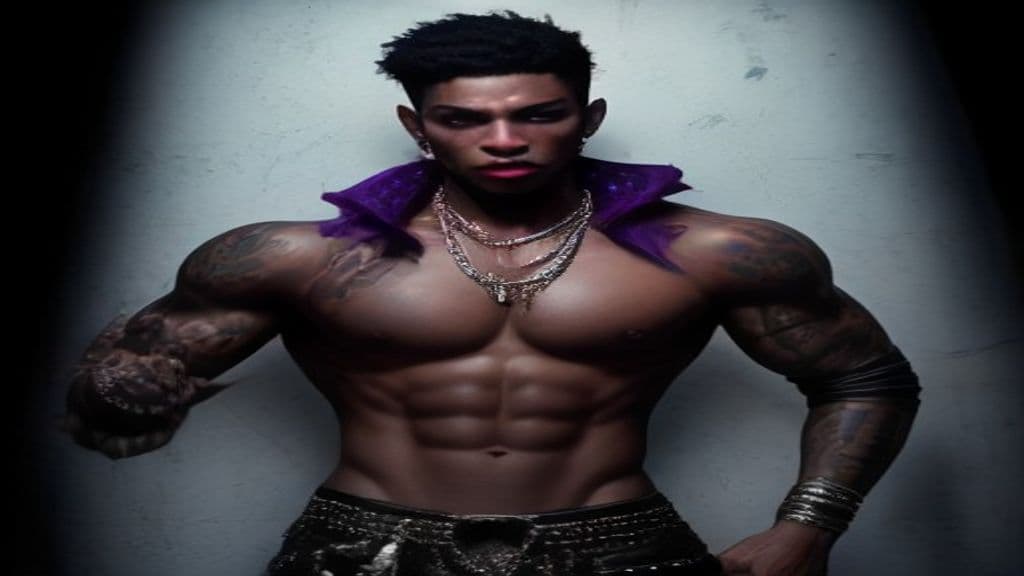
Banjee emerged within New York City ballroom culture and associated queer urban spaces in the late twentieth century as a category and street-presentational persona. Sources trace banjee usage into vogue balls from at least the early 1980s; the term circulated through documentary and journalistic depictions (notably Paris Is Burning and coverage of 1980s–1990s ball culture), lexicographical entries (Green's Dictionary of Slang), and community practices. Over time it moved beyond strictly ballroom contexts into wider cultural references—fashion, music, pornography marketing, and named community events such as Banjee Balls—while remaining principally a performative identity resource within queer urban communities.
Descriptions emphasize style and comportment rather than fixed physical traits: an urban, tough swagger manifested through attitude, clothing, and presentation aligned with heterosexual hip-hop/"hood" aesthetics. Sources list elements judged in the category called 'banjee realness'—attitude, clothing, ethnicity, masculinity, physique, and youth—so appearance is primarily about convincing a particular street-attuned masculinity. 'Banjee girl' usages are attested but noted in sources as rarer and harder to define.
As a social category and performance identity, banjee functions as a means of social recognition, status, and competition within ballroom culture: contestants are judged on 'banjee realness' in runway categories, and the identity can serve as an interpersonal badge of honor and a way to claim belonging or authenticity. It also indexes intersections of class, ethnicity, youth, and masculinity; sources note overlap with related terms such as 'homo thug' and 'gayngsta' in describing gay men who adopt hip-hop-influenced, hypermasculine street styles. The term has been appropriated in commercial contexts (pornographic marketing, fashion, music), evidencing cultural circulation beyond balls.
Weaknesses
- conditionsubject to stereotyping and commodification
- conditionrarely fixed sexual orientation—vulnerability to reductive labeling (e.g., assumptions about bisexuality or opportunistic sex) as noted in sources
Wards
None recorded.
Banba
Banba (modern spelling Banbha) is a matron goddess of Ireland in Irish mythology, daughter of Delbáeth and Ernmas of the Tuatha Dé Danann. She forms a triad of matronal personifications of the island with her sisters Ériu and Fódla, is associated with sovereignty and the land, and appears in origin and heroic narratives linked to specific Irish landscapes.
Bandicoot
A group of more than 20 species of small to medium-sized, largely nocturnal, omnivorous marsupials (order Peramelemorphia) endemic to the Australia–New Guinea region. The English name is an Anglicised borrowing ultimately from Telugu and was historically applied to unrelated Indian rodents before being transferred to Australasian marsupials.
Bandua
Bandua is a theonym attested in Roman‑period epigraphic sources from north‑west Iberia (Galaico‑Lusitanian area). The name appears with many localizing epithets and is reconstructed by scholars as a local tutelary or protective divine figure (or a set of closely related local figures) with occasional Roman syncretism to Mars.
Banebdjedet
An ancient Egyptian ram deity worshipped at Mendes (Djedet), understood as the local 'Ba' or soul‑manifestation tied to fertility, virility, and aspects of rulership; depicted commonly as a ram or ram‑headed man and sometimes as a four‑headed ram representing multiple Bas of the sun god.
Bangpūtys
Bangpūtys is a reconstructed masculine sea-and-storm deity from Lithuanian mythology. Known from very scanty sources, modern mythologists portray him as an austere, vindictive master of winds and the sea and as the reconstructed father-figure of the cardinal wind-gods.
Banjara / Banjari (wandering-gypsy spirits)
No primary or secondary evidence for a distinct supernatural entity explicitly called 'Banjara' or 'Banjari' (wandering gypsy spirits) is present in the supplied sources. The materials document the Banjara (Lambadi/Sugali) as a nomadic tribal community and their ethnobotanical knowledge, but they do not record descriptions, powers, appearances, or rituals directed at a spirit entity by this name.
Banjhākri and Banjhākrini
Forest-dwelling shamanic supernatural beings of the Kirati and related Himalayan traditions, presented as a male wilderness shaman (Banjhākri) who trains human shamans and a complementary female shamaness (Banjhākrini) who functions as an initiatory threat.
Bannik
A place-bound spirit of the Slavic banya (bathhouse) that inhabits the steam room and related spaces; he mediates divination, presides over births within the banya, and must be appeased by offerings or he may harm or otherwise vex users and the building.
Banshee
A female spirit of Irish and Scottish folklore whose wail heralds an impending death in a family of Gaelic descent. Not a cause of death — a witness to it.
Banu Goshasp
Important heroine in Iranian mythology, appearing in several Persian epics including the Banu Goshasp Nama. (Note: - The power tier should be Ancient, not Primordial, as there's no indication that she has cosmic-level abilities. - There are no sensory cues, weaknesses, or wards listed, but they could potentially b)
Baobh-shìth
A female fairy of Scottish Highland folklore portrayed as a beautiful but deadly supernatural woman who seduces and kills lone men at night. Tales place her within the Highland sidhe corpus while linking her actions to a motif in which nighttime wishes made without invoking divine protection are answered by malevolent agencies.
Baobhan Sith
A Scottish Highland vampire fairy — a beautiful woman in a green dress who appears to men alone in the wilderness and drains their blood, her deer hooves hidden beneath her skirts.
Community Record
- [1]Banjee — Wikipedia. Wikipedia, 'Banjee'wiki
- [2]Banjee — Wikidata. Wikidata entry for 'Banjee'wiki
- [3]banjee boy, n. — Green's Dictionary of Slang. Green's Dictionary of Slang, entry 'banjee boy'other
- [4]Delancey Music Service archive listing. Archive.org listing referenced in research notesother
- [5]Kayne The Lovechild 'Banjee Girls' (DJ BAD THA PROBLEM Mash Up). Archive.org audio referencing 'banjee girls'other
- [6]A burst of light...: Homie-Sexuals, Homo-Thugs & Banjee Queens Galore. Essay/article discussing related identities and cultural contextother
- [7]BUILD THIS HOUSE Presented by MOCA and Banjee Ball Foundation • MOCA. MOCA program page referencing Banjee Ball Foundationother
- [8]Sprigs – Banjee Wrist Wallet Review. Commercial/usage example referencing the term 'banjee'other
- [9]Basement Corner Emissions — 'Banjee' (track). Music track titled 'Banjee' indicating cultural circulationother