
The source provides no single creation myth for the baobh-shìth; instead the creature appears as part of Highland fairy belief (the sidhe corpus). Folktales present the baobh-shìth as an otherworldly female who responds to human speech and desire at night, a pattern tied to a traditional Scottish belief that a wish made at night without also invoking God's protection may be fulfilled in a harmful manner. Folklorists link her taxonomy to fairies generally while noting shared traits with succubi and other seductive night-spirits, situating her as a liminal fairy figure whose actions reflect cultural anxieties about solitude, wilderness, and unguarded speech after dark.
In the recorded tales the baobh-shìth appears as a strikingly beautiful woman whose outward attractiveness conceals her lethal nature. At least one tale explicitly records a nonhuman identifying trait: the women in that variant were said to have deer hooves instead of feet. The accounts emphasize deceptive human form employed to seduce male victims prior to attack, though physical monstrousity (such as hooved feet) may reveal their otherworldly identity in certain variants.
Tales describe the baobh-shìth as seducing men and then attacking and killing them; in one recorded variant the victims were later found with their throats cut and chests opened. A recurring narrative motif is that these fairies appear almost immediately after hunters express a wish for female companionship at night, linking their activity to the folkloric idea that unguarded nocturnal wishes can be answered by the unseen. Scholarly commentary cited in the source (Katharine Briggs) also treats iron as a practical deterrent in at least one tale, and animals (notably a black dog) are reported to drive the women away; a modern literary adaptation cited in the source attributes additional mimicry powers to a baobh-shìth, but that portrayal is explicitly a contemporary fictional expansion and not presented as a traditional attribute in the provided material.
Weaknesses
- substanceiron (e.g., iron-shod horses prevented pursuit in a tale)
- otherguardian animals (a black dog drove the women away in a recorded story)
- ritualinvoking God's protection when making a wish at night (prevents the wish being fulfilled by a malevolent agency)
Wards
- substanceiron (horses shod with iron acted as a barrier in a tale)
- otherguard animals (a dog defended its master and drove the women from a cave)
- ritualinvocation of God's protection when making nocturnal wishes
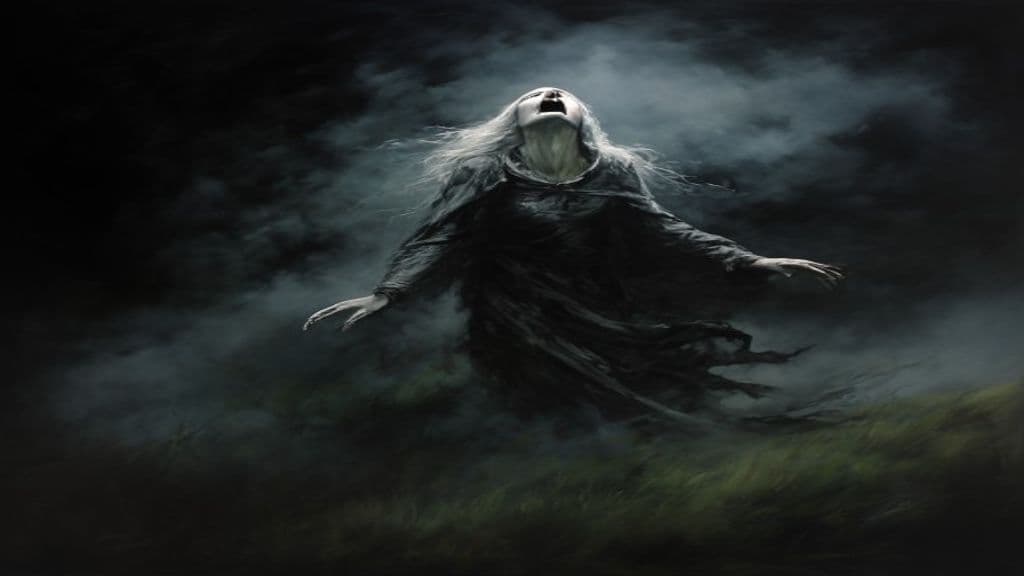
Banshee
A female spirit of Irish and Scottish folklore whose wail heralds an impending death in a family of Gaelic descent. Not a cause of death — a witness to it.
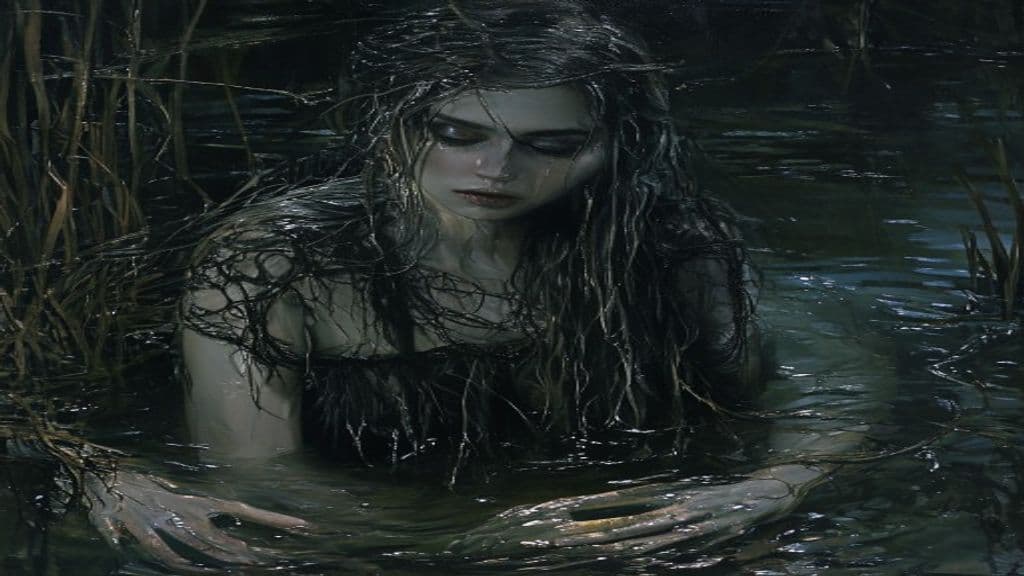
Rusalka
Water spirits in Slavic folklore — the spirits of young women who died by drowning or suicide, bound to rivers and lakes. Beautiful and dangerous, they can bewitch men to their deaths.
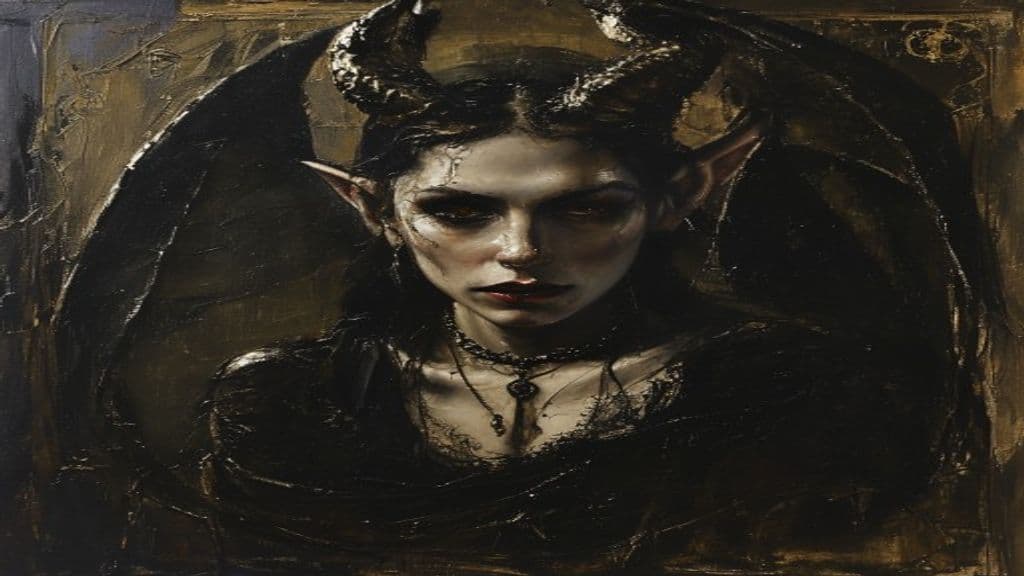
Succubus (Jewish Tradition)
Female demon that seduces male humans through dreams, potentially leading to a hybrid child and the man's decline. (Note: 1. Power tier should be Ancient, not Primordial (Primordial powers are cosmic, while Ancient powers are deity-level). 2. No information on physical appearance is missing because it's simply not mentio)
Bean-nighe
A female spirit in Scottish Gaelic folklore who haunts desolate streams and fords, washing the clothing of those who are about to die; regarded as an omen of death and a messenger from the Otherworld.
Fuath
Fuath are a class of malevolent, uncanny spirits in Scottish Highland and Irish Gaelic folklore, especially associated with water (streams, mills, lochs) but not confined to it. The term functions both as a label for particular water-spirits in local tales and as a broader category of hostile spectres or goblins in Gaelic tradition.
Banjee
Banjee is a social identity and performance category from urban LGBTQ+ ball culture—especially New York City voguing/ball scenes—denoting a person who embodies an urban, tough swagger and a street-presentational form of masculinity used as a judged category (e.g., 'banjee realness') in balls and related events.
Banjhākri and Banjhākrini
Forest-dwelling shamanic supernatural beings of the Kirati and related Himalayan traditions, presented as a male wilderness shaman (Banjhākri) who trains human shamans and a complementary female shamaness (Banjhākrini) who functions as an initiatory threat.
Bannik
A place-bound spirit of the Slavic banya (bathhouse) that inhabits the steam room and related spaces; he mediates divination, presides over births within the banya, and must be appeased by offerings or he may harm or otherwise vex users and the building.
Banshee
A female spirit of Irish and Scottish folklore whose wail heralds an impending death in a family of Gaelic descent. Not a cause of death — a witness to it.
Banu Goshasp
Important heroine in Iranian mythology, appearing in several Persian epics including the Banu Goshasp Nama. (Note: - The power tier should be Ancient, not Primordial, as there's no indication that she has cosmic-level abilities. - There are no sensory cues, weaknesses, or wards listed, but they could potentially b)
Baobhan Sith
A Scottish Highland vampire fairy — a beautiful woman in a green dress who appears to men alone in the wilderness and drains their blood, her deer hooves hidden beneath her skirts.
Baphomet
Baphomet is a mutable Western esoteric and cultural figure: in medieval inquisitorial records the name labels an alleged idol or head invoked in accusations against the Knights Templar; in 19th‑century occultism Éliphas Lévi reimagined Baphomet as a symbolic androgynous human‑goat figure embodying reconciled opposites; in modern culture the term and imagery are widely repurposed across conspiracy discourse, art, and fiction.
Bar Juchne
A colossal bird from Jewish tradition, described as having a massive wingspan large enough to block out the sun. (Note: * Power tier should be at least Ancient, given its ability to block out the sun. * Origin story section is missing, with no information provided by Source 1. * No specific weaknesses or wards mentione)
Barachiel
Barachiel (Hebrew: בַּרַכְאֵל, Baraḵʾēl, 'God has blessed') is an archangelic figure in Jewish mystical literature and in Byzantine Catholic and Eastern Orthodox Christian devotion, traditionally associated with blessings, guardianship of family and married life, and as chief of guardian angels. Mystical texts place him over the second heaven and attended by a vast retinue of ministering angels; Christian iconography portrays him with symbols of blessing such as a white rose, rose petals, a bread basket, or a staff.
Baraka (Mortal Kombat)
Baraka is a recurring fictional character in the Mortal Kombat franchise portrayed as a Tarkatan warrior and antagonist. First introduced as a playable fighter in Mortal Kombat II, he appears across multiple games and in film adaptations, varying between playable roster member and non-playable opponent depending on the installment.
Community Record
- [1]Baobh-shìth - Wikipedia. Wikipedia: 'Baobh-shìth' entrywiki