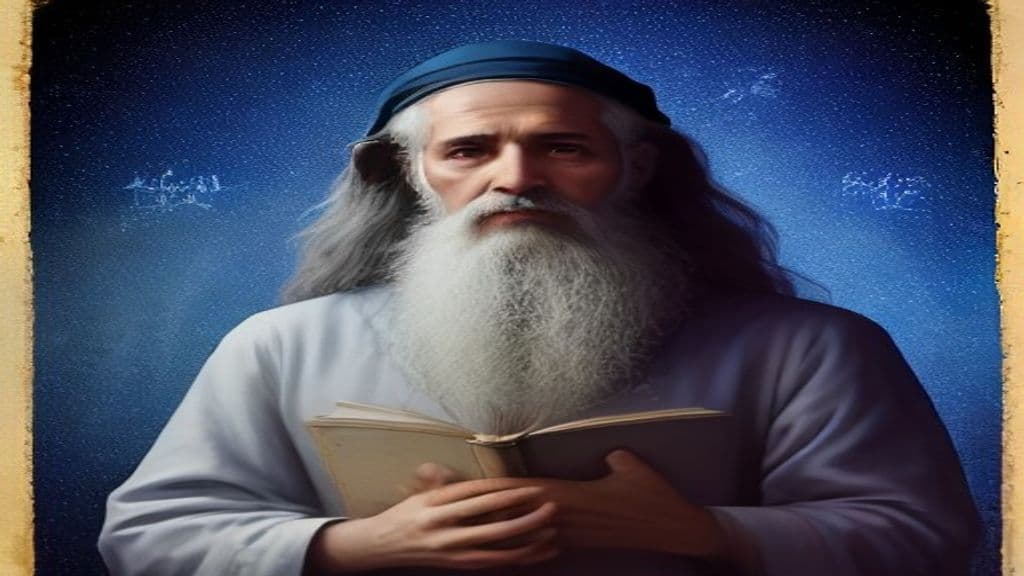
In the biblical and post-biblical record Baruch appears as the son of Neriah and brother of Seraiah ben Neriah; he emerges in the late monarchic period (c. 6th century BCE) as Jeremiah’s scribe who wrote down the prophet’s messages as they were dictated. Later rabbinic, Christian, and apocryphal traditions extend his biography: some place him remaining with Jeremiah at Mizpah, some say he accompanied Jeremiah to Egypt and died there (tradition preserved by Jerome), while other traditions assert he later went or was carried to Babylon. Centuries after his lifetime, deuterocanonical and pseudepigraphical writings were ascribed to him, a practice that anchors later theological reflection on exile to his name.
Sources do not provide a sustained physical description. Identifying markers in the traditions are social and genealogical: son of Neriah; brother of Seraiah ben Neriah; sometimes described in rabbinic sources as of priestly (kohen) status or as resident with Jeremiah at Mizpah and active in Jerusalem (including public readings in the Temple). Later accounts locate him variably in Egypt or Babylon after the fall of Jerusalem.
Primary functions attested in the sources are non-supernatural: Baruch served as Jeremiah’s scribe and secretary, recording the prophet’s first and second editions of prophecies; he acted as a public reader of Jeremiah’s oracles (including a Temple reading on a day of fasting); and he is portrayed as a loyal companion and transmitter of prophetic teachings. Rabbinic sources debate whether he himself received prophetic inspiration—some accounts deny him prophecy and present a Midrashic divine explanation, while other rabbinic traditions include him among the Prophets. Later literature attributes authorship of the Book of Baruch and ascribes pseudepigraphal apocalypses (2 Baruch, 3 Baruch) to him, though these works were composed centuries after his lifetime and are pseudepigraphal attributions rather than direct evidence of supernatural power.
Barri
Barri (also attested Barrey/Barey) is a mythic place-name in Old Norse tradition, named in Skírnismál and Snorri Sturluson’s Gylfaginning as the rendezvous-site where Freyr and Gerðr will meet nine nights after prior events. The term is etymologically ambiguous between a grove/wood and an island or a grain-field, and scholars debate whether its semantic field evokes woodland or agricultural fertility.
Barrow-wight
A wraith-like tomb-spirit coined by J. R. R. Tolkien that inhabits burial mounds (barrows). Modeled on Old Norse mound-spirits (haugbúar/draugr), Tolkien's barrow-wights animate or occupy ancient tombs and, in his narrative, can place living intruders under an enchanted sleep and arrange them with grave-goods until relieved by a powerful agent.
Barry Allen
Barry Allen is a fictional human superhero appearing in American comic books published by DC Comics, best known as the second character to bear the Flash mantle. A forensic chemist who gains superhuman speed after a laboratory lightning accident, Barry functions as a science-oriented protagonist whose actions have driven major company-wide storylines and multiverse-level events.
Bart Allen
Bart Allen is a fictional DC Comics speedster: a super-powered superhero from the Flash family legacy who has appeared as Impulse, Kid Flash, and briefly as the Flash. Originating in 30th-century lineage stories, he is characterized by Speed Force-derived super-speed, rapid aging/metabolic issues, and apprenticeship within an intergenerational hero tradition.
Barta (Shahnameh)
No evidence in the supplied sources identifies a supernatural entity named Barta within the Shahnameh. The name appears in disambiguation and as a family name in external records, and in unrelated Bangla/Islamic pamphlet titles, but the provided Shahnameh materials do not describe any being called Barta.
Bartholomew the Apostle
Bartholomew is presented in the supplied sources as one of the Twelve Apostles of Jesus, an early Christian missionary and martyr whose life functions in Christian liturgical memory, regional founding traditions (notably Armenian), and in later apocryphal and visionary narratives that expand his missionary itinerary and miraculous acts.
Basajaun
A huge, hairy hominid in Basque mythology that protects flocks and teaches humans skills. (Note: * Power tier: should be "Greater" instead of "Ancient", as Basajaun's abilities suggest regional power but not deity-level. * Origin story: it is actually mentioned in the source that the origin story)
Basamum
Basamum is attested as a deity worshipped in pre-Islamic South Arabia, tentatively associated with healing through an etymological link to balsam; a single ancient text credits Basamum with curing two sick goats or ibexes. The evidence is limited and leaves most aspects of cult and myth undetermined.
Basan
The Basan is a legendary nocturnal bird-like yōkai from Edo-period Japanese illustrated compendia. Described as a chicken-sized fowl that emits a visible, cold, non-combustive ‘ghost-fire’ and feeds on charred wood and embers, it is associated with mountain bamboo groves and remote villages at night.
Bashe (巴蛇) — Great Horned/Great Ba Snake
Bashe (巴蛇, bā-shé) is a named legendary giant python-like serpent in classical Chinese literature, famed for swallowing elephants whole and disgorging their bones after a long interval. It appears in mytho-geographic and poetic compilations (notably the Shanhaijing and the Chuci Tianwen) and is taken up in materia medica writings (e.g., Bencao Gangmu) and commentaries (Guo Pu) as both marvel and source of medicinal substances.
Bashnouna
Bashnouna is a Coptic Christian monk venerated as a saint and martyr in the Coptic Orthodox tradition. According to hagiographical accounts recorded in the Coptic Synaxarion and secondary summaries, he was a monk of the Monastery of Saint Macarius in Scetes, arrested during the Fatimid caliphate of al-'Āḍid, refused to convert to Islam, and was burned alive on 24 Pashons (19 May 1164). His relics are reported buried at the Church of Saint Sergius in Cairo and he is commemorated liturgically on that date.
Basilides and Potamiana
Basilides and Potamiana are early Christian martyrs venerated in later tradition. Potamiana is remembered as a young virgin of Alexandria whose martyrdom and reported nocturnal appearances inspired conversions; Basilides was a court officer converted by Potamiana’s apparition, baptized, and subsequently executed.
Community Record
- [1]Baruch ben Neriah – Wikipedia. Wikipedia, 'Baruch ben Neriah'wiki
- [2]Wikidata: Baruch ben Neriah (Q599907). Wikidata entry Q599907other
- [3]The Apocalypse Of Baruch (complete audiobook) – Archive.org. Archive.org, 'The Apocalypse Of Baruch'literary
- [4]Book of Baruch – LibriVox summary (Archive.org). Archive.org / LibriVox summary, 'Book of Baruch'literary
- [5]Baruch ben Neriah (Hebrew Nations summary). HebrewNations.com summary on Baruch ben Neriahother