
Bashe is attested as a named extraordinary serpent in classical Chinese texts rather than as a theogonic or anthropogenic origin myth. It appears in catalogues of marvels and mythic natural history — most prominently the Shanhaijing (Classic of Mountains and Seas) and the Chuci's Tianwen — where it is presented as an extreme example of southern serpent fauna. Later commentators (Guo Pu) and materia medica compilers (Bencao Gangmu) treat the bashe as an exaggerated form or literary instantiation of very large southern pythons (ranshe 蚺蛇), elaborating its size and linking it to medicinal uses. Scholarly commentary records how observational traits of large constricting snakes (e.g., regurgitation of indigestible bones) were amplified into a legendary claim that a bashe swallows elephants and later disgorges their bones.
Classical descriptions portray the bashe as an enormous, python-like serpent. The Shanhaijing lists color variants — green, yellow, scarlet, or black (with one author noting black snakes with green heads) — and describes its capacity to swallow elephants whole. Guo Pu's commentary inflates its length dramatically (recorded in commentary as up to 100 xun, a legendary measure cited in Guo Pu's notes), while Bencao Gangmu cites more modest traditional measures for large pythons (50–60 chi in some compilations) and compares bashe to southern ranshe. Overall the textual picture is of a prodigiously long constricting snake, with specific color notes and reiterated emphasis on extreme size.
Primary legendary abilities recorded in the sources are prodigious size and digestive feats: the Shanhaijing states that the 'Big Snake eats elephants and after three years it disgorges their bones.' Commentators compare this claim to real python behavior (crushing/swallowing prey and sometimes regurgitating indigestible bone), suggesting the tale is an amplification of natural observation. Materia medica texts and commentaries attribute curative or sympathetic-magic value to the bashe or to materials associated with it: the Shanhaijing line that 'Gentlemen take a dose of this snake so that they will never have heart disease or illnesses of the belly' and Bencao Gangmu entries record use of python parts (bile, flesh, fat, teeth, oil) or the undigested elephant bones expelled by the snake as therapeutic. Sources disagree on whether medicinal ingestion refers to snake flesh/parts or to the disgorged elephant bones; this ambiguity is explicitly noted in the commentarial and modern scholarly literature.
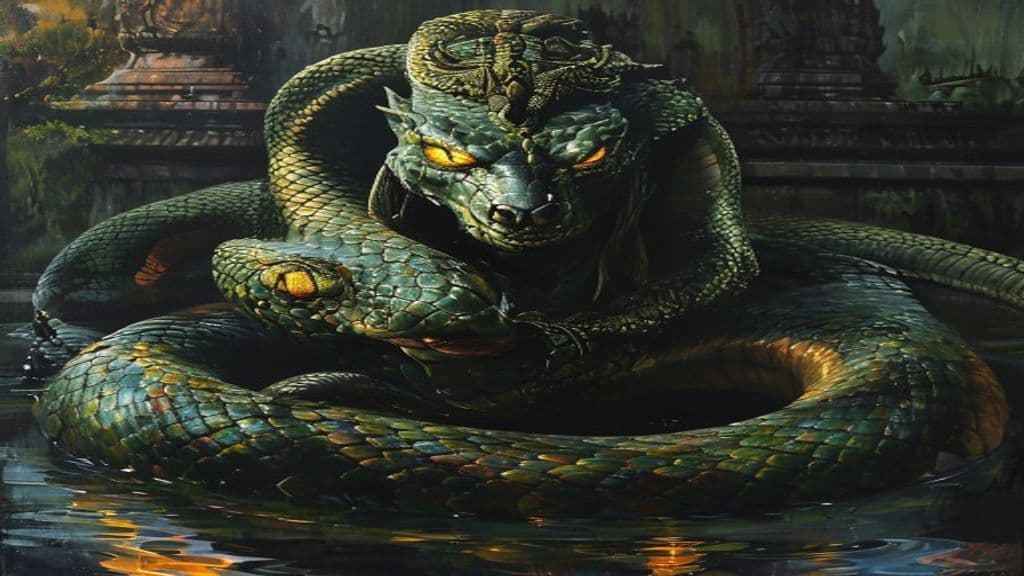
Naga
Divine serpent beings of Hindu, Buddhist, and Jain cosmology — powerful guardians of water, earth, and underground treasures. Revered as deities in South and Southeast Asia.
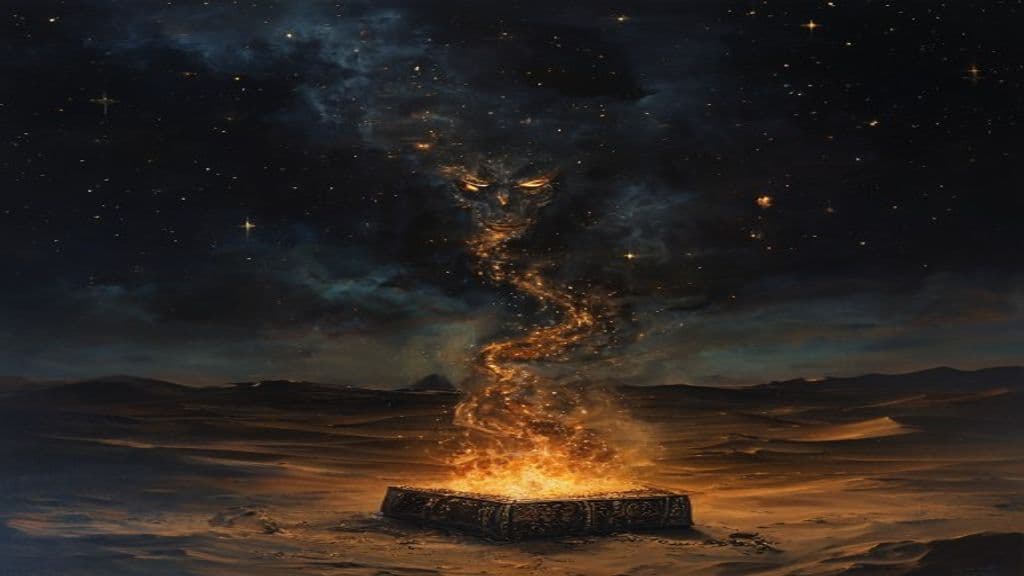
Djinn
The class of supernatural beings created from smokeless fire in Islamic cosmology — a parallel civilization to humanity, capable of belief or unbelief, with their own prophets, society, and judgment before God.
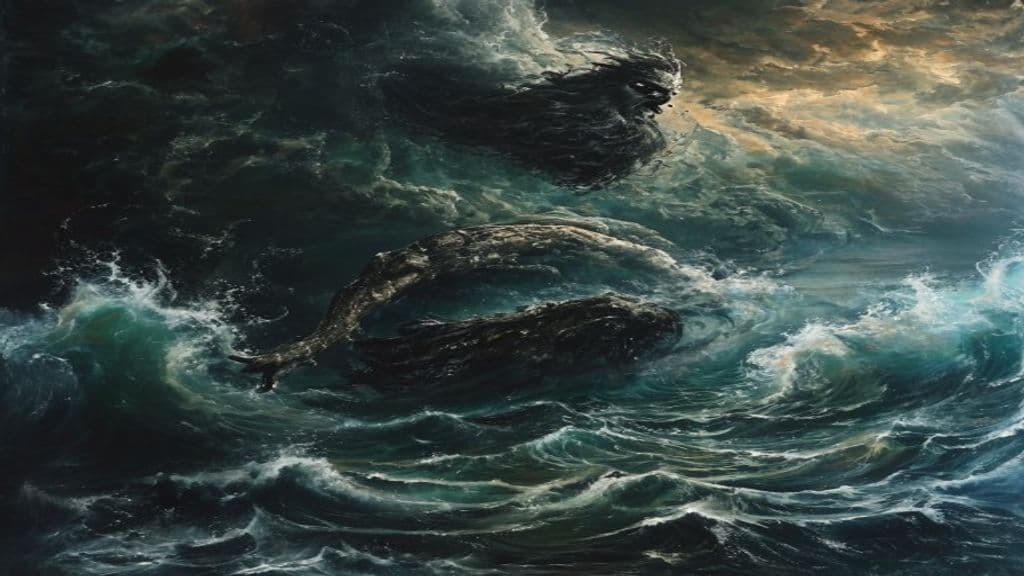
Marid
The most powerful class of jinn in Islamic tradition — beings of the sea, associated with the deep ocean, storms, and the granting of wishes at terrible cost. The classic genie of the Arabian Nights.

Jann
The weakest class of djinn in Islamic tradition, associated with desert winds and taking the form of snakes or whirlwinds, dwelling in empty wilderness and posing little threat to those who know the proper invocations.
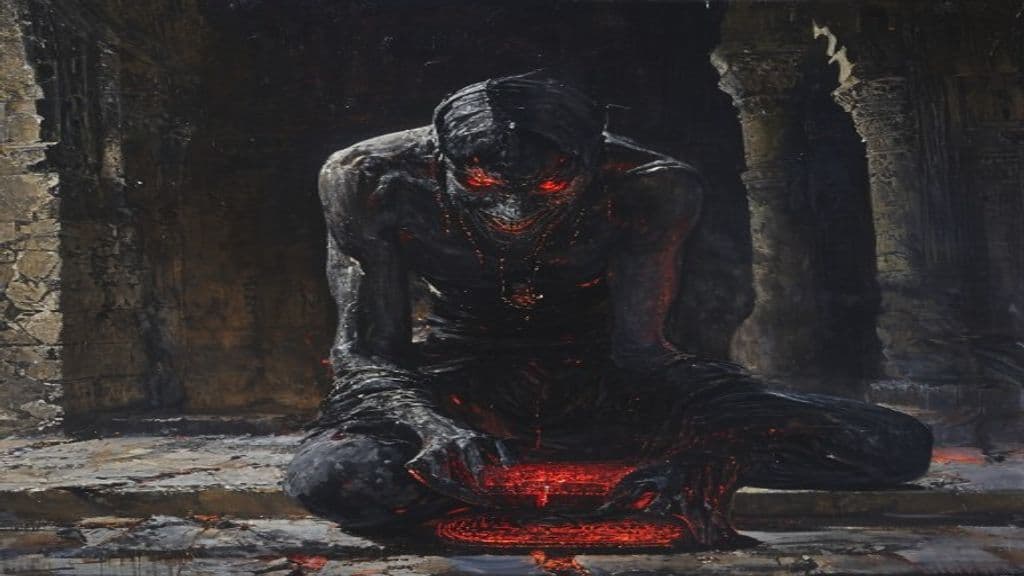
Shaitan
A class of corrupted djinn who follow Iblis and dedicate themselves to leading humans astray — distinct from Iblis himself, the Shayatin are a species of evil djinn who whisper doubts and temptations into the minds of the living.
Community Record
- [1]Bashe — Wikipedia summary. Wikipedia: 'Bashe' article (summary and bibliographic pointers)wiki
- [2]Shanhaijing (Classic of Mountains and Seas) — cited passages. Shanhaijing: account summarized in source notes — 'The Big Snake eats elephants and after three years it disgorges their bones. Gentlemen take a dose of this snake...' (chapter summaries as cited in the research notes)literary
- [3]Chuci — Tianwen (Heavenly Questions) — referenced riddle. Chuci (Tianwen): summarized question regarding 'How does the snake that can swallow an elephant digest its bones?' as cited in the research notesliterary
- [4]Guo Pu commentary on Shanhaijing (commentarial tradition). Guo Pu commentary (summarized): compares bashe to southern ran (python) and records exaggerated length claims (e.g., up to 100 xun) as noted in the research notesliterary
- [5]Bencao Gangmu (Materia Medica) — entries on pythons / Pa She. Bencao Gangmu: materia medica entry summarized in the research notes — records uses for python bile, flesh, fat, teeth, oil and cites the Shanhaijing statement about disgorged elephant bones used medicinallyliterary
- [6]Modern scholarly summaries (Birrell, Carr, Eberhard, Read, Schiffeler) — paraphrased. Modern commentators and scholars as summarized in the research notes (e.g., Birrell, Carr, Eberhard, Read, Schiffeler) — used for interpretation of bashe as amplification of python behavior and for noting disputes about medicinal readings and size-claimsacademic