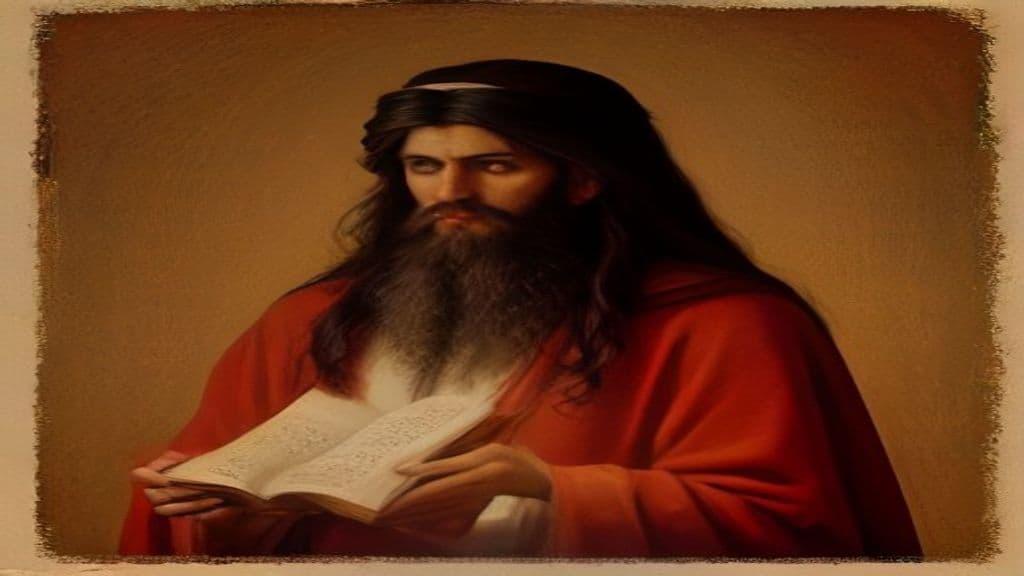
In the canonical tradition as represented in the supplied materials, Bartholomew (Greek: Βαρθολομαῖος, from Aramaic bar-Tolmai 'son of Tolmai') appears in the New Testament lists of the Twelve Apostles and is thus an original follower commissioned as an apostolic witness in first‑century Palestine. Patristic writers recorded later traditions about his missionary activity after the Ascension: Eusebius (as summarized in the sources) and Jerome report tradition(s) of missions reaching as far as India; other accounts place his labors in Mesopotamia, Parthia, Lycaonia, Ethiopia, and Greater Armenia. Armenian tradition particularly credits Bartholomew (often paired with Jude/Thaddeus) with bringing Christianity to Armenia in the first century, a claim that undergirds Armenian claims of apostolic origins. Later apocryphal and visionary narratives attributed additional journeys, miracles, and a martyrdom to him, but these are later traditions layered upon the canonical apostolic listing.
The supplied sources do not preserve a contemporary, eyewitness physical description of Bartholomew. The material emphasizes his identity and role (apostle, missionary, martyr) rather than detailed corporeal features. Later devotional and iconographic traditions (not fully detailed in the supplied excerpts) commonly portray him according to martyr motifs in diverse Christian art; the present sources note narrative markers such as his association with martyrdom (including accounts of torture or flaying in later tradition) but provide no standardized, primary‑source physical description.
In the canonical and patristic material Bartholomew's 'abilities' are those of an apostolic missionary: preaching, baptizing, establishing communities, and serving as an authoritative witness for the apostolic generation. Patristic summaries (Eusebius, Jerome as cited) attribute wide geographic missionary activity to him. Later devotional and visionary accounts (e.g., the Emmerich summaries) ascribe miraculous deeds—raising the dead, silencing a speaking idol, and healings—and narratives of steadfast witness under persecution culminating in martyrdom; these miraculous attributions belong to later apocryphal or visionary layers rather than the New Testament lists.
Weaknesses
- conditionmartyred under persecution
Wards
- ritualveneration and liturgical commemoration (feast days, prayers, novenas)

Jann
The weakest class of djinn in Islamic tradition, associated with desert winds and taking the form of snakes or whirlwinds, dwelling in empty wilderness and posing little threat to those who know the proper invocations.

Djinn
The class of supernatural beings created from smokeless fire in Islamic cosmology — a parallel civilization to humanity, capable of belief or unbelief, with their own prophets, society, and judgment before God.
Barraiya
Barraiya is named in a single recorded account as a god in Australian Aboriginal mythology who fashioned the first vagina with a spear so that the being Eingana could give birth. The attestation presents Barraiya in a creator role connected to the origin of human birth.
Barri
Barri (also attested Barrey/Barey) is a mythic place-name in Old Norse tradition, named in Skírnismál and Snorri Sturluson’s Gylfaginning as the rendezvous-site where Freyr and Gerðr will meet nine nights after prior events. The term is etymologically ambiguous between a grove/wood and an island or a grain-field, and scholars debate whether its semantic field evokes woodland or agricultural fertility.
Barrow-wight
A wraith-like tomb-spirit coined by J. R. R. Tolkien that inhabits burial mounds (barrows). Modeled on Old Norse mound-spirits (haugbúar/draugr), Tolkien's barrow-wights animate or occupy ancient tombs and, in his narrative, can place living intruders under an enchanted sleep and arrange them with grave-goods until relieved by a powerful agent.
Barry Allen
Barry Allen is a fictional human superhero appearing in American comic books published by DC Comics, best known as the second character to bear the Flash mantle. A forensic chemist who gains superhuman speed after a laboratory lightning accident, Barry functions as a science-oriented protagonist whose actions have driven major company-wide storylines and multiverse-level events.
Bart Allen
Bart Allen is a fictional DC Comics speedster: a super-powered superhero from the Flash family legacy who has appeared as Impulse, Kid Flash, and briefly as the Flash. Originating in 30th-century lineage stories, he is characterized by Speed Force-derived super-speed, rapid aging/metabolic issues, and apprenticeship within an intergenerational hero tradition.
Barta (Shahnameh)
No evidence in the supplied sources identifies a supernatural entity named Barta within the Shahnameh. The name appears in disambiguation and as a family name in external records, and in unrelated Bangla/Islamic pamphlet titles, but the provided Shahnameh materials do not describe any being called Barta.
Baruch ben Neriah
Baruch ben Neriah (Hebrew: Bārūḵ ben Nērīyyā) is presented in the Judaic and Christian literary tradition as the scribe, disciple, secretary, and devoted companion of the prophet Jeremiah (c. 6th century BCE). He is remembered as the recorder and public reader of Jeremiah’s prophecies and as the putative author or eponymous attributee of later deuterocanonical and pseudepigraphical works (Book of Baruch; 2 Baruch, 3 Baruch).
Basajaun
A huge, hairy hominid in Basque mythology that protects flocks and teaches humans skills. (Note: * Power tier: should be "Greater" instead of "Ancient", as Basajaun's abilities suggest regional power but not deity-level. * Origin story: it is actually mentioned in the source that the origin story)
Basamum
Basamum is attested as a deity worshipped in pre-Islamic South Arabia, tentatively associated with healing through an etymological link to balsam; a single ancient text credits Basamum with curing two sick goats or ibexes. The evidence is limited and leaves most aspects of cult and myth undetermined.
Basan
The Basan is a legendary nocturnal bird-like yōkai from Edo-period Japanese illustrated compendia. Described as a chicken-sized fowl that emits a visible, cold, non-combustive ‘ghost-fire’ and feeds on charred wood and embers, it is associated with mountain bamboo groves and remote villages at night.
Bashe (巴蛇) — Great Horned/Great Ba Snake
Bashe (巴蛇, bā-shé) is a named legendary giant python-like serpent in classical Chinese literature, famed for swallowing elephants whole and disgorging their bones after a long interval. It appears in mytho-geographic and poetic compilations (notably the Shanhaijing and the Chuci Tianwen) and is taken up in materia medica writings (e.g., Bencao Gangmu) and commentaries (Guo Pu) as both marvel and source of medicinal substances.
Bashnouna
Bashnouna is a Coptic Christian monk venerated as a saint and martyr in the Coptic Orthodox tradition. According to hagiographical accounts recorded in the Coptic Synaxarion and secondary summaries, he was a monk of the Monastery of Saint Macarius in Scetes, arrested during the Fatimid caliphate of al-'Āḍid, refused to convert to Islam, and was burned alive on 24 Pashons (19 May 1164). His relics are reported buried at the Church of Saint Sergius in Cairo and he is commemorated liturgically on that date.
Community Record
- [1]Bartholomew the Apostle - Wikipedia. Wikipedia, 'Bartholomew the Apostle' (summary of traditions, etymology, missionary attributions, Armenian tradition, feast days, visionary reports).wiki
- [2]Eusebius, Ecclesiastical History (summary as cited). Summarized reference in the supplied materials to Eusebius of Caesarea's Ecclesiastical History reporting tradition of missionary activity to India (as cited in the Wikipedia excerpt).other
- [3]Commentary on the Gospel of St Matthew (Jerome) - archive excerpt. Jerome's mention of various noncanonical gospels 'according to ... Bartholomew' (archive excerpt quoted in the supplied notes).literary
- [4]Coptic apocrypha metadata (Archive). Library metadata indicating a Coptic text attributed to Bartholomew ('The book of the resurrection of Jesus Christ, by Bartholomew the Apostle') in the supplied archive excerpt.literary
- [5]Novena to Saint Bartholomew, the Apostle (CatholicDoors). Text and description of a modern nine‑day novena devotion to Saint Bartholomew as cited in the supplied notes.other
- [6]Diocese/lectionary and devotional summaries (satucket / lectionary pages). Lectionary and commemorative material summarizing feast observances and liturgical references to Saint Bartholomew (as cited in the supplied notes).other
- [7]Orthodoxy in America: Divine Liturgy in honor of Saint Bartholomew (2024). Contemporary liturgical commemoration and feast observance in Orthodox practice (cited in the supplied notes).other