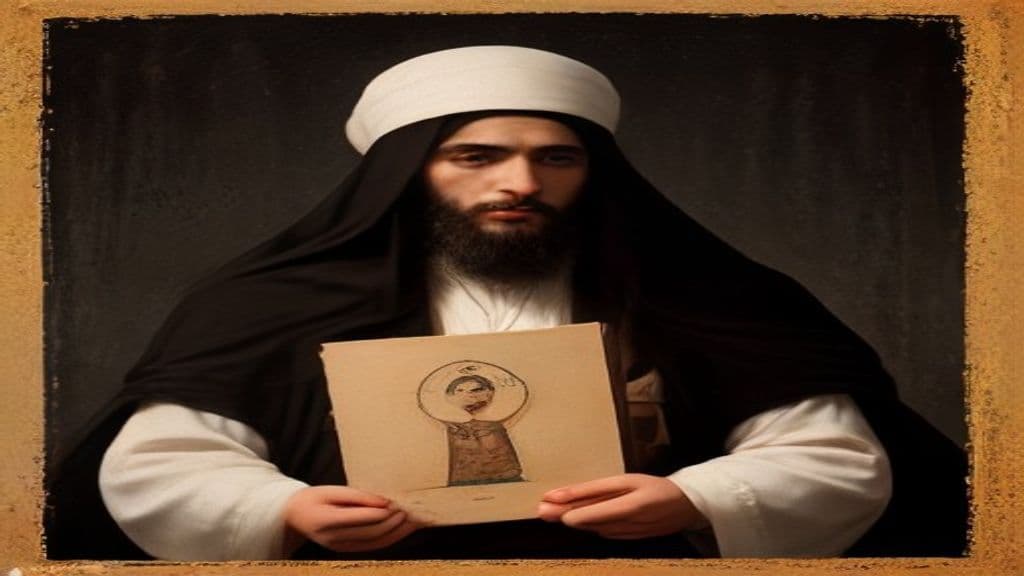
As recorded in the Coptic Synaxarion and summarized in available hagiographical listings, Bashnouna was a monk of the Monastery of Saint Macarius the Great in Scetes. During the caliphate of al-'Āḍid (Fatimid period), he was arrested by Fatimid authorities and threatened with death unless he converted to Islam. He refused to renounce his Christian faith and was executed by being burned alive on 24 Pashons, 880 A.M. (19 May 1164 AD). His life and martyrdom are commemorated in the Synaxarion and his relics are said to be buried at the Church of Saint Sergius in Cairo.
The provided sources do not supply a physical description of Bashnouna. He is identified by his monastic affiliation (a monk of the Monastery of Saint Macarius the Great) and by the circumstances of his martyrdom. In liturgical and commemorative contexts he is represented as a monastic martyr; his relics are reported to rest at the Church of Saint Sergius in Cairo. No iconographic details or bodily descriptions are attested in the cited excerpts.
The sources do not attribute supernatural powers, miracles, or posthumous interventions to Bashnouna in the provided material. His significance in the sources is as a historical/hagiographical martyr and exemplar of steadfast faith. Standard practices of saint veneration (liturgical commemoration in the Synaxarion and the keeping of relics) are implied by the reports that his life is recorded in the Synaxarion and that his relics are buried at a named church, but no specific miraculous acts are documented in the excerpts supplied.
Weaknesses
- otherNot attested in sources
Wards
- otherNot applicable — Bashnouna is a venerated saint, not a threat; no wards attested in sources
Abadiu of Antinoe
Abadiu of Antinoe was a fourth‑century bishop of Antinoe (Antinoopolis, in Roman Egypt) commemorated as a martyr and saint in the Coptic Orthodox Church, with a feast day on 26 December. Sources record that he was killed during a theological dispute with Arian opponents and reference him in collections of Egyptian martyrs.
Abaskhiron the Soldier
A Coptic Orthodox martyr venerated for refusing imperial idolatry during the Diocletian persecution; reputedly healed by the Archangel Michael, preserved in monastery relics, and commemorated on 14 June (7 Paoni).
Abdel Messih El-Makari
Abdel Messih El-Makari (1892–1963) was a Coptic Orthodox monk and priest venerated as a 20th‑century Coptic saint. Associated with the Monastery of Saint Samuel the Confessor and the Monastery of Saint Macarius (Scetes/Wadi El‑Natrun), he is remembered for humility, asceticism, charity, and reported spiritual gifts such as prescience, discerning of spirits, and healing.
Anba George (Saint George of Assiut)
Anba George is a Coptic Orthodox bishop venerated as a saint and martyr in Coptic hagiographical and liturgical tradition. Associated with Assiut in Upper Egypt and the Monastery of St. George, his life is commemorated in Synaxarium-type records; hagiography recounts his leadership of communal fasting and prayer and his subsequent arrest and martyrdom in the 12th century.
Arsenius the Great
Arsenius the Great (c. 350/354–c. 445/450) was a Roman-born imperial tutor who renounced court life to become an anchorite among the Desert Fathers in Egypt. Venerated as a saint in Eastern Orthodox, Coptic, and Roman Catholic traditions, he is remembered for extreme humility, prolonged solitude, silence, copious tears of devotion, and brief monastic writings and sayings preserved in the Apophthegmata Patrum and other collections.
Bishop Karas (Sorial Ayad Sorial)
Bishop Karas (born Sorial Ayad Sorial, 1955–2002) was a Coptic Orthodox monk, abbot, and the first bishop of the Coptic Orthodox Church in the United States to head its first monastery outside Egypt. He is documented as a historical ecclesiastical figure known for monastic leadership, pastoral care, and ascetic practice.
Basamum
Basamum is attested as a deity worshipped in pre-Islamic South Arabia, tentatively associated with healing through an etymological link to balsam; a single ancient text credits Basamum with curing two sick goats or ibexes. The evidence is limited and leaves most aspects of cult and myth undetermined.
Basan
The Basan is a legendary nocturnal bird-like yōkai from Edo-period Japanese illustrated compendia. Described as a chicken-sized fowl that emits a visible, cold, non-combustive ‘ghost-fire’ and feeds on charred wood and embers, it is associated with mountain bamboo groves and remote villages at night.
Bashe (巴蛇) — Great Horned/Great Ba Snake
Bashe (巴蛇, bā-shé) is a named legendary giant python-like serpent in classical Chinese literature, famed for swallowing elephants whole and disgorging their bones after a long interval. It appears in mytho-geographic and poetic compilations (notably the Shanhaijing and the Chuci Tianwen) and is taken up in materia medica writings (e.g., Bencao Gangmu) and commentaries (Guo Pu) as both marvel and source of medicinal substances.
Basilides and Potamiana
Basilides and Potamiana are early Christian martyrs venerated in later tradition. Potamiana is remembered as a young virgin of Alexandria whose martyrdom and reported nocturnal appearances inspired conversions; Basilides was a court officer converted by Potamiana’s apparition, baptized, and subsequently executed.
Basilisco chilote
A Chilote household parasite: a rooster-crested, serpentine creature hatched from a chicken's egg that lives beneath houses and feeds on inhabitants' phlegm and saliva, causing dehydration and death. Preventive measures call for burning the egg and killing the laying hen; once hatched the documented remedy is to burn the afflicted house.
Basilisk
A legendary serpent‑king from Roman and medieval European bestiary tradition, described in Pliny's reception as a small but uniquely deadly snake whose venomous trail and lethal gaze can kill. It functions in those corpora as one of several marvelous or dangerous creatures catalogued by natural historians and compilers of bestiaries.
Community Record
- [1]Bashnouna. Wikipedia: Bashnounawiki
- [2]24 Bashans - Pachans Month - Coptic Synaxarium (Coptic Orthodox Calendar: Daily Synaxarion). St-Takla.org: 24 Pashons Synaxarion entryother
- [3]St. George & St. Bashnouna Coptic Orthodox Church of Fom El Khaleeg, Al Qahirah, Egypt. Coptic Orthodox Directory: St. George & St. Bashnouna Church listingother
- [4]4 Bashans - Pachans Month - Coptic Synaxarium (Coptic Orthodox Calendar: Daily Synaxarion). St-Takla.org: Pashons month Synaxarion pages (contextual sources cited alongside 24 Pashons)other