
Scholars and popular belief offer competing origins. A widespread folk etymology links her name to the Feast of the Epiphany (Italian epifania / Greek epiphaneia), making her a personification of the liturgical feast and its calendar role. Other commentators trace the name to bastrina and offerings connected to the ancient goddess Strina/Strenia (New Year offerings), reading Befana as a survival or syncretic transformation of older household/goddess figures. Historical commentators (e.g., Jacob Grimm and later folklorists) have argued both for pre‑Christian survivals and for medieval Christian personification; sources record the debate without a single definitive consensus.
Traditional iconography depicts Befana as an old, hag‑like woman—often described as ugly and toothless—wearing rags, a headscarf and sometimes a black shawl. She is commonly shown with a sooty face (explained by her entering homes through chimneys), ember‑like eyes, a cutting tongue, and carrying a broom and a sack or basket filled with gifts. Popular imagery also represents her riding a broomstick; effigies and dolls commonly reproduce these features.
Befana's principal role is seasonal and social rather than combative: she visits homes on Epiphany Eve to distribute gifts—sweets, candies, or toys—to good children and coal to bad children. Some regional accounts say she emerges once a year from remote dwellings (for example, mountain caves in certain traditions) to move through communities. She enters houses via chimneys (explaining her soot), and she functions as an ambivalent moral figure who both rewards and punishes. She also appears as a focus for communal enactments—mumming, effigy‑making and bonfire rituals—where her presence is performed and sometimes mocked or ritually burned.
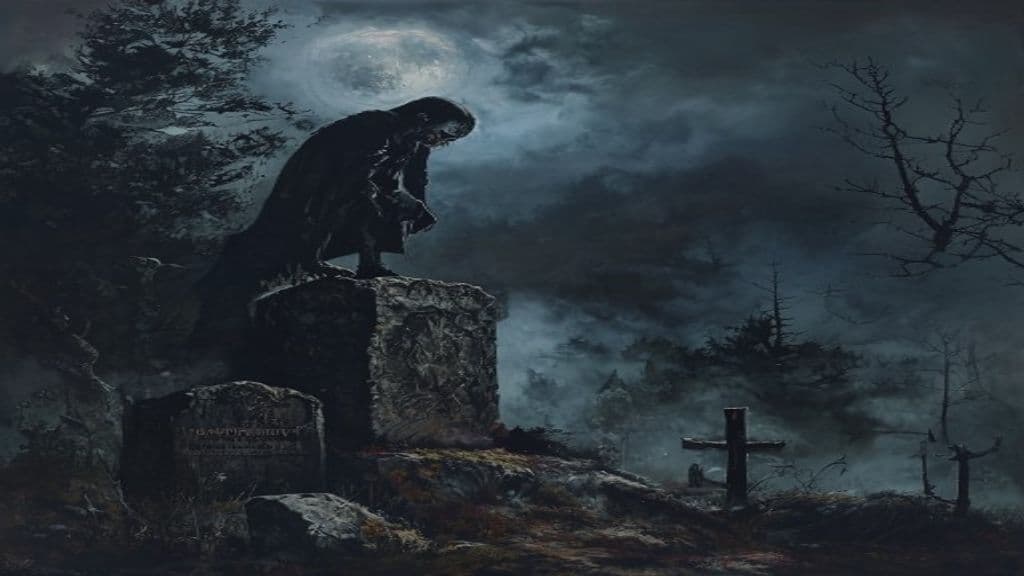
Bedivere
One-handed knight and marshal of King Arthur's Round Table, known for returning Excalibur to the Lady of the Lake. (Note: - Power tier should be Greater (powerful regional), as Bedivere is a human character with significant roles within the Arthurian court, but not necessarily on a cosmic or deity-level. - Appearance: Th)
Bedwyr (Bedivere)
Bedwyr (Welsh; Anglicized Bedivere) is a named heroic figure in early Welsh poetry and later medieval Arthurian romances. Presented in the sources as a human warrior and courtier — famed as the one‑handed great warrior Bedwyr Bedrydant in Welsh texts and later as a Knight of the Round Table and Arthur's marshal who, in English versions, returns Excalibur to the Lady of the Lake.
Bee
The bee (Anthophila) is a group of winged insects within the order Hymenoptera, best known as pollinators and, in some species, producers of honey; the provided sources treat bees as biological organisms and as subjects of human husbandry (apiculture/meliponiculture) rather than as supernatural beings.
Beelzebub
Originally the name of a Philistine city-deity of Ekron recorded in the Hebrew Bible (2 Kings), Baʿal-zəḇūḇ was later used in Jewish polemic as a derisive title and appears in Christian texts as a designation for a principal demonic figure (rendered Beelzebul/Beelzebub) often called the 'prince of demons.' Over subsequent centuries the name is incorporated into medieval and early modern demonological hierarchies and literary depictions of infernal powers.
Beeri
Beeri (Hebrew: בְּאֵרִי, Bə’êrî) is a personal name appearing in the Hebrew Bible for at least two distinct human figures: a Hittite father of Judith (Genesis 26:34) and the father of the prophet Hosea (Book of Hosea). Jewish tradition treats the latter as a minor prophetic figure whose brief utterances are traditionally linked to Isaiah 8:19–20.
Beerwolf
Beerwolf (also attested Bärwolf, Werwolf) is a German term equated with the werewolf in folkloric vocabulary and separately used as a political-theoretical metaphor in 16th‑century Protestant resistance discourse to designate a ruler who has placed himself outside the moral and legal order.
Begoe
Begoe is a scarcely attested named figure in Etruscan religious tradition, recorded in a 19th‑century retelling as able to slay an ox by whispering a sacred name. Modern references sometimes list Begoe as a variant spelling of the better‑attested Etruscan figure Vegoia/Vegoe, but evidence is fragmentary.
Behedety
Behedety is attested in the supplied sources only as an Egyptian deity label; the available materials do not provide mythological narratives, attributes, iconography, cult practice, or functions. One modern musical release uses the name as a title, but offers no traditional information.
Behemoth
Primordial creature from Jewish tradition, representing chaos-monster or embodiment of primordial forces. (Note: - Power tier should be revised as Primordial is not an official power tier classification; however, given Behemoth's abilities and origin story, it can be re-classified as Ancient (deity-level). - App)
Beira / Cailleach
A Gaelic seasonal figure: an old-woman 'hag' who personifies winter, storms, and the shaping of landscape. Known across Ireland, Scotland, and the Isle of Man, she appears in contrast to younger spring/summer goddesses such as Brìgde.
Beithir
In Scottish Gaelic tradition the beithir is a very large snakelike creature—often called a serpent or dragon—associated with mountains, corries and bodies of water. It is portrayed as venomous and deadly in local tales, linked in etymology and interpretation to lightning/thunderbolt imagery, and classed among water-associated monsters (fuath).
Bekka
Bekka is a fictional New God from Jack Kirby’s Fourth World mythos and later DC Comics continuities. Portrayed as a nigh-immortal warrior and healer, she is notable for a subconscious power that manipulates and amplifies others' emotions and for wielding Fourth World technology such as a Mother Box and, in some stories, a yellow power ring.
Community Record
- [1]Befana. Wikipedia: Befanawiki
- [2]Befana (Wikidata). Wikidata: Befanaother
- [3]De buena mañana - Personajes navideños. Archive podcast mentioning Befanaother
- [4]La Festa dell'Epifania. Article on Epiphany customs noting household blessing and sweeping motiffolk
- [5]The Story of La Befana. Folk summary of Befana traditions and effigy customsfolk
- [6]Befana, Italy's Christmas Witch. Blog summary of Befana folkloreother
- [7]Regatta della Befana [weblog]. Weblog accounts of local Befana festivalsother
- [8]Epiphany/Regatta della Befana [weblog]. Weblog accounts of Befana procession/festivalother
- [9]Who is La Befana? - by Beth Collier - Curious Minds. Contemporary essay summarizing popular traditionsother