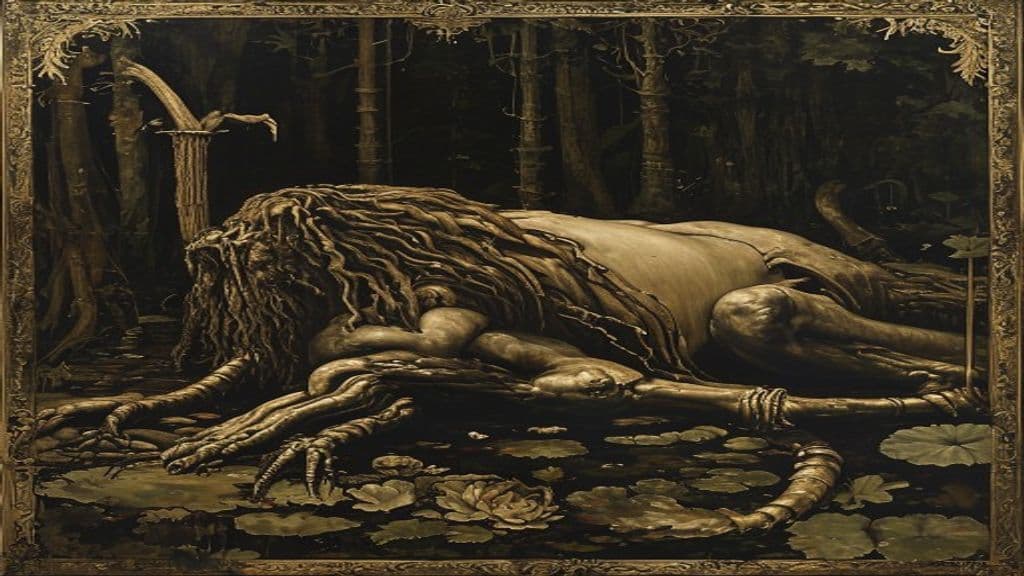
According to the Book of Job (40:15-24), Behemoth is a primeval creature created by God at the beginning of creation.
Behemoth lies under lotus trees, and its bones are tubes of bronze; limbs like bars of iron. Its tail rises up like a cedar; sinews of its loins are tied together.
Impressive physical abilities, incredible strength, massive size.
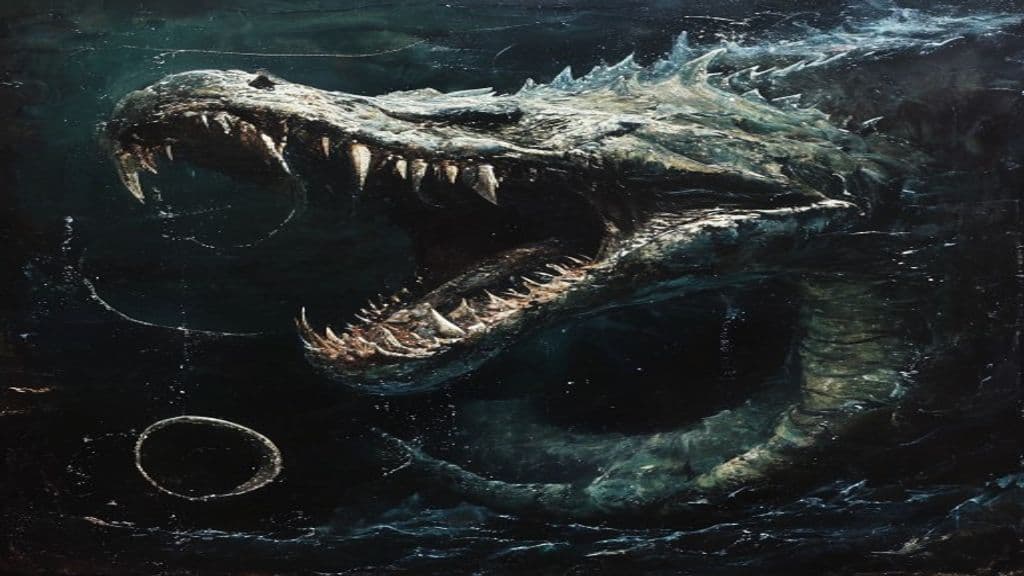
Beelzebub
Originally the name of a Philistine city-deity of Ekron recorded in the Hebrew Bible (2 Kings), Baʿal-zəḇūḇ was later used in Jewish polemic as a derisive title and appears in Christian texts as a designation for a principal demonic figure (rendered Beelzebul/Beelzebub) often called the 'prince of demons.' Over subsequent centuries the name is incorporated into medieval and early modern demonological hierarchies and literary depictions of infernal powers.
Beeri
Beeri (Hebrew: בְּאֵרִי, Bə’êrî) is a personal name appearing in the Hebrew Bible for at least two distinct human figures: a Hittite father of Judith (Genesis 26:34) and the father of the prophet Hosea (Book of Hosea). Jewish tradition treats the latter as a minor prophetic figure whose brief utterances are traditionally linked to Isaiah 8:19–20.
Beerwolf
Beerwolf (also attested Bärwolf, Werwolf) is a German term equated with the werewolf in folkloric vocabulary and separately used as a political-theoretical metaphor in 16th‑century Protestant resistance discourse to designate a ruler who has placed himself outside the moral and legal order.
Befana
In Italian popular and folk culture, the Befana is a witch‑like old woman associated with the Feast of the Epiphany who, on Epiphany Eve (night of January 5), brings sweets to good children and coal to bad children. She is an ambivalent household/seasonal figure involved in domestic and communal Epiphany rituals such as mumming, effigy‑making and bonfires, and her origins are debated between liturgical personification and survivals of older household goddess offerings.
Begoe
Begoe is a scarcely attested named figure in Etruscan religious tradition, recorded in a 19th‑century retelling as able to slay an ox by whispering a sacred name. Modern references sometimes list Begoe as a variant spelling of the better‑attested Etruscan figure Vegoia/Vegoe, but evidence is fragmentary.
Behedety
Behedety is attested in the supplied sources only as an Egyptian deity label; the available materials do not provide mythological narratives, attributes, iconography, cult practice, or functions. One modern musical release uses the name as a title, but offers no traditional information.
Beira / Cailleach
A Gaelic seasonal figure: an old-woman 'hag' who personifies winter, storms, and the shaping of landscape. Known across Ireland, Scotland, and the Isle of Man, she appears in contrast to younger spring/summer goddesses such as Brìgde.
Beithir
In Scottish Gaelic tradition the beithir is a very large snakelike creature—often called a serpent or dragon—associated with mountains, corries and bodies of water. It is portrayed as venomous and deadly in local tales, linked in etymology and interpretation to lightning/thunderbolt imagery, and classed among water-associated monsters (fuath).
Bekka
Bekka is a fictional New God from Jack Kirby’s Fourth World mythos and later DC Comics continuities. Portrayed as a nigh-immortal warrior and healer, she is notable for a subconscious power that manipulates and amplifies others' emotions and for wielding Fourth World technology such as a Mother Box and, in some stories, a yellow power ring.
Bel (Mesopotamian Tradition)
Title signifying 'lord' or 'master', applied to various high gods in Akkadian, Assyrian, and Babylonian traditions. (Note: * Power tier should be Ancient (deity-level) instead of Primordial (cosmic). * Origin story is accurate. * Appearance and Abilities sections are missing relevant information from source material, whic)
Belacqua
Belacqua is a literary soul appearing in Dante Alighieri's Purgatorio (Canto IV), encountered in Ante‑Purgatory as a saved soul whose delayed repentance requires him to wait before beginning active purgation. He personifies sloth/indolence, functions as a comic, humanized figure in Dante's moral topography, and was identified by early commentators with the Florentine instrument‑maker Duccio di Bonavia.
Belatucadros
Belatucadros is a native Brittonic/Celtic deity attested in northern Britain (modern Cumbria) whose cult continued into the Roman period; in Romano-British inscriptions he is commonly equated with the Roman god Mars (Mars Belatucadrus). Archaeological evidence shows roughly 28 inscriptions in the Hadrian's Wall region and small, simple altars, suggesting a local tribal protector and martial focus worshipped by Britons and lower-ranked Roman soldiers.
Community Record
- [1]Book of Job. 40:15-24, 41biblical
- [2]