
Created by Stan Lee and Jack Kirby, Betty Ross debuted in The Incredible Hulk #1 (May 1962) as the daughter of General Thaddeus E. 'Thunderbolt' Ross and the primary romantic interest of Dr. Bruce Banner. Over decades of serialized storytelling she has been portrayed as emotionally tied to Banner, subject to personal traumas (including a nervous breakdown and hospitalization after Banner's relapse at their wedding) and involved in plotlines tied to gamma radiation incidents. Storylines summarized in the sources include a Sandman-related transfusion that temporarily gave her glass-like properties and later narrative developments in which she becomes the Harpy and, beginning in Hulk vol. 2 #15 (2009), Red She-Hulk (sources: The Incredible Hulk #1 origin; summarized plot events and transformations in collected source material).
As a baseline human Betty is depicted in mainstream comic-book art as an adult woman associated with military and scientific milieus (no single canonical physical description in the provided excerpts). In her transformed states she has distinct visual presentations: the Harpy identity (details not fully expanded in the provided notes) and the Red She-Hulk form introduced in Hulk vol. 2 #15 (2009), described in commentary as a tall, heavily muscled, durable figure — Matt Fraction (quoted in Source 1) framed the character as physically hulking and resistant to conventional harm; writers Jeph Loeb and artist Ed McGuinness were involved in the Red She-Hulk creation.
As a baseline human Betty exhibits no inherent supernatural powers and functions narratively through her relationships, medical treatment, and psychological responses to events. In comic continuity she has undergone engineered or narrative transformations that grant superhuman attributes: as Red She-Hulk she demonstrated vast physical strength and notable durability (debuted Hulk vol. 2 #15, 2009) and has acted as an active participant in superhero conflicts and teams (sources summarize team involvement and confrontations typical to Marvel story arcs). Earlier story beats include medical/experimental incidents (e.g., transfusion from Sandman-related plot producing temporary 'glass properties') and the Harpy transformation in prior continuity.
Weaknesses
- conditionbaseline human vulnerability when not transformed
- conditiontransformations often engineered, temporary, or narratively contingent on gamma-related interventions
Wards
None recorded.
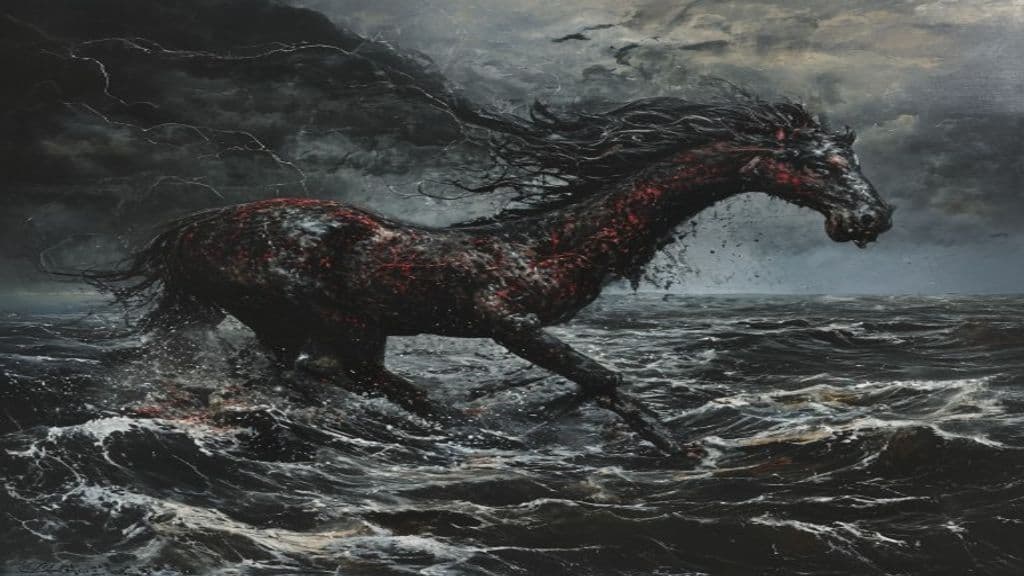
Nuckelavee
The most terrifying creature of Orcadian folklore — a skinless, horse-headed demon of the sea whose breath spreads plague and whose presence causes crops to wither. It cannot cross fresh water.

Djinn
The class of supernatural beings created from smokeless fire in Islamic cosmology — a parallel civilization to humanity, capable of belief or unbelief, with their own prophets, society, and judgment before God.
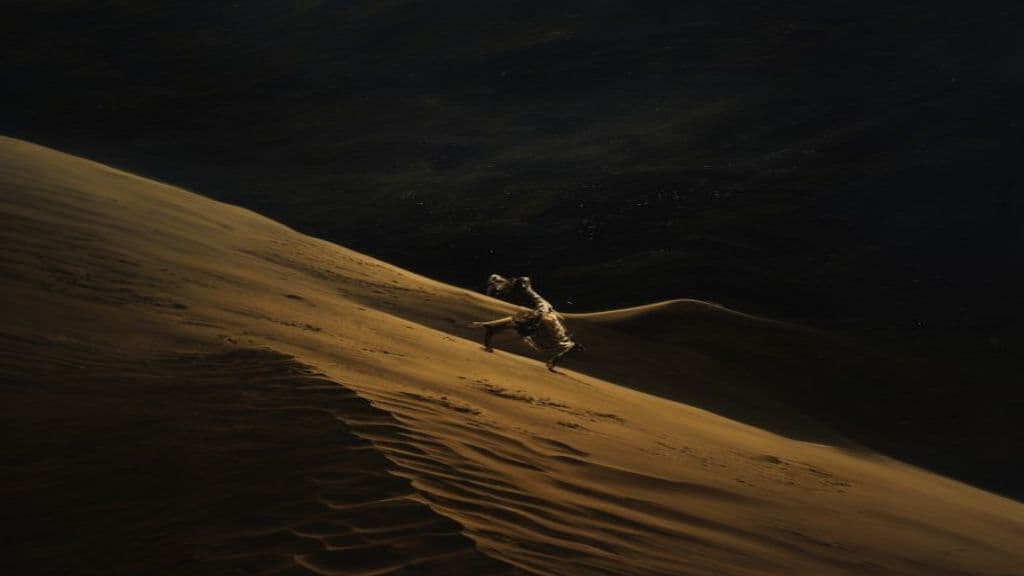
Jann
The weakest class of djinn in Islamic tradition, associated with desert winds and taking the form of snakes or whirlwinds, dwelling in empty wilderness and posing little threat to those who know the proper invocations.
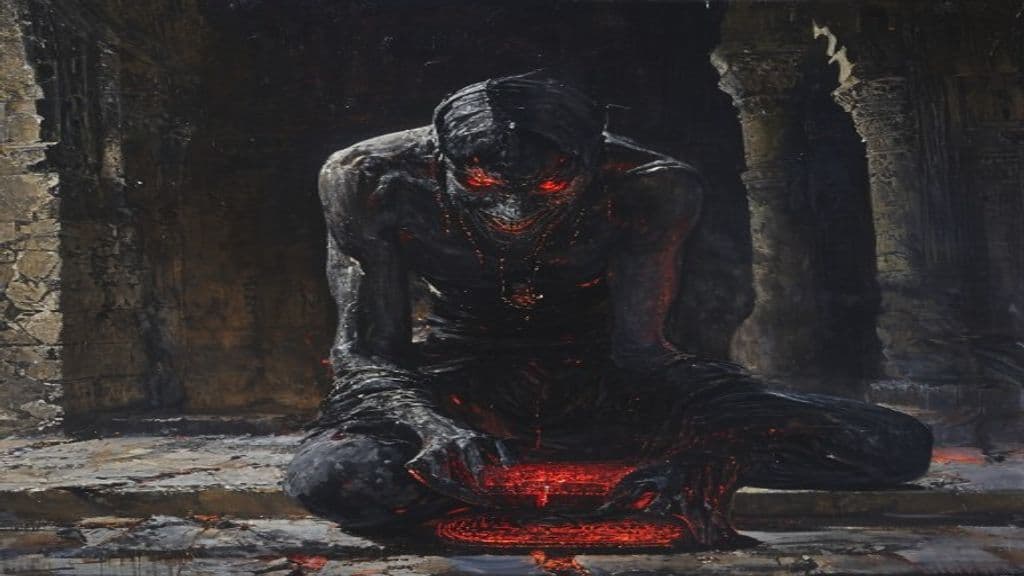
Shaitan
A class of corrupted djinn who follow Iblis and dedicate themselves to leading humans astray — distinct from Iblis himself, the Shayatin are a species of evil djinn who whisper doubts and temptations into the minds of the living.
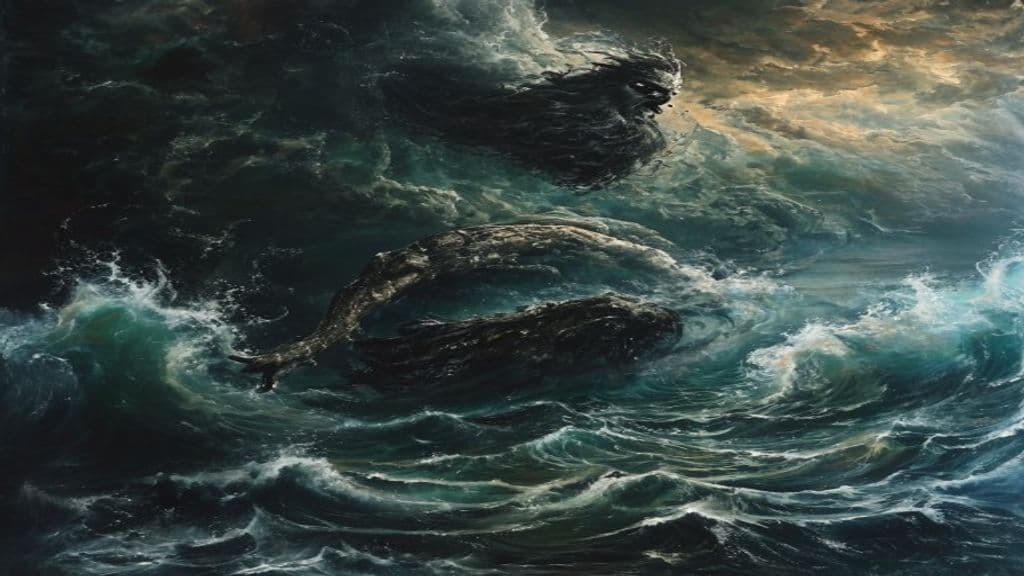
Marid
The most powerful class of jinn in Islamic tradition — beings of the sea, associated with the deep ocean, storms, and the granting of wishes at terrible cost. The classic genie of the Arabian Nights.
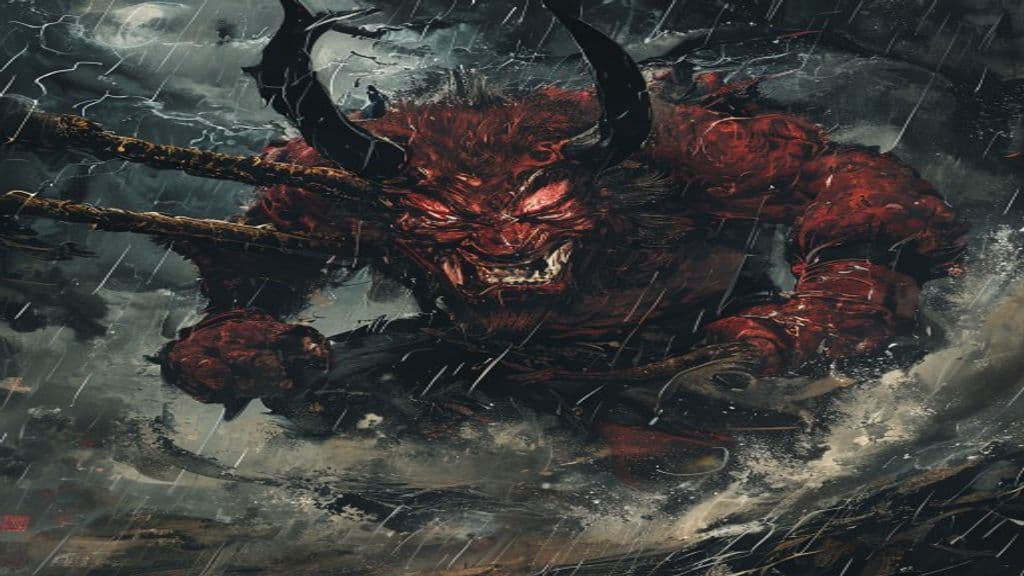
Oni
Powerful supernatural beings of Japanese folklore — associated with misfortune, disease, and the punishment of sinners in hell. Fearsome, often depicted as guardians of the underworld.
Abraham Cornelius
Abraham Cornelius is a fictional human scientist in Marvel Comics, a senior Weapon X technician who helped develop the technique to bond adamantium to bone and who features in Wolverine's origin and later storylines, including Death of Wolverine.
Alberto Falcone
Alberto Falcone is a fictional human antagonist from DC Comics, a member of Gotham's Falcone crime family who, in the comics, is revealed as the Holiday Killer. He operates as a mobster whose actions, psychological profile, and familial ambitions drive major plotlines in Batman stories such as The Long Halloween and Dark Victory.
Amanda Belle Waller
Amanda Belle Waller is a fictional human bureaucrat in DC Comics who operates as a high-level government organizer of covert operations, most notably directing Task Force X / the Suicide Squad. She is depicted as non-powered, politically ruthless, and an expert tactician who manages and weaponizes extranormal actors within the DC Universe.
Amazo
Amazo is a fictional android from DC Comics, created by Professor Anthony Ivo as an artificial intelligence weapon capable of mimicking the abilities of superheroes. Debuting in 1960, Amazo recurs as an adversary to the Justice League and appears in multiple incarnations, including a techno-organic virus in later reboots.
Anarky
Anarky is a fictional anti‑hero and recurring adversary in DC Comics' Batman mythos, created as a politically driven vigilante figure who embodies and critiques anarchist and anti‑statist ideas. Introduced in Detective Comics #608 (November 1989), the character functions as a vehicle for political and philosophical themes rather than a supernatural being.
Ani-Men
Ani-Men is the name applied to several fictional teams in Marvel Comics that adopt animal-themed identities; incarnations range from costumed human criminals to scientifically altered operatives and High Evolutionary-created "New Men." They function in stories as criminal teams, henchmen for villains, or independent anthropomorphic militants rather than supernatural beings.
Atomic Knight
A heroic identity from American comic-book fiction (DC Comics) embodied by one or more human characters who adopt a chivalric role in a post‑apocalyptic setting. The Atomic Knights serve as armored protectors and symbols of hope amid the aftermath of a catastrophic hydrogen/atomic war within various DC future continuities.
Barbara Gordon
Barbara Joan Gordon is a recurring fictional character in DC Comics' Batman mythos, introduced as the costumed vigilante Batgirl and later reimagined as Oracle, a paraplegic information broker and technical advisor to other heroes. She functions as a human, non-supernatural operative whose roles alternate between field crime-fighter and behind-the-scenes intelligence specialist across publication eras and media adaptations.
Betty Brant
Betty Brant is a fictional human supporting character in Marvel Comics, introduced in The Amazing Spider-Man #4 (1963). She is best known as J. Jonah Jameson's secretary at the Daily Bugle and as an early romantic interest of Peter Parker who later becomes a reporter and marries Ned Leeds.
Black Mariah
Black Mariah is a fictional human antagonist in American comic books published by Marvel Comics, primarily an enemy of Luke Cage who appears as a Harlem-based crime boss. The name is also used for a television adaptation (Mariah Dillard/Stokes) portrayed by Alfre Woodard in the Luke Cage series and derives from a historical nickname for a 19th-century Boston police 'black wagon.'
Black Marvel
The Black Marvel is a Marvel Comics superhero identity first published in 1941. Primarily associated with the civilian Daniel Lyons, the Black Marvel is a Golden Age costumed adventurer whose origin involves tests administered by a dying Blackfeet chief (Man-to) and his medicine man (Running Elk); the character later appears in modern Marvel continuity in storylines involving wartime team-ups, murder and resurrection plots, and a Faustian bargain with the demonic Mephisto.
Brent Jackson
A contemporary English-language personal name borne by multiple real persons (politician, developer/designer, CEO, academic) and a fictional Marvel Comics character associated with S.H.I.E.L.D. and Weapon X. The corpus shows no evidence that the name denotes any supernatural or folkloric entity.
Community Record
- [1]Betty Ross — Wikipedia. Wikipedia contributors. "Betty Ross." Wikipedia, The Free Encyclopedia.wiki
- [2]Wikidata entry for Betty Ross. Wikidata: Q616633other
- [3]Archive: Eye in the Sky. Archive.org resource referenced in research notes.other
- [4]Archive: Marvel Alliance Vol. 157 (Betty Ross references). Archive.org resource referenced in research notes.other
- [5]Fanlore: Betty Ross. Fanlore entry on Betty Ross.other
- [6]Marvunapp: Karen Lee (Betty Ross' mother). Marvunapp appendix entry referencing family context.other
- [7]The Headshop (Hulk foes) — Marvunapp. Marvunapp appendix referencing Hulk foes and related plots involving Betty Ross.other
- [8]Looper — The Untold Truth Of Marvel's Betty Ross. Looper feature on Betty Ross summarizing history and adaptations.other
- [9]Betty Ross Clarke — Wikipedia (distinct historical person). Wikipedia contributors. 'Betty Ross Clarke.'wiki