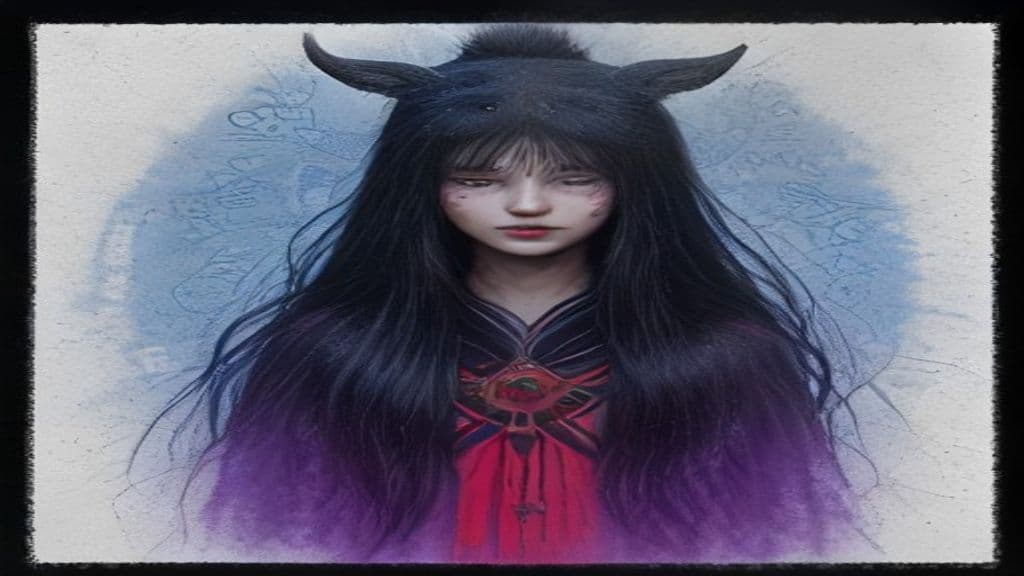
No origin narrative or cosmogonic account for Bieggolmai / Bieggagállis is provided in the supplied sources. The only attested information in the available material is the identification of the figure as the god of wind within Sámi shamanic belief; beyond that, the sources do not record an origin story, genealogy, or mythic episode for this being.
The supplied source material contains no descriptive information about the physical appearance, form, or iconography of Bieggolmai / Bieggagállis. Because the available excerpt is limited to a one-line identification as a wind god, no attested visual depictions, anthropomorphic or zoomorphic traits, or typical shamanic representations are recorded in the provided texts.
The only power attributed in the cited material is that Bieggolmai / Bieggagállis is the god of wind, implying an association with or governance of wind and atmospheric phenomena in Sámi shamanism. The sources do not enumerate specific abilities, behaviors, interactions with humans, or mythic deeds; no additional powers (such as control over storms, travel, or blessings/curse functions) are documented in the supplied excerpts.
Beaivi-nieida
Beaivi-nieida (also given as Biejjenniejte) is identified in the cited source as a female solar figure in Sámi shamanism, translated as 'Daughter of the Sun' or 'Sun Maiden'. The available entry provides only a name, literal translation, and one-line identification within Sámi religious context.
Juoksáhkká
Juoksáhkká (also Juksakka, Joeksaahka; lit. 'bow woman' — Stäukedne lit. 'bow mother') is a female household deity in Sámi shamanistic belief associated with childbirth, the development and protection of children, and immediate postnatal rites. She is one of the daughters of Máttaráhkká, located in the ground under the goahti (often at the back), and was reported among Sámi in the Scandinavian parts of Sápmi but not universally across all Sámi regions.
Jábmiidáhkká
Jábmiidáhkká (also Jabme-akka) is the female ruler of the Sámi underworld Jábmiidaibmu. She functions as gatekeeper and mediator for the dead, sometimes permitting them to affect the living and allowing captured souls to return in exchange for offerings; sacrificial burials of black animals are recorded as offerings to her.
Máttaráhkká
Máttaráhkká is a Sámi mother figure associated with fertility, childbirth, and the giving of the physical body to a child. She is a domestic, chthonic presence said to dwell in the ground beneath the goahti and was traditionally petitioned by women during pregnancy; after Christianization she was often syncretized with the Virgin Mary.
Uksáhkká
Uksáhkká is a female household/threshold deity in Sámi shamanic belief associated with the goahti's door and childbirth. She is counted among the daughters of Máttaráhkká and functions as a guardian of passages, receiving newborns and protecting infants as they learn to walk and move about the household.
Biblical Magi
A group of distinguished foreign visitors described in the Gospel of Matthew who come from the East to pay homage to the newborn Jesus, following a star and presenting gifts. Later Christian tradition expanded their identity (number, names, royal status) and made them central to Epiphany liturgy and nativity imagery.
Bidadari
Bidadari is a Southeast Asian regional term related to the South Asian apsara: a class of celestial/ethereal female beings originally associated with clouds and water in Hindu and Buddhist cosmology, later represented in regional art and performance as nymph- or fairy-like figures. The term is also widely used in modern Southeast Asian toponymy and popular culture (place names, media, vessel names), distinct from detailed mythic narratives in the provided sources.
Biderafsh
Biderafsh is a Turanian heroic warrior and envoy attested in the Iran–Turan cycle of epic literature (notably the Shahnameh) who bears a name meaning 'with unfurled banner.' In the Goshtasp–Arjasp episode he delivers a threatening letter, fights in Arjasp's army, kills Zarir, and is in turn slain by the Iranian hero Esfandiar (attested in Shahnameh and earlier Middle Persian and Islamic-era sources).
Bidhi Nongdamba
A classical Meitei language literary work that explores themes of human destiny and divine intervention. (Note: - Power tier: Lesser (Bidhi Nongdamba is a literary work, not a supernatural being with cosmic or deity-level powers) - Appearance: Remove as there is no physical description of Bidhi Nongdamba - Abil)
Bienaimé
Bienaimé is a French-language family name attested in historical and contemporary records. Sources identify it solely as a surname borne by various individuals and as a string used in modern online personal handles; there is no evidence in the provided materials of any supernatural or folkloric character associated with the name.
Bienor
Bienor is attested in two distinct registers in the supplied sources: (1) as a personal name borne by four minor characters in Greek mythology (no narratives or attributes provided), and (2) as the designation of a Solar System small body, 54598 Bienor, a centaur-class minor planet whose photometry has been studied and modeled by astronomers.
Bieresel
A German household/local spirit associated with beer, breweries, inns and cellars, the Bieresel alternates between helping by performing chores in exchange for a nightly portion of beer and causing mischief or harm when neglected; some regional variants in Thuringia and former German‑speaking Bohemia depict street‑roaming, aufhocken behavior.
Community Record
- [1]Bieggolmai. Wikipedia, entry 'Bieggolmai' — identifies Bieggolmai / Bieggagállis as the god of wind in Sámi shamanism.wiki
- [2]Njörðr. Wikipedia, entry 'Njörðr' — included in the provided materials but contains no information relevant to Bieggolmai / Bieggagállis.wiki