
According to Greek mythic summaries, King Oeneus of Calydon failed to honour Artemis (Diana) in his rites—specifically omissions in harvest/offerings—which provoked the goddess to send a devastating wild boar as retribution. The animal was dispatched to ravage the region of Calydon, attacking people and cattle and preventing normal agricultural activities. The calamity prompted the calling of an extraordinary hunting-party of heroes, led by Meleager and including figures such as Atalanta, whose wounding of the beast and the subsequent dispute over its hide form central scenes in the episode.
Narrative summaries portray the creature as an especially savage wild boar distinguished by its destructive impact; one traditional summary describes it as having "bristles like arrows." Beyond these emphases on its ferocity and weapon-like bristles, sources do not provide a detailed zoological description, instead stressing the wake of death and destruction the animal leaves across fields and livestock.
The Calydonian Boar is depicted as a violently destructive animal capable of killing people and cattle and of disrupting sowing and harvest activities across the countryside. Its appearance is explicitly an act of divine agency—Artemis sent the animal in punishment—which situates its force as an extension of a goddess' wrath. In combat, the boar becomes fiercely aggressive: accounts report that hunters who sought it were driven into danger, the hunting party themselves becoming the hunted, and that prominent participants were wounded or killed; in many retellings Atalanta is credited with first wounding it with an arrow.
Weaknesses
- conditionconfrontation by organised heroic hunters
- conditionrestoration of proper ritual honour to Artemis/Diana (preventive)
Wards
- ritualproper inclusion of Artemis/Diana in harvest and offering rites
- otherassemble a hunting-party to kill the beast
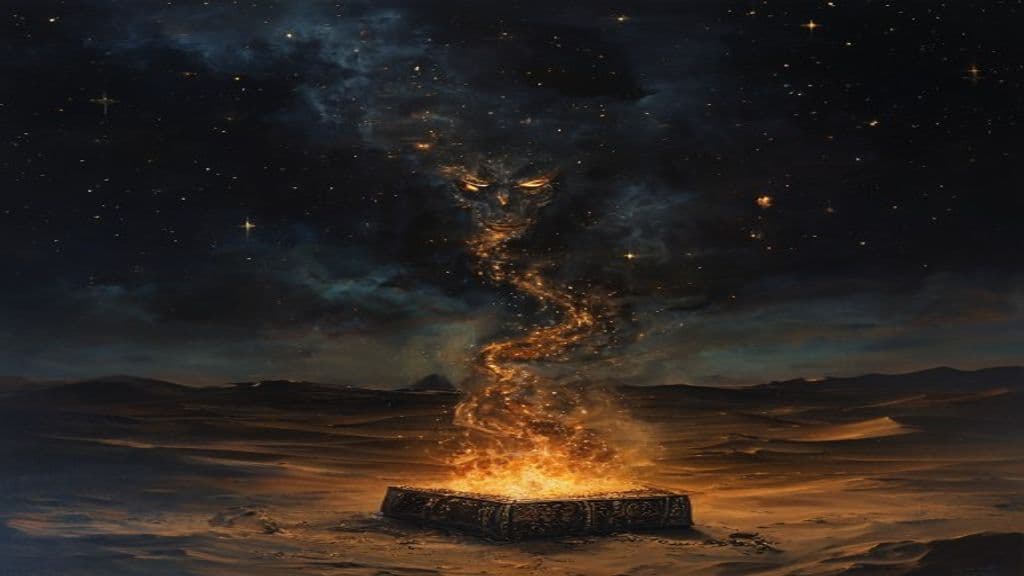
Djinn
The class of supernatural beings created from smokeless fire in Islamic cosmology — a parallel civilization to humanity, capable of belief or unbelief, with their own prophets, society, and judgment before God.
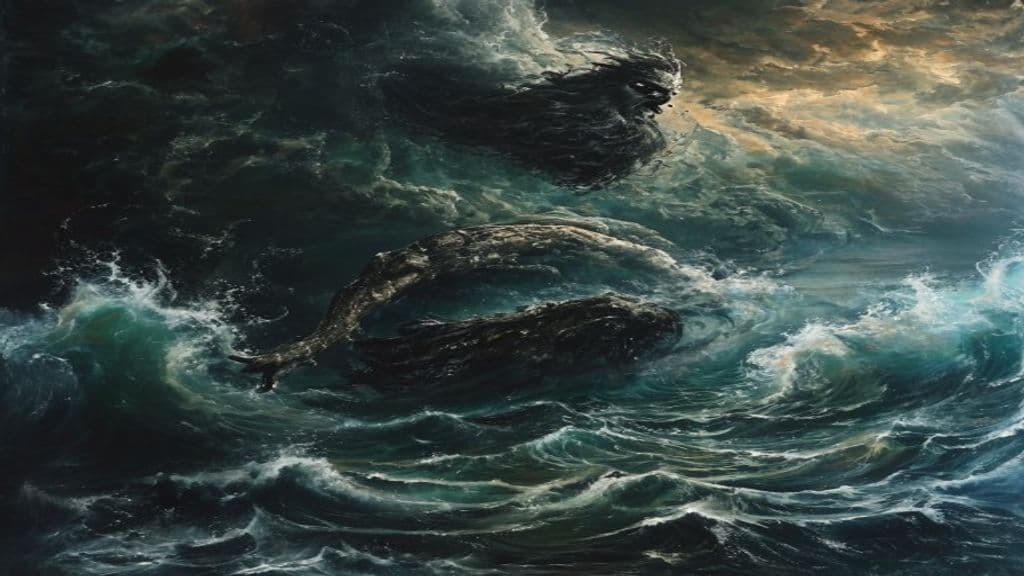
Marid
The most powerful class of jinn in Islamic tradition — beings of the sea, associated with the deep ocean, storms, and the granting of wishes at terrible cost. The classic genie of the Arabian Nights.
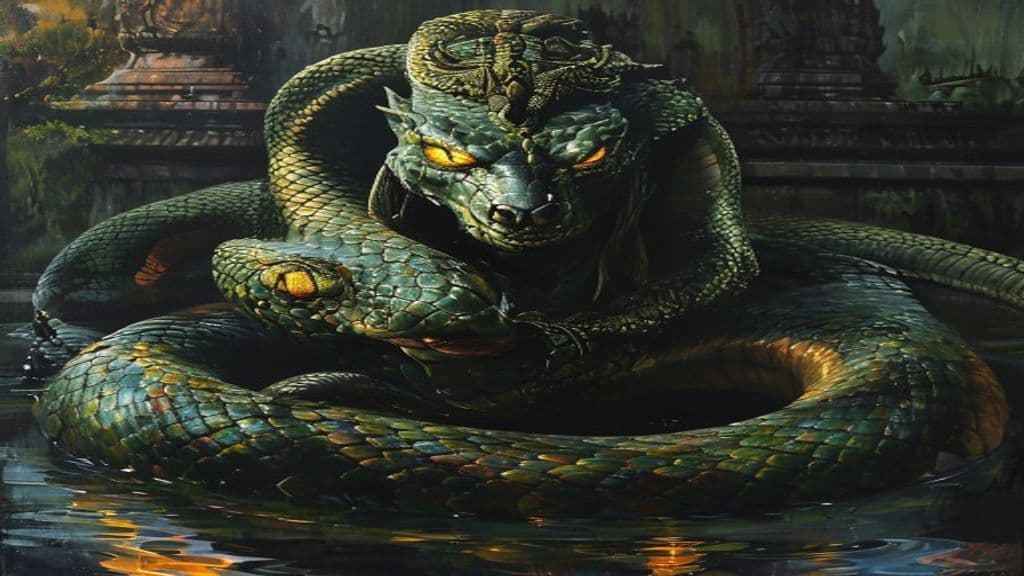
Naga
Divine serpent beings of Hindu, Buddhist, and Jain cosmology — powerful guardians of water, earth, and underground treasures. Revered as deities in South and Southeast Asia.
Abas
Abas (Ancient Greek: Ἄβας, gen.: Ἄβαντος) is not a single mythic being but a recurring personal name borne by multiple mortals and minor mythic figures in Greek epic and genealogical traditions — kings, founders, seers, warriors, attendants, a centaur, and a youth transformed by a goddess. The name is glossed in the sources as 'guileless' or 'good-hearted' and appears across Argive, Theban, Trojan, Euboean, and other local cycles.
Acheilus
Acheilus (also spelled Akheilos/Achilleus in some sources) is a minor figure of Greek myth described as a mortal son of Zeus who was transformed into a shark and thereafter called a 'shark-formed sea daimon.' Surviving summaries frame his story as a hubris metamorphosis: boasting about his beauty led a goddess to change him into a marine monster.
Achelois
Achelois (Ancient Greek: Ἀχελωίς, 'she who drives away pain') is an attributive name or epithet used in ancient Greek mythic contexts rather than a single, consistently characterized being. The term appears applied to several different figures — a surname of the Sirens, a general name for certain water-nymphs (Acheloides), and as the name of a daughter of Pierus — and functions within Greek naming practice as a descriptive label rather than a fixed ontological office.
Achilles (son of Zeus)
A minor figure in Greek myth named Akhilleus (Ancient Greek: Ἀχιλλεύς), presented in some traditions as a son of Zeus and the Lamia who was famed for irresistible beauty, won a beauty contest judged by Pan, and was transformed into ugliness by Aphrodite. This Akhilleus is distinct from the Homeric hero of the Trojan War.
Achiroe
Achiroe (variants Anchirrhoë, Anchinoë/Ankhinoe) is a minor Greek mythological figure: a Naiad associated with the river Nile, daughter of the river-god Nilus, who becomes the wife of the Egyptian king Belus and mother of mythic progenitors such as Aegyptus and Danaus (with some accounts also naming Cepheus and Phineus). She functions primarily as a genealogical link between river-divinity and royal lineages rather than as an active agent in surviving myths.
Acontes
Acontes (Ancient Greek: Ἀκόντην) is an Arcadian prince in Greek mythology, counted among the fifty sons of the impious King Lycaon. He appears in the Lycaon narrative as a participant in a sacrilegious meal prepared for Zeus (disguised as a peasant) and is destroyed by the god's lightning as punishment.
Actaea
Actaea is a named sea‑nymph in Greek mythic lists, identified in the provided sources as the personification or eponym of the seashore. She appears primarily in onomastic and catalogue contexts (lists of nymphs/Nereids) and has no surviving independent narrative or cultic rites attested in the cited material.
Acte (Akte)
Acte (Ancient Greek Akte, sometimes rendered Acme) is a divine personification in Greek myth: one of the Horae who embodies a particular hour of the day — specifically the hour of eating and pleasure, a designated afternoon work-hour — and functions chiefly as a temporal marker rather than an active mythic agent.
Adonia
The Adonia festival is a ritual mourning celebration for Adonis, the consort of Aphrodite in ancient Greek mythology. (Note: 1. The draft claims that the article is about a "ritual mourning celebration", but the source only mentions the festival as a mourning celebration. 2. Power tier should be Primordial or Ancient since )
Aega
Aega is attested in modern reference works as a mythological name from the Greek tradition; the string 'Aega' is used for more than one minor figure or entry in Greek mythic catalogs. Surviving provided sources give no coherent myth, iconography, or rituals tied to a single, identifiable deity or spirit named Aega.
Aegaeus
Aegaeus (Ancient Greek: Αἰγαῖος) appears in Greek myth as (1) a local river-god associated with the island called Scheria (traditionally associated with Corfu) and father of the nymphs Aigaiides and of Melite (who in some sources bore Heracles a son, Hyllus), and (2) as a toponymic surname/epithet of the sea-god Poseidon derived from the town of Aegae in Euboea.
Aegesta
Aegesta is an ancient place-name and eponym recorded in Greek and Roman sources as an alternate form of Segesta, an Elymian city in northwestern Sicily, and as a mythic personal name (Aegestus/Aegesta) tied to Trojan foundation legends rather than a supernatural being.
Community Record
- [1]Calydonian boar hunt (Wikipedia). Wikipedia: Calydonian boar huntwiki
- [2]Calydonian Boar - Biblical Cyclopedia. Biblical Cyclopedia: Calydonian Boarother
- [3]Calydonian Boar | A Book of Creatures. A Book of Creatures: Calydonian Boarfolk
- [4]Calydonian Boar - Wikidata. Wikidata: Calydonian Boar (classification as mythical creature)wiki
- [5]Atalanta - Alchetron. Alchetron: Atalanta (summary of role in the Calydonian boar hunt)other
- [6]Children of the dawn; old tales of Greece (archive listing). Children of the Dawn: table of contents listing 'Hunting the Calydonian boar'literary
- [7]Announcing The Calydonian Boar Hunt (Substack). Substack: Announcing The Calydonian Boar Hunt (modern retelling/contextualization)other
- [8]Old European culture: Calydonian boar (blog). Old European culture blog: Calydonian boar (contextual/interpretive write-up)folk
- [9]My Calydonian Boar Hunt (Tribwatch). Tribwatch: My Calydonian Boar Hunt (retelling/summary)other
- [10]New Blasters and Blades Podcast Interview About The Calydonian Boar hunt. Podcast interview referencing the Calydonian boar huntother