Cathubodua is not attested in narrative myth but as a named deity on a single carved stone altar discovered near Mieussy in Haute‑Savoie, dated to the Roman‑period in Gaul. The inscribed formula, restored in modern scholarship, reads in part as a Latin votive dedication: [C]ATHVBODVAE AVG(VSTAE) SERVILIA TERENTIA (VOTVM) S(OLVIT) L(IBENS) M(ERITO). The reading requires restoration of an initial C in the surviving damaged lettering. Nineteenth‑century scholar Adolphe Pictet proposed a connection with the Irish Badb and interpreted the name as a war goddess; later authors have alternatively read elements of the name as relating to "victory," yielding a function comparable to a victor deity. These interpretations are etymological and comparative reconstructions based on the single epigraphic attestation rather than on native narrative or cult manuals.
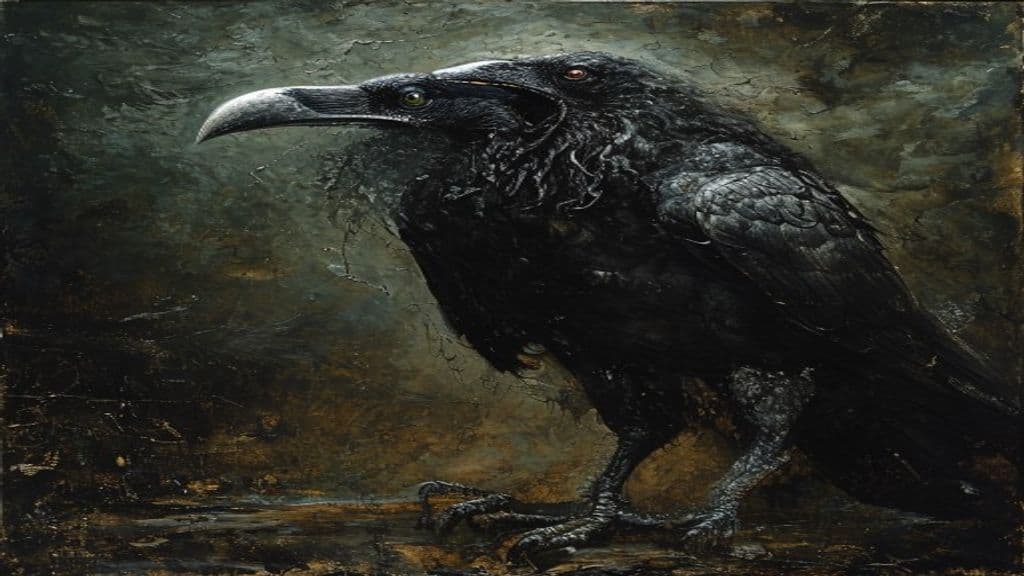
No contemporary descriptive or iconographic evidence for Cathubodua's appearance survives in the sources. Suggestions of crow‑imagery derive solely from the reconstructed Proto‑Celtic element *bodwā ("crow") in the name *Katu‑bodwā; any depiction of Cathubodua as crow‑headed or accompanied by crows is therefore speculative and based on analogy with better‑attested Celtic war‑figures (e.g., Badb), not on direct evidence from the inscription.
The altar inscription contains no catalogue of powers, deeds, or mythic actions. Scholarly inference from etymology and comparative Celtic and classical parallels yields two main readings: one reconstructs the name as *katu‑ + *bodwā meaning "battle‑crow," implying association with warfare, battle‑omens, or the martial sphere (analogous to the Irish Badb's war‑omens); another reads the second element as related to *boudi‑/bodio‑ "victory," which suggests a deity of victory comparable in function to the Greek Nike. These are interpretive reconstructions rather than attested attributes in the archaeological record.
Abnoba
Abnoba is a Gaulish theonym and toponym attested in Roman-era sources and inscriptions: a localized deity associated with woods, springs and the sources of rivers (notably the Danube) and simultaneously the name applied to a mountain or mountain range in the Black Forest/Baar/Odenwald region. Roman altars equate her with Diana, reflecting syncretic cult practice in frontier provinces.
Catalina Lercaro
Catalina Lercaro is the legendary specter associated with a 16th‑century member of the Genoese Lercaro family who allegedly died by suicide in the family mansion (Casa Lercaro) in San Cristóbal de La Laguna, Tenerife. Tradition holds her ghost walks through the rooms of the mansion (now the Museum of History and Anthropology of Tenerife) and she is widely regarded in local lore as the Canary Islands' most famous ghost.
Catbus (Nekobasu)
Catbus (Japanese: ねこバス, Nekobasu) is a fictional character created by Hayao Miyazaki for the Studio Ghibli film My Neighbor Totoro. Within the film's imagined ecology it is a large, animate cat whose hollow body functions as a passenger bus and which interacts directly with the child protagonists alongside other invented forest spirits.
Catellus
Catellus (Welsh: Kadell map Geraint) is a legendary, pseudo‑historical king of the Britons attested in Geoffrey of Monmouth's Historia Regum Britanniae and in Welsh redactions (Brut y Brenhinedd). He functions as a dynastic/chronological figure used to order genealogies rather than as a supernatural being.
Catgirl (nekomimi / nekomusume)
A fictional character type in Japanese popular culture combining an otherwise human body with feline traits (most commonly cat ears and often a tail). Historically informed by Edo and Shōwa period shapeshifting cat-monster imagery, the modern catgirl functions as an aesthetic trope in manga, anime, theater, and Internet culture rather than a documented religious or folkloric spirit.
Cath Palug
A monstrous, unusually large cat from Welsh myth later adapted into continental medieval romance (Anglo‑Norman/Old French) as Chapalu/Capalu. Associated with islands, lakes, bogs, and shoreline liminal zones, it functions as a localized animal horror that confronts named heroes (Welsh Cai/Kay; continental sources often transfer the opponent to King Arthur).
Catherine of Alexandria
A Christian virgin-martyr venerated in Eastern Orthodox, Roman Catholic, Anglican and other Western traditions. Presented in hagiography as a learned princess of Alexandria who debated pagan philosophers, suffered miraculous events during imprisonment and execution, and became the focus of a widespread cult centered on Saint Catherine's Monastery at Sinai and numerous liturgical commemorations and artistic depictions.
Catigern
Catigern is a legendary/historical early medieval British warrior-prince remembered chiefly for dying fighting the Saxons at the Battle of Epsford/Aylesford. He appears in medieval chronicles and genealogies (notably the Historia Brittonum and various Welsh pedigrees) as a son or kinsman within ruling lineages and is used in later tradition for dynastic legitimation and local topographical memory.
Catillus
Catillus is a legendary Arcadian founder-figure in Roman tradition. An Arcadian named Catillus (son of Amphiaraus) and his sons — one also named Catillus, Coras, and Tiburtus — are said to have fled Thebes, settled the Aniene plateau, driven off prior inhabitants, and founded Tibur (Tivoli); the younger Catillus and Coras later appear in Virgil's Aeneid as allies of Turnus against Aeneas.
Catoblepas
A legendary Greco‑Roman monstrous beast reported from Ethiopia: a mid‑sized, sluggish quadruped with a heavy head habitually pointed toward the ground and described in sources as possessing lethal properties expressed either as a deadly gaze or poisonous breath.
Catreus
Catreus is a mortal figure in Greek myth, presented in mythographic sources as the eldest son of King Minos and Pasiphaë and a king of Crete whose life is shaped by an oracle predicting that one of his children would kill him; efforts to avoid that fate, and variants of the tale, link him etiologically to later heroic genealogies.
Catskin
Catskin is the name/title of an English and related folk-tale heroine type (ATU 510B) who escapes an unwanted marriage by disguising herself in a catskin coat. The figure functions as a narrative motif: a noble-born girl reduced to servitude by wearing an animal-derived garment, secretly appearing at court in splendid dresses, and ultimately being recognized and restored.
Community Record
- [1]Cathubodua — Wikipedia. Wikipedia contributors. "Cathubodua." Wikipedia, The Free Encyclopedia.wiki
- [2]Wikidata entry: Cathubodua (Pauly‑Wissowa reference). Wikidata: Q35338613 (cross‑reference to Pauly‑Wissowa / Realencyclopädie entry cited in source list).other
- [3]Progrock For Requesters #221: Carnegie to Causa Sui (archive listing showing modern reuse of name). Internet Archive listing (playlist) including modern musical uses of the name Cathubodua.other
- [4]Game Of Prog #64 (archive listing showing modern reuse of name). Internet Archive listing (playlist) including modern musical uses of the name Cathubodua.other
- [5]Game Of Prog #119 (archive listing showing modern reuse of name). Internet Archive listing (playlist) including modern musical uses of the name Cathubodua.other