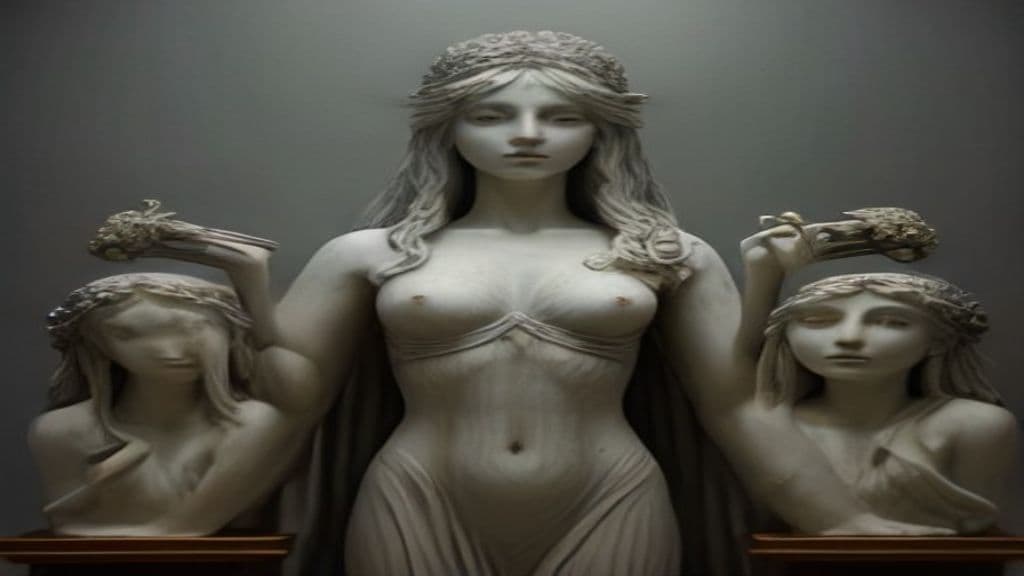
In the surviving summary tradition Cephisso occurs as one member of a three-sister Muse-variant whose names are given as Cephisso, Apollonis, and Borysthenis. These three are presented in the sources as daughters of Apollo rather than as members of the canonical nine daughters of Zeus and Mnemosyne; this marks them as part of localized or alternative Muse genealogies (ancient lists and later mythographic summaries note they were regarded in some traditions as the daughters of Apollo). The triad is also identified in some testimonia with the lyre-string names Nete, Mese, and Hypate, a symbolic mapping that ties the group to musical theory and instrument practice rather than recounting a narrative birth-myth or heroic origin tale.
No primary-source physical description of Cephisso is preserved in the cited materials. Attestations emphasize her identity and role within a small Muse triad and situate her within musical and cultic contexts—specifically an association of the three sisters with lyre-chord terminology and with localized Muse worship (for example, traditions recording three Muses venerated on Mt. Helicon). Thus iconographic or visual details are not recorded in the supplied sources; available testimony frames her more as a named divine-persona tied to music and to Apollo than as a figure with a fixed descriptive portrait.
The sources do not enumerate discrete, individual powers or actions for Cephisso beyond her classification as a Muse. By virtue of that category and by the triad's identification with lyre-string names, the sisters collectively embody musical/artistic personification and inspiration in a technical register (personified elements of lyre tuning/chords). No specific functions (for example, named kinds of poetic inspiration or intervening deeds) are attributed to Cephisso individually in the provided material; extant notices are catalogic rather than narrative and thus do not preserve individualized agency beyond her membership in a musical Muse-triad.
Apollonis
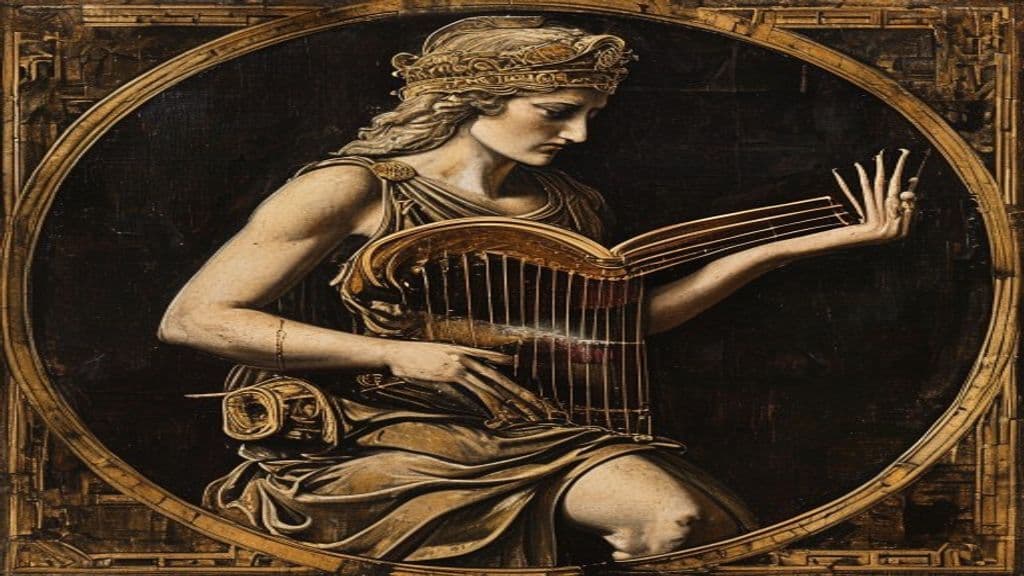
Apollonis is an Ancient Greek name associated both with a local Muse (one of the Apollonides, daughters of Apollo worshipped at Delphi) and with a Hellenistic royal woman, Apollonis of Cyzicus, who received posthumous civic cult and a temple in the 2nd century BCE.

Borysthenis
Borysthenis (Ancient Greek Βορυσθενίς) is a theonym recorded in Greek discourse with two distinct usages: (1) as the name of one of a localized triad of Muses described as daughters of Apollo (sisters Apollonis and Cephisso), and (2) as an epithet applied to the Scythian earth-and-water goddess Api, indicating her status as 'daughter of the god of the Borysthenēs (Dnipro) river.'
Muses
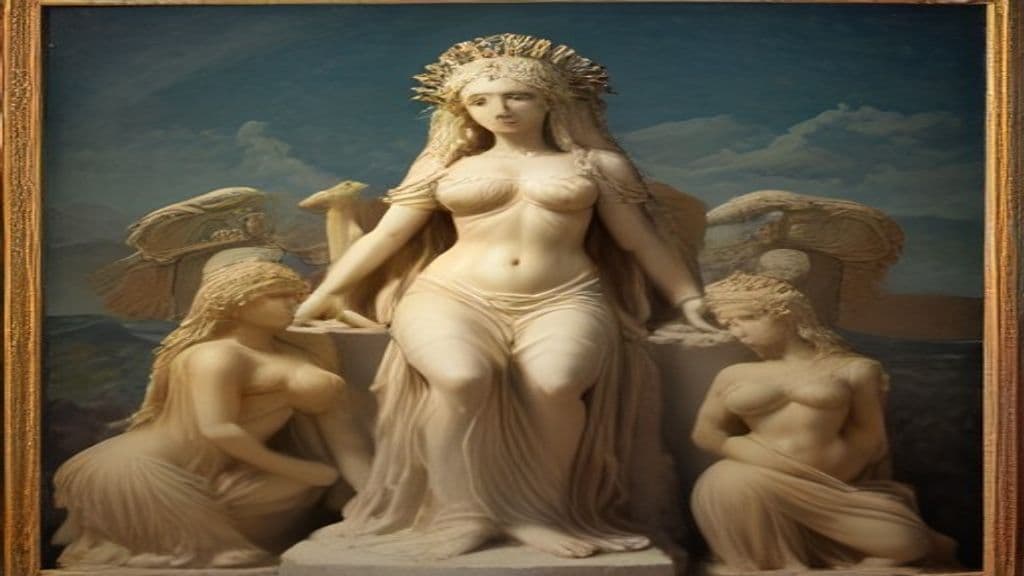
Divine inspirational figures of ancient Greek religion and mythology who personify and authorize the arts, literature, and learned knowledge; traditionally enumerated as nine daughters of Zeus and Mnemosyne in the Hesiodic account and associated with sacred springs and cult sites such as Mount Helicon and Delphi.
Community Record
- [1]Cephisso — Wikipedia. "In Greek mythology, Cephisso, Cephiso, or Kephiso was one of the three Muses that were daughters of Apollo. Her sisters were Apollonis and Borysthenis."wiki
- [2]Wikidata: Cephisso. Wikidata label and identifier for Cephisso (Muse in Greek mythology).wiki
- [3]Apollonis (entry). Discussion of the triad Cephisso, Apollonis, and Borysthenis and their identification with the lyre-string names Nete, Mese, and Hypate (triadic musical-personification reading).wiki
- [4]Muses – Mousai – MYTH INDEX. Survey entry noting traditions of three Muses worshiped on Mt. Helicon and variants describing the three as daughters of Apollo.other
- [5]The Muses in Ancient Greece and Rome, and Their Continued Influence. Summary account referencing triadic Muse-variants and noting the Apollonian filiations in some traditions.other