
Multiple classical traditions attribute Charybdis' condition to divine action. In one strand she aided her father Poseidon against his brother Zeus; Zeus, angered, hurled her into the sea so that she became a force that drinks the surrounding water three times daily, creating whirlpools. In another variant she is portrayed as a voracious woman who stole oxen from Heracles and was cast into the sea by Zeus, retained as a consuming sea-force thereafter. Other accounts present her less as a person and more as the natural whirlpool localized in the strait.
Descriptions vary between a personified sea-monster and a purely natural phenomenon. Some narratives present Charybdis as a monstrous swallowing maw under a small rock on one side of a narrow channel able to suck in rafts (Odysseus' raft is said to have been sucked into her maw), while other accounts and later commentators (e.g., John Tzetzes) describe her as a 'terrible and violent stream' or large whirlpool whose waters 'flow and bubble like a boiling cauldron.' Classical summaries do not provide consistent anthropomorphic detail beyond voracious, mouth-like sucking and expulsion of water.
Classical sources attribute to Charybdis a cyclical swallowing and disgorging of seawater three times a day, producing whirlpools capable of dragging vessels under; this habitual gulp-and-belch is the central dangerous behavior. As a mythic being she can engulf rafts or cast them back out (Odysseus survives by clinging to a fig tree above her lair). Genealogical variants frame the whirlpool as the result of divine punishment (Zeus casting her into the sea for aiding Poseidon or for stealing oxen). Modern commentators note that a real whirlpool in the Strait of Messina exists but that its true danger in practice is limited — hazardous mainly to small craft under extreme conditions — distinguishing narrative potency from physical reality.
Weaknesses
- conditionavoidance by course deviation
- conditiondivine intervention or guidance (appeal to gods/Nereid aid)
- otherpractical limitation: real whirlpool dangerous mainly to small craft under extreme conditions
Wards
- conditionsail around Pachynus Point (Cape Passero)
- ritualdivine guidance/invocation (Hera ordering Thetis to guide the Argonauts)
- conditiontactical passage choice (pass nearer Scylla to avoid Charybdis as in Odyssey)
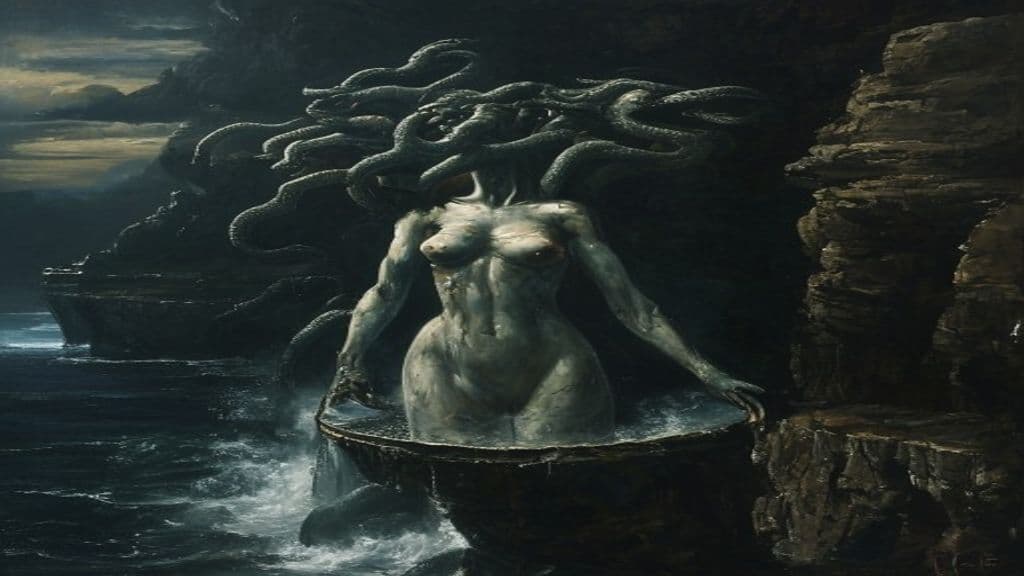
Scylla
A six-headed sea monster lurking in a narrow strait, snatching sailors from passing ships — the original origin of the phrase 'between Scylla and Charybdis.'
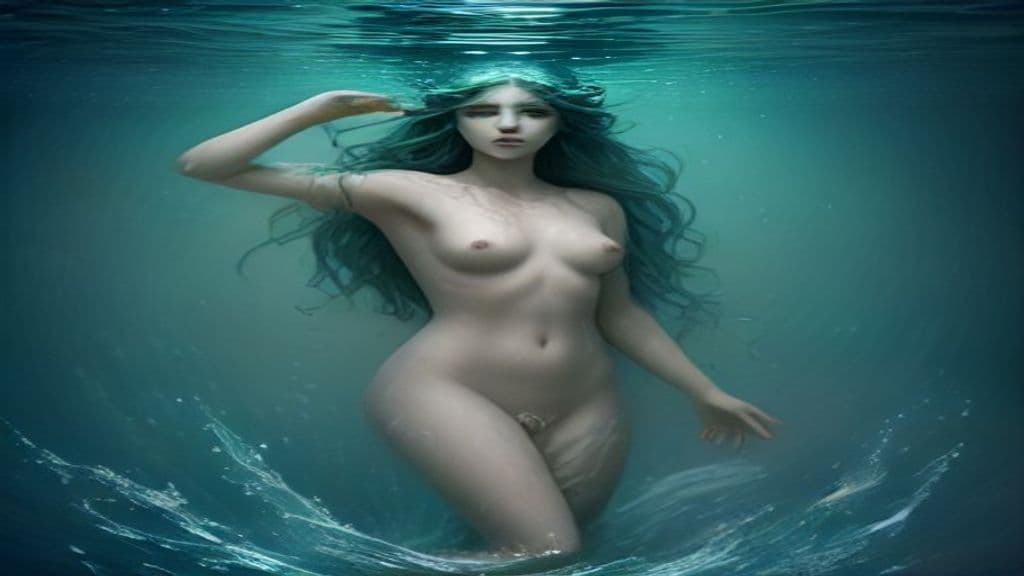
Thetis
Thetis is a figure from ancient Greek myth: a sea-nymph (one of the fifty Nereids) and a semi-divine water-goddess. She is mother of Achilles, a shapeshifter and protector who intervenes for gods and heroes, and a liminal figure tied to older sea-divinities and questions of mortality and divine succession.
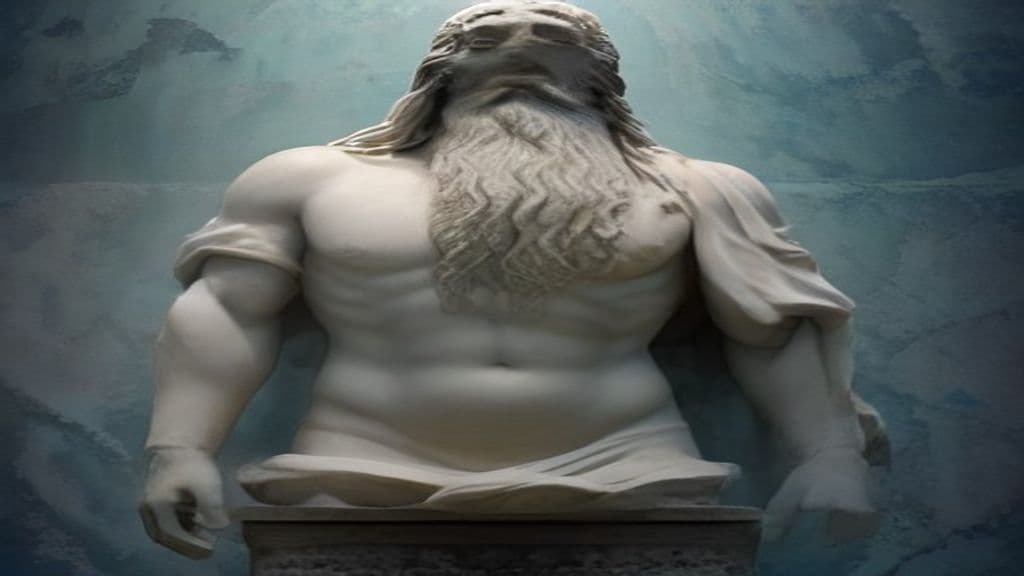
Poseidon
Poseidon is a principal deity of the ancient Greek pantheon, counted among the Twelve Olympians; he presides over the sea, storms, earthquakes and horses and functions as protector of seafarers and guardian of cities and colonies.
Abas
Abas (Ancient Greek: Ἄβας, gen.: Ἄβαντος) is not a single mythic being but a recurring personal name borne by multiple mortals and minor mythic figures in Greek epic and genealogical traditions — kings, founders, seers, warriors, attendants, a centaur, and a youth transformed by a goddess. The name is glossed in the sources as 'guileless' or 'good-hearted' and appears across Argive, Theban, Trojan, Euboean, and other local cycles.
Acheilus
Acheilus (also spelled Akheilos/Achilleus in some sources) is a minor figure of Greek myth described as a mortal son of Zeus who was transformed into a shark and thereafter called a 'shark-formed sea daimon.' Surviving summaries frame his story as a hubris metamorphosis: boasting about his beauty led a goddess to change him into a marine monster.
Achelois
Achelois (Ancient Greek: Ἀχελωίς, 'she who drives away pain') is an attributive name or epithet used in ancient Greek mythic contexts rather than a single, consistently characterized being. The term appears applied to several different figures — a surname of the Sirens, a general name for certain water-nymphs (Acheloides), and as the name of a daughter of Pierus — and functions within Greek naming practice as a descriptive label rather than a fixed ontological office.
Achilles (son of Zeus)
A minor figure in Greek myth named Akhilleus (Ancient Greek: Ἀχιλλεύς), presented in some traditions as a son of Zeus and the Lamia who was famed for irresistible beauty, won a beauty contest judged by Pan, and was transformed into ugliness by Aphrodite. This Akhilleus is distinct from the Homeric hero of the Trojan War.
Achiroe
Achiroe (variants Anchirrhoë, Anchinoë/Ankhinoe) is a minor Greek mythological figure: a Naiad associated with the river Nile, daughter of the river-god Nilus, who becomes the wife of the Egyptian king Belus and mother of mythic progenitors such as Aegyptus and Danaus (with some accounts also naming Cepheus and Phineus). She functions primarily as a genealogical link between river-divinity and royal lineages rather than as an active agent in surviving myths.
Acontes
Acontes (Ancient Greek: Ἀκόντην) is an Arcadian prince in Greek mythology, counted among the fifty sons of the impious King Lycaon. He appears in the Lycaon narrative as a participant in a sacrilegious meal prepared for Zeus (disguised as a peasant) and is destroyed by the god's lightning as punishment.
Actaea
Actaea is a named sea‑nymph in Greek mythic lists, identified in the provided sources as the personification or eponym of the seashore. She appears primarily in onomastic and catalogue contexts (lists of nymphs/Nereids) and has no surviving independent narrative or cultic rites attested in the cited material.
Acte (Akte)
Acte (Ancient Greek Akte, sometimes rendered Acme) is a divine personification in Greek myth: one of the Horae who embodies a particular hour of the day — specifically the hour of eating and pleasure, a designated afternoon work-hour — and functions chiefly as a temporal marker rather than an active mythic agent.
Adonia
The Adonia festival is a ritual mourning celebration for Adonis, the consort of Aphrodite in ancient Greek mythology. (Note: 1. The draft claims that the article is about a "ritual mourning celebration", but the source only mentions the festival as a mourning celebration. 2. Power tier should be Primordial or Ancient since )
Aega
Aega is attested in modern reference works as a mythological name from the Greek tradition; the string 'Aega' is used for more than one minor figure or entry in Greek mythic catalogs. Surviving provided sources give no coherent myth, iconography, or rituals tied to a single, identifiable deity or spirit named Aega.
Aegaeus
Aegaeus (Ancient Greek: Αἰγαῖος) appears in Greek myth as (1) a local river-god associated with the island called Scheria (traditionally associated with Corfu) and father of the nymphs Aigaiides and of Melite (who in some sources bore Heracles a son, Hyllus), and (2) as a toponymic surname/epithet of the sea-god Poseidon derived from the town of Aegae in Euboea.
Aegesta
Aegesta is an ancient place-name and eponym recorded in Greek and Roman sources as an alternate form of Segesta, an Elymian city in northwestern Sicily, and as a mythic personal name (Aegestus/Aegesta) tied to Trojan foundation legends rather than a supernatural being.
Community Record
- [1]Charybdis - Wikipedia. Wikipedia entry 'Charybdis' (accessed sources summarized: Homeric, Virgilian, Tzetzes, etc.)wiki
- [2]Charybdis - Wikidata. Wikidata item Q2961314other
- [3]John Tzetzes (summary of mythic description). Summary citing John Tzetzes describing Charybdis as a 'terrible and violent stream' with waters that 'flow and bubble like a boiling cauldron.' (as summarized in provided notes)literary
- [4]Aeneid (summary: Helenus' counsel to avoid the strait). Summary of Virgil's Aeneid advising avoidance by sailing around Pachynus Point (Cape Passero).literary
- [5]Odyssey (summary: Odysseus and Charybdis). Summary of Homer's Odyssey in which Odysseus' raft is sucked into Charybdis and he survives by clinging to a fig tree; Odysseus orders passing nearer Scylla than Charybdis.literary
- [6]Argonauts and Thetis (summary). Summary stating Hera ordered the Nereid Thetis to guide the Argonauts past Scylla and Charybdis.literary
- [7]Best of Sicily Magazine: Charybdis. Local cultural/geographic discussion locating Charybdis in the Strait of Messina.other