In Aztec cosmogony Cihuacōātl assisted the creator god Quetzalcoatl in fashioning the current race of humanity by grinding up the bones of previous ages and mixing them with Quetzalcoatl's blood; this positions her as an active participant in cosmic regeneration and human creation. A narrative linked to her motherhood role records that she is the mother of Mixcoatl, whom she abandoned at a crossroads; tradition says she often returns there to weep for her lost son and finds a sacrificial knife, a motif that ties her personal mythic history into themes of mourning, sacrifice, and liminality.
Two iconographic types are reported in the sources. Occasionally she is depicted as a young, fertile woman resembling the goddess Xōchiquetzal. More commonly she appears as a fierce, skull-faced older woman who bears the spears and shield of a warrior. This skeletal, martial imagery overlaps with the depiction of the Cihuateteo (the spirits of women who died in childbirth), who are likewise shown with skeletal faces and warrior-associated symbolism.
Cihuacōātl occupies multiple functional registers. Cosmogonically she participates in creation alongside Quetzalcoatl. In ritual and social life she acts as patroness of midwives and is especially associated with the sweat lodges (temazcalli) where midwives practiced, marking her as a protector and technical patron of childbirth rites. She is part of the cultural complex that equates childbirth with warfare: women who died in childbirth were honored as fallen warriors and became Cihuateteo, restless spirits who haunt crossroads at night and were believed to steal children. Politically and symbolically, her name functions as the title cihuacoatl for a male high official—second‑in‑command to the tlatoani—whose office embodied Cihuacōātl's female principles and served as a civic complement to rulership.
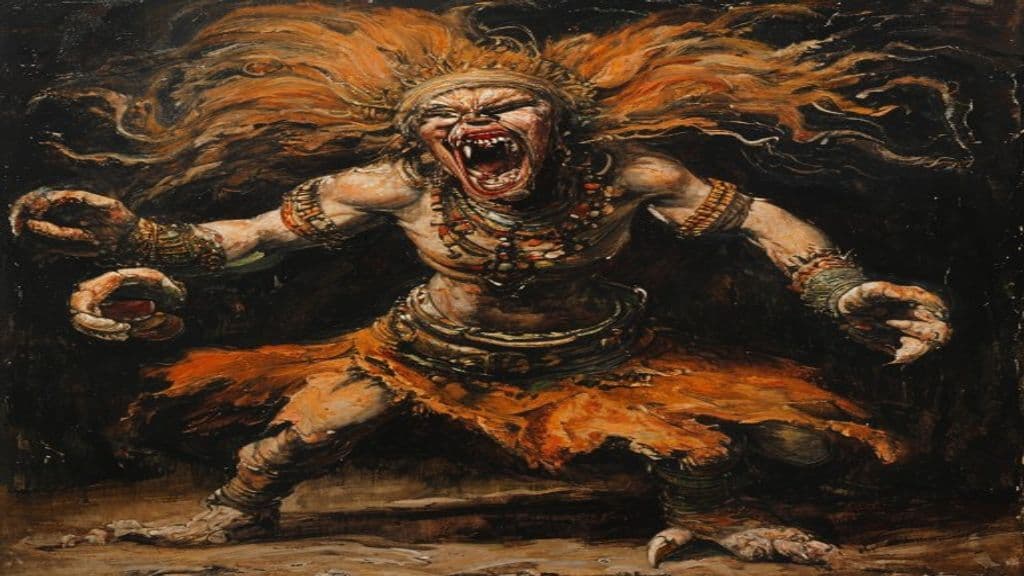
Cihuateteo
In Aztec tradition, the Cihuateteo (Cihuātēteoh; sing. Cihuātēotl) are the spirits of women who died in childbirth. They occupy an honored cosmic role—guiding the sun toward the west—and, on five calendar days, were believed to descend to the earth as dangerous nocturnal spirits who must be propitiated.

Quetzalcoatl
Quetzalcoatl is the central Mesoamerican 'Feathered' or 'Plumed Serpent' figure prominent in Aztec and broader pre-Columbian religious thought, associated with wind (Ehecatl), the planet Venus, learning, arts and crafts, merchants, and the priesthood. Represented as a hybrid serpent-and-bird emblem, Quetzalcoatl functions as both a deity and an organizing sacred principle linking sky and earth.
Acolnahuacatl
Acolnahuacatl is a name attested in central Mexican sources both as a historical Tepanec ruler of Azcapotzalco and, in several modern compilations and trivia lists, as a minor chthonic or underworld-associated figure (often given the variant Acolmiztli). The evidence in the provided material is divided: the historical/genealogical reading is supported by standard reference entries, while the deity reading appears mainly in secondary online god-lists and quizzes and is not substantiated by detailed primary ritual or mythic texts in the supplied set.
Ahuiateteo
Ahuiateteo (Āhuiatēteoh; also rendered Mācuīltōnalequeh) are a quintet of Aztec deities associated with excess, pleasure, and the dangers that accompany over‑indulgence. They appear in calendrical and codical contexts, are invoked in divinatory practice, and are thematically linked to pleasures (feasting, drinking, gambling, sex, music) and the misfortunes that follow excess.
Ahuitzotl
Ahuitzotl is both the personal name of the eighth tlatoani (ruler) of Tenochtitlan (reigned ca. 1486–1502) known for military expansion and monumental rebuilding, and an onomastic term in Nahuatl for an aquatic animal/legendary creature (commonly glossed 'water thorny' and often associated with an otter or water opossum). The sources treat these registers—historical ruler and animal-name—as related but distinct uses of the same Nahuatl lexeme.
Ahuizotl
Ahuizotl is identified in the provided sources as an Aztec mythological creature; the same lexical form also names an historical Aztec emperor (Ahuitzotl). The available materials for this entry are limited to modern reference pages and a small set of artistic and popular-culture uses of the name, and do not contain primary indigenous mythic accounts or detailed ethnographic descriptions.
Akateko
Akateko (赤手児, lit. 'red child's hand') is a yōkai from Japanese folklore commonly told as a small, red, disembodied child's hand that appears from trees—especially the Japanese honey locust—and startles travelers; in some regional variants it is accompanied by a specter of a young woman or manifests as paired foot- or leg-like apparitions. Accounts vary between mostly harmless trickster apparition and a violent variant that attacks humans.
Alicante
Alicante is attested in available reference sources as the proper name of a mythological snake identified with Mexico. The surviving entries provide only the name and a categorical label (mythological snake) without accompanying narrative, attributes, or ritual context.
Amimitl (Opochtli)
A Mexica/Aztec deity associated with fishing, hunting, and water-related technologies; identified in sources with the better-documented figure Opochtli, "The Left," who functions as a specialized patron of implements and as a representative or attendant of the rain god Tlaloc. A temple in the Tira de la Peregrinación has been interpreted by a scholar as possibly belonging to a figure labeled Amimitl, but that identification is uncertain.
Atabey
Atabey is a principal Taíno ancestral mother-spirit (a zemi) associated with fresh water, fertility, and prime matter; she appears in early ethnohistorical transmissions with multiple names and manifestations ranging from nurturing mother to violent storm-mother.
Atlacoya
Atlacoya is named in modern compilations as a figure from Aztec tradition associated with drought; some modern databases alternately classify the name under water-deity categories. The supplied sources do not provide primary-codex citations, iconography, etymology, or detailed ritual texts.
Atlahua
Atlahua is an Aztec water-associated deity attested in colonial and modern summaries as a water god described as a fisherman and archer, identified in sources as a blue/aspectual form of Tlaloc and invoked in contexts of deaths in water.
Atlaua
Atlaua (also recorded as Atlahua, Ahtlahua, Atlahoa, Atlavâ) is an Aztec water deity described in the provided sources as a water god, fisherman and archer who was worshiped at multiple temples and was prayed to by the Aztecs when there were deaths in water.
Aztec Creator-Brothers
A quaternity of primordial divine offspring in Aztec (Mexica) myth who dwell in the highest heaven Ilhuicatl-Omeyocan as children of Omecihuatl and Ometecuhtli. Identified in sources with fourfold aspects (conventionally four Tezcatlipocas / colored aspects such as Black, Red, White, Blue) they act as cosmological agents who create living beings, take turns ruling as the Sun in successive world-ages, and participate in sacrificial acts that sustain cosmic cycles.
Community Record
- [1]Cihuacōātl - Wikipedia. Wikipedia: 'Cihuacōātl' entry (as cited in the supplied research notes).wiki
- [2]Cihuacoatl - Wikidata. Wikidata item Q1091902 (as cited in the supplied research notes).wiki
- [3]Contra una sirena nacional (Archive). Archive copy cited in supplied notes (contextual/cultural material referenced).other
- [4]Contra una sirena nacional (Archive). Archive copy cited in supplied notes (contextual/cultural material referenced).other
- [5]La Llorona (Canción Oaxaqueña) - Archive. Archive (comparative cultural reference noted in supplied notes).other