
Multiple folkloric variants place Cipitío within a syncretic, pre‑Columbian/Mesoamerican matrix. In Salvadoran accounts he is described as the offspring of the moon goddess Sihuet/Sihuehet and a mortal or semi‑divine father; other traditional tellings link his genealogy to Nahua mythic figures (some variants invoke associations to Tláloc or to morning‑star motifs). Many versions explain his perpetual childhood as a curse or punishment, producing an eternal eight‑to‑ten‑year‑old who wanders the countryside. These origin motifs function within the narrative as moral and social lessons (for example, stories about maternal neglect and divine sanction) rather than as a single canonical cosmogony.
Folklore commonly depicts Cipitío as an eternally young boy roughly eight to ten years old with a conspicuously large pot belly, wearing simple white woven cotton garments and leather sandals, and often an oversized pointed or wide‑brimmed hat. Multiple sources report that he exhibits backwards‑facing feet — a folkloric trait said to mislead trackers about his true direction. Regional Chiapas variants called zipes/cipes are described in local accounts as more animalistic in demeanor (pack behavior, mute babbling "zipe") and may omit or vary elements like the hat.
Traditional descriptions attribute to Cipitío a legendary capacity for instantaneous relocation (stories say he appears and disappears suddenly) and the misleading property of his reversed feet. He is characterized primarily as a prankster: whistling at or courting young women, throwing pebbles or flowers, mocking travelers with loud laughter, jumping on mounts or playing tricks in nocturnal settings, and frequenting riverbanks, mills, and fires. Behaviors attributed to him include bathing in and consuming ashes in some accounts. He is generally portrayed as mischievous and harassing rather than cosmically destructive.
Weaknesses
- conditionrepulsive hygiene act
- conditionavoidance by communal vigilance / avoidance of isolated nocturnal travel
Wards
- ritualhygiene‑shock method
- conditionavoidance of isolated nocturnal travel
- otherdomestication (Chiapas variant)
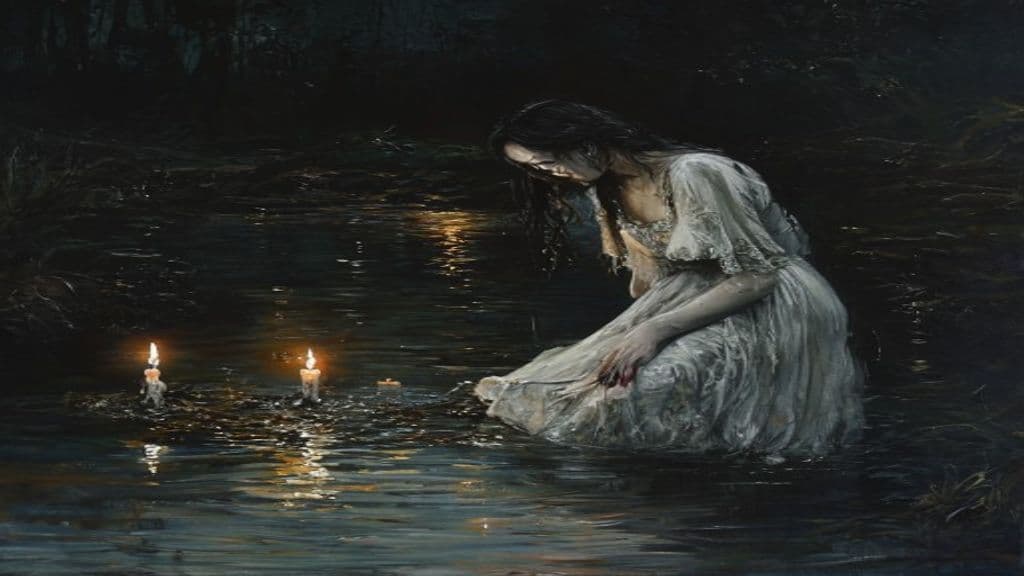
Cinderella's stepsisters
Human antagonists in the Cinderella tale-cycle: the stepdaughters of the heroine's stepmother who persecute and compete with the heroine for status and marriage. They function as social and moral foils, varying across Perrault, Grimm, Chinese (Ye Xian) and pantomime traditions in name, appearance, and narrative fate.
Cingris
Semi-historical and mythological Pharaoh in Celtic tradition. (Note: - Power tier: Lesser (based on being described as a "mythological Pharaoh" and not having deity-level abilities) - Abilities: Inconsistencies in draft article - should mention that no explicit descrip)
Cinna
Cinna is a proper name applied across multiple unrelated referents in classical history, geography, biological taxonomy, and modern culture. The provided sources treat Cinna as a Roman family name and individual Romans, an ancient town in Galatia, a genus of grasses, and various modern literary, musical, and vernacular uses rather than as a singular mythological or supernatural being.
Cintāmaṇi
A wish-fulfilling jewel in Hindu and Mahayana Buddhist traditions, described as a pearl-like object. (Note: 1. Power tier: "Primordial" may be too strong; the source describes it as a "wish-fulfilling jewel", which suggests deity-level power (Ancient) rather than cosmic. 2. Origin story: None provided, shou)
Cintāmaṇicakra (Nyoirin Kannon / Ruyi-lun Guanyin)
Cintāmaṇicakra is a bodhisattva-manifestation of Avalokiteśvara (Guanyin), identified with the wish-fulfilling jewel (cintāmaṇi) and wheel (cakra). In Mahāyāna sources the figure functions as one of six Avalokiteśvara forms tied to deliverance across the six realms (especially the deva realm) and is invoked through a dhāraṇī for karmic purification, protection, and fulfillment of aspirations.
Cinyras
Cinyras is a mythic human king and eponymous founder-figure in Greek and Roman literary traditions, chiefly associated with Cyprus (notably Paphos). He functions as a legendary ancestor, founder of priestly lines connected to the cult of Aphrodite Paphia, and the tragic protagonist of the Myrrha–Adonis cycle; classical authors also link him with musical skill and eastern (Phoenician/Cilician/Byblian) cultural connections.
Ciqui Ollco
Ciqui Ollco is not documented in the supplied sources as a supernatural being; the materials reference historical Inca royals (notably Topa Inca Yupanqui and Mama Ocllo Coya). Any supernatural characterization of 'Ciqui Ollco' is unsupported by the provided research notes.
Circe
Circe is a figure of Greek myth known as a practitioner of potent pharmacological and ritual arts who occupies a liminal status between goddess, nymph, and witch. She is famed for her knowledge of herbs and potions, her ability to transform humans into animals in narrative episodes, and for performing ritual purification in at least one classical source.
Circle of Eight (tradition)
No folkloric or mythic entity called 'Circle of Eight' is documented in the supplied sources. The phrase appears only in modern, secular, and creative contexts (a film title, a gaming campaign milieu, organizational/event names, and miscellaneous web uses) and not as a traditional supernatural being.
Circus of Strange
The Circus of Strange is a fictional, carnival-themed criminal troupe appearing in DC Comics, organized and led by the villain Professor Pyg. Introduced in Batman and Robin #1 (August 2009), the group stages violent, theatrical assaults in Gotham City and creates brainwashed minions called Dollotrons.
Ciriatto
Ciriatto is one of the Malebranche, a named demon-guard in Dante Alighieri’s Inferno who appears in Cantos XXI–XXIII as an enforcer over the fifth bolgia of the Eighth Circle (Malebolge). His Italian name denotes porcine qualities and the poem characterizes him with a single descriptive epithet meaning 'tusky.'
Cisseus
Cisseus is a personal name borne by several distinct human figures in ancient Greek and Roman mythic traditions. Bearers of the name appear as kings, fathers, warriors, and members of dynastic genealogies across Homeric, tragic, mythographic, and Roman epic sources rather than as a single supernatural being.
Community Record
- [1]Cipitío (Wikipedia). Wikipedia: "El Cipitío is a central figure in Salvadoran folklore..."; appearance and warding descriptions; etymology notes.wiki
- [2]Cipitio (Wikidata Q5121279). Wikidata entry linking identifiers and general notes on the folkloric figure.wiki
- [3]El Cipitio | USC Digital Folklore Archives (item 1). USC Digital Folklore Archives: field recordings and informant performance documenting narrative variants, appearance, behaviors, and pedagogical function.folk
- [4]El Cipitio | USC Digital Folklore Archives (item 2). USC Digital Folklore Archives: additional informant narratives and archival notes on Cipitío's traits and regional variants.folk
- [5]Las Aventuras Del Cipitío - El Huacal De Oro (archive recording). Archive recording of traditional tales illustrating behavior, setting, and narrative role.folk
- [6]Las Aventuras Del Cipitío - El Cipitío Enamorado (archive recording). Archive recording of a traditional tale demonstrating courting/prankish behavior and folkloric motifs.folk
- [7]Contemporary literary and journal references (selected). Modern adaptations and discussions indicating the figure's ongoing presence in literature and media (used to evidence contemporary cultural presence).literary
- [8]Timeless Stories of El Salvador (Wikipedia). Reference to modern retellings and archives preserving the Cipitío narratives.wiki